Raspberry Panna Cotta : Easy, Creamy & Foolproof

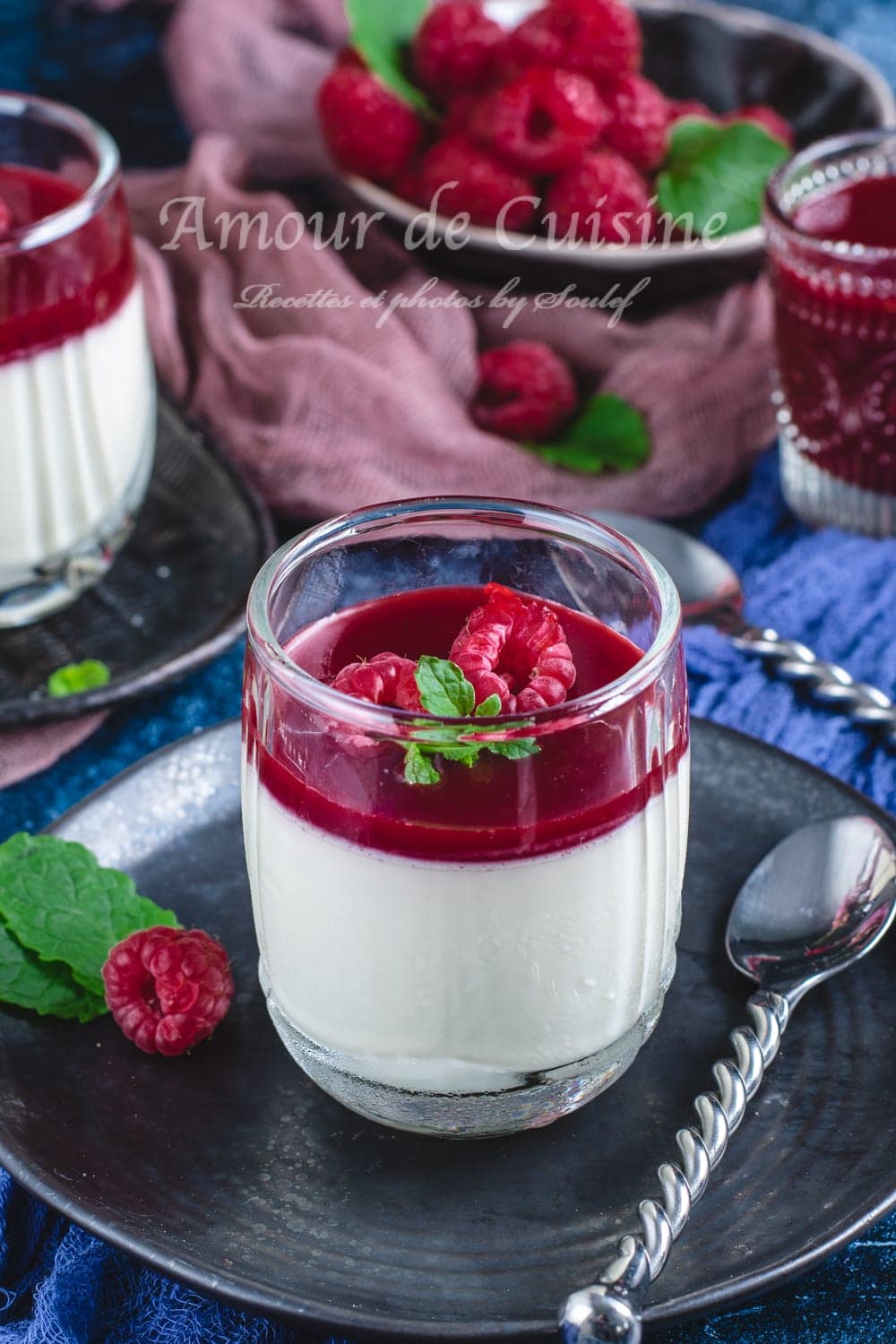
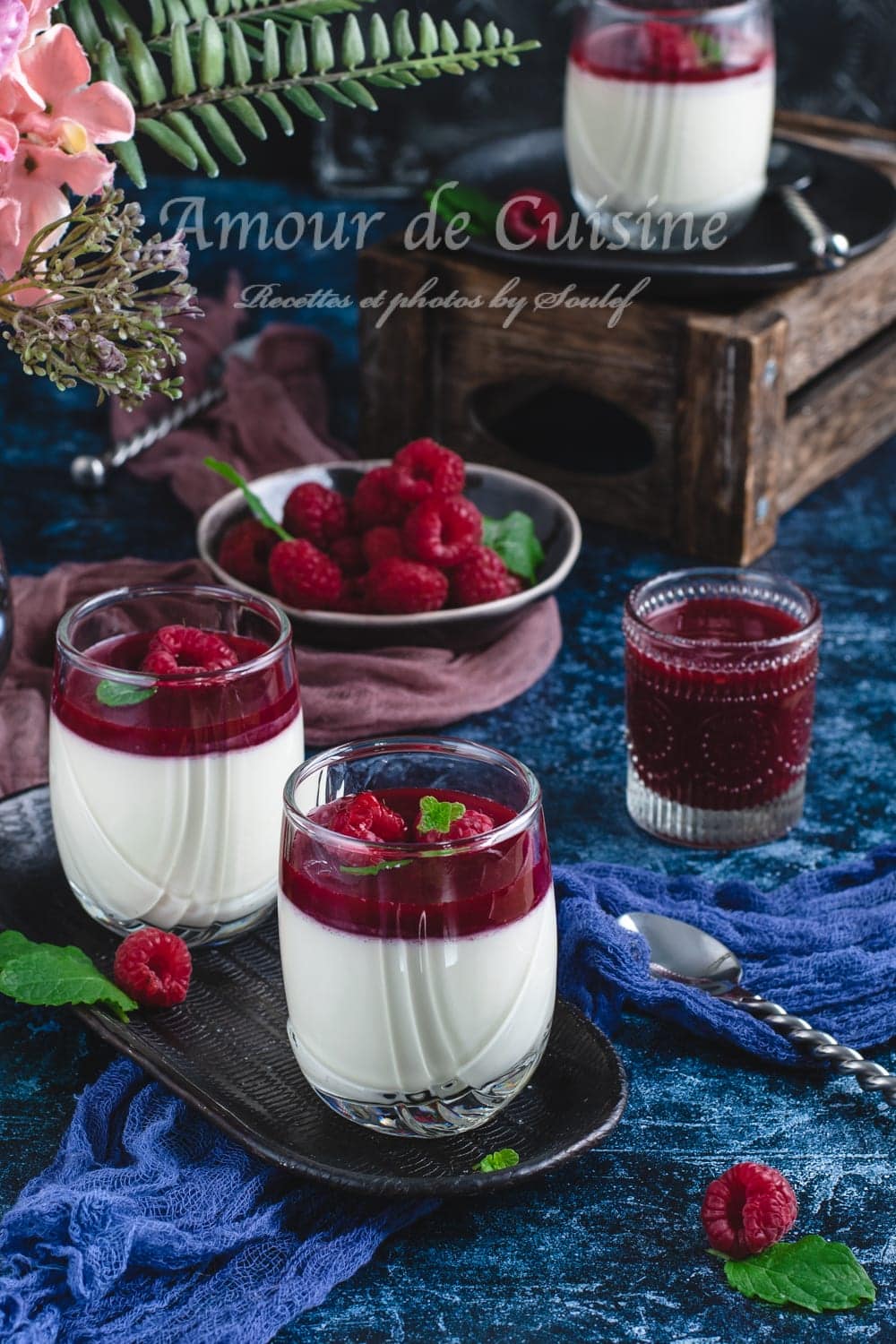
Raspberry panna cotta is a refined Italian dessert made with silky vanilla cream and topped with a bright, slightly tangy raspberry coulis.
Ideal for guests or a simple treat, this easy recipe includes practical tips for a smooth, perfectly set finish.
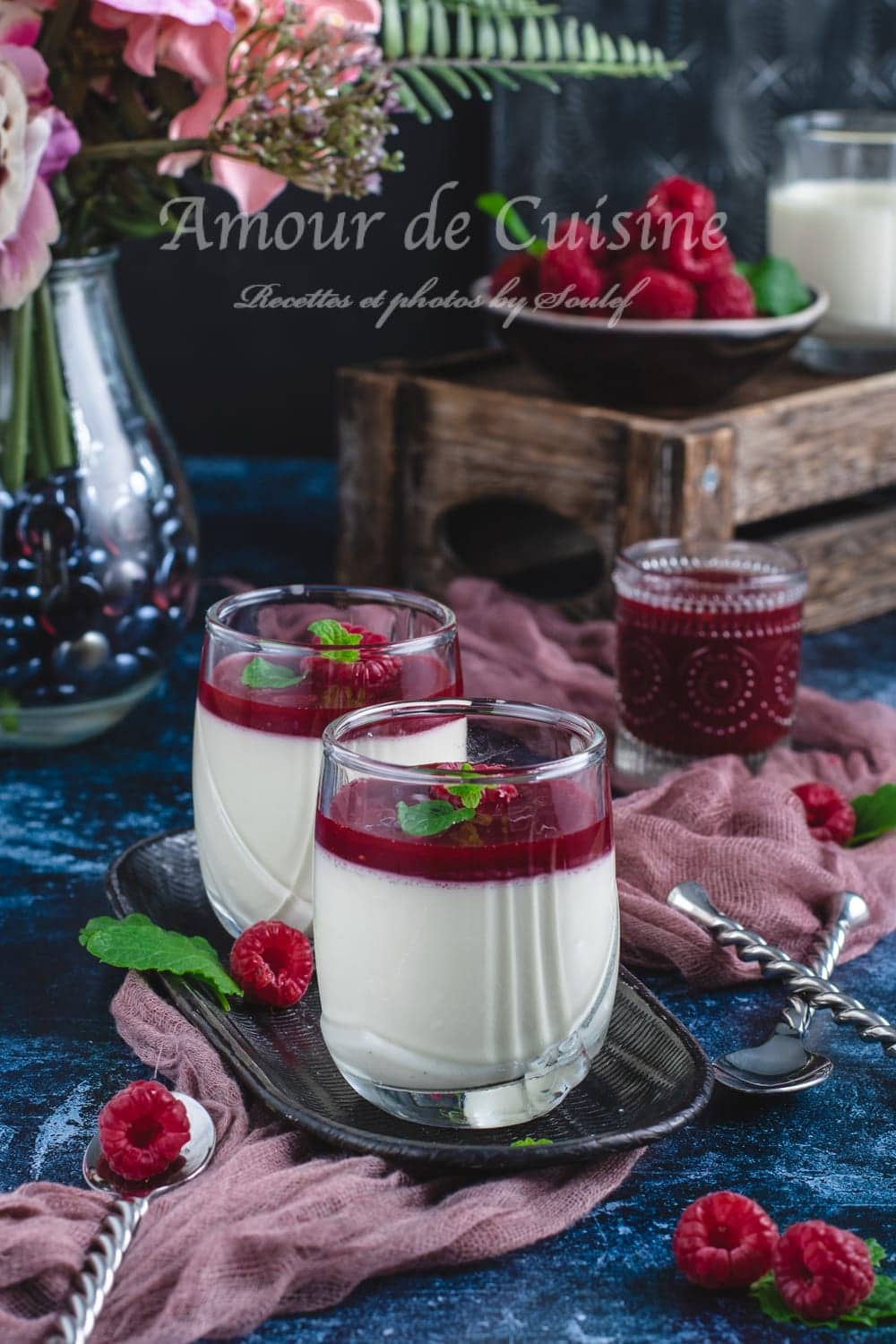
Easy Raspberry Panna Cotta Recipe (Creamy Vanilla Dessert with Homemade Raspberry Coulis)
This easy raspberry panna cotta is one of those desserts you can make without stress, most of the time, my daughter even takes over and prepares it in the Thermomix.
We’ve tried it with both gelatine and agar-agar, and while agar-agar is handy when you want a plant-based option (or when I’ve run out of halal gelatine), gelatine gives the creamiest, smoothest result.
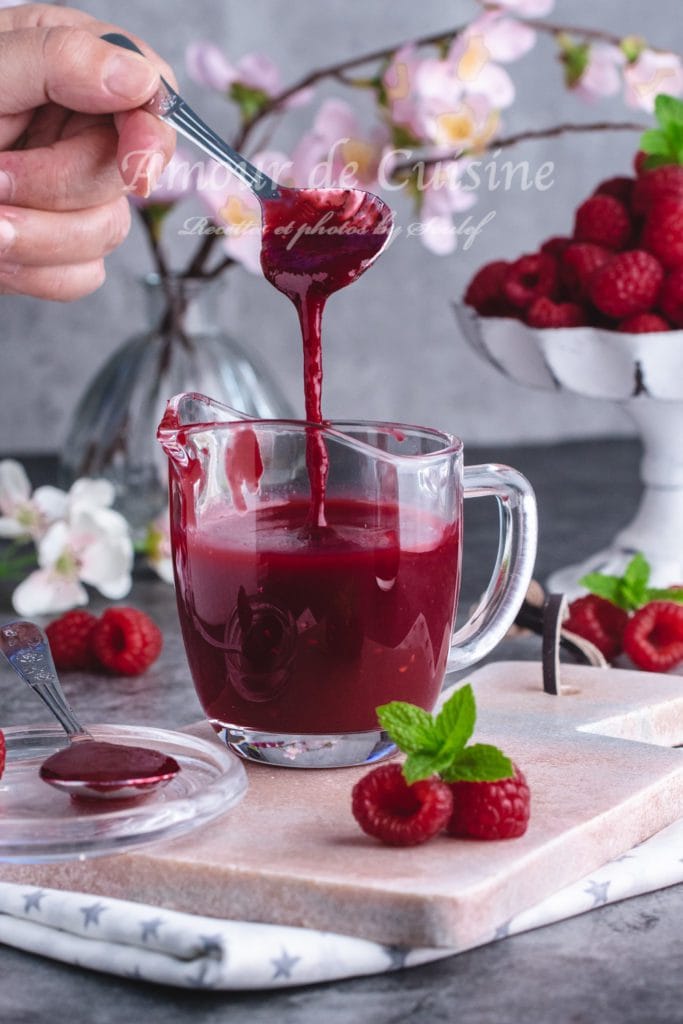
For extra flavour, we finish it with a generous layer of homemade raspberry coulis.
That bright, slightly tangy topping lifts the vanilla cream and makes the dessert feel instantly more special, perfect for guests, yet simple enough for a weeknight treat.
One thing I’ve noticed: panna cotta made with agar-agar can release a little water by the next day if it isn’t eaten straight away.
Gelatine sets more softly and keeps better in the fridge, which is why it’s my go-to for chilled desserts.
What’s the difference between gelatine and agar-agar?
Gelatine and agar-agar are both used to thicken and set recipes such as jams, jellies, mousses, and many other desserts, giving them a firmer, more stable texture.
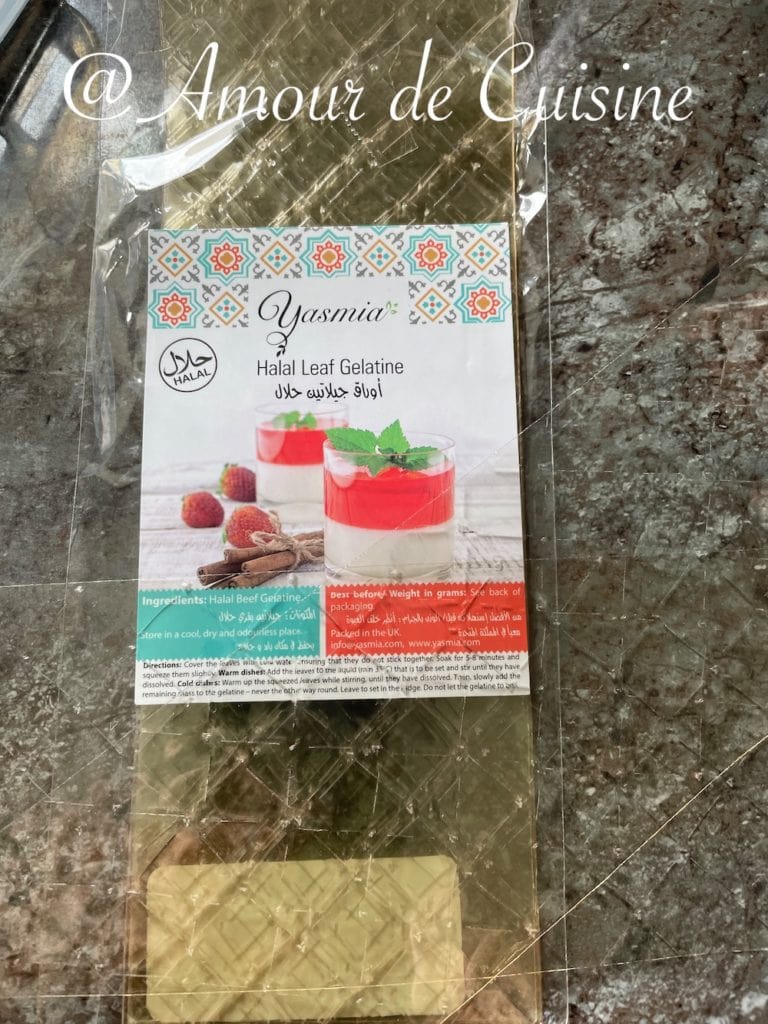
Gelatine is animal-based. It’s extracted from collagen-rich parts and is typically clear, odourless, and tasteless. You’ll find it sold as sheets (leaves) or powder.
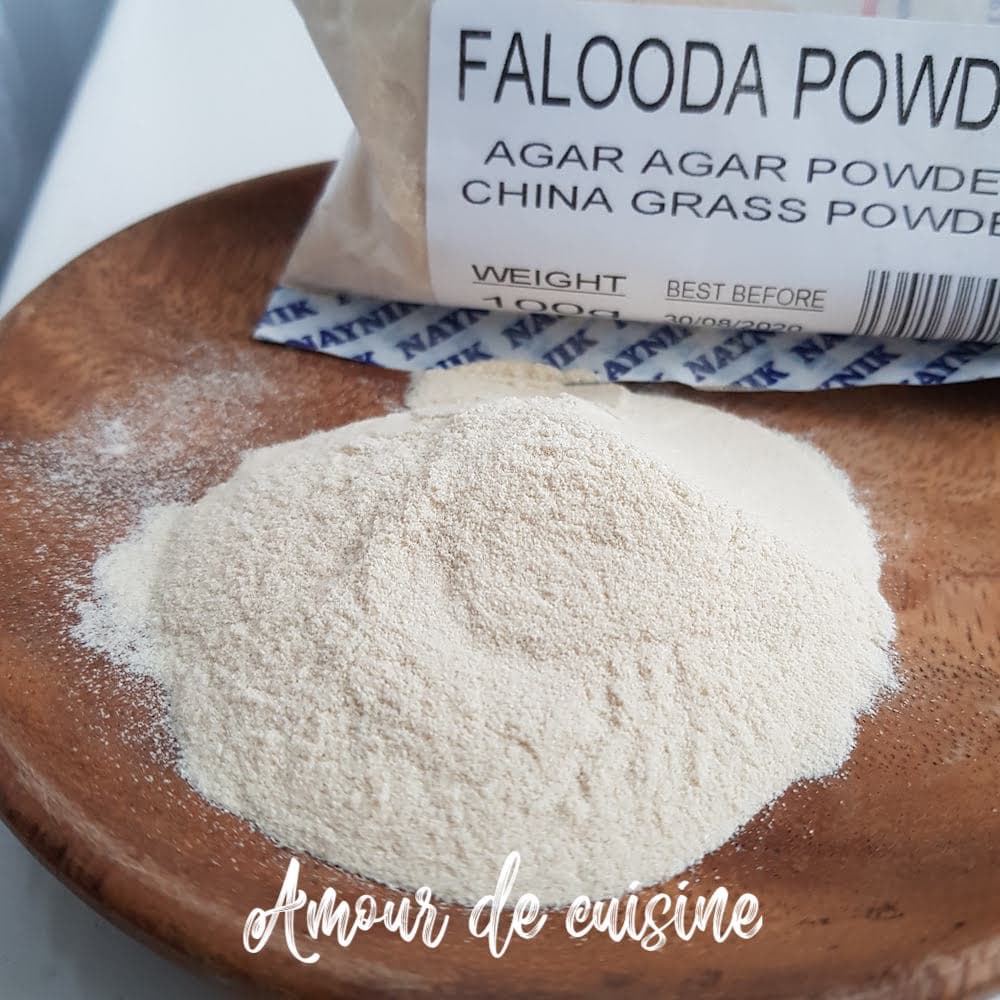
Agar-agar comes from a red seaweed (commonly associated with Japanese cuisine). It’s also neutral in flavour and smell, and it’s widely used as a setting agent in vegetarian and vegan cooking.
How to Use Gelatine
For gelatine sheets (leaves), start by soaking them in very cold water for about 20 minutes, until fully softened and swollen.
Squeeze out the excess water, then add the sheets to your hot mixture off the heat while stirring. Avoid boiling, high heat can reduce gelatine’s setting power.
For powdered gelatine, “bloom” it first by mixing it with five times its volume of cold water. Let it hydrate, then whisk it into a hot (but not boiling) preparation until completely dissolved.
How to Use Agar-Agar
Mix the agar-agar into a small amount of the mixture while it’s cold or at room temperature, then add it back to the rest.
Bring everything to a boil, stirring constantly, and boil for up to 2 minutes to activate its gelling power.
Important notes when using agar-agar:
- Desserts set with agar-agar are best eaten quickly (within 24 hours) as they can release water.
- Agar-agar doesn’t freeze well, so it’s not recommended for desserts that need freezer setting (like some entremets), as the texture may become watery.
- Agar-agar can struggle in very acidic mixtures (for example, strongly lemon-based preparations), which may weaken its setting effect.
How to Replace Gelatine with Agar-Agar (Conversion)
Gelatine can’t always be swapped for agar-agar, but when it works, this is a helpful guide:
- 2 g agar-agar ≈ 8 g gelatine ≈ 4 gelatine sheets (2 g each)
- 8 g gelatine ≈ 2 g agar-agar ≈ 1 level teaspoon agar-agar
Ingredients for Raspberry Panna Cotta (and Coulis)
For the panna cotta
- 300 ml heavy cream (double cream, 30-35% fat): best for a rich, stable set and a truly creamy texture; lighter cream works but tastes less indulgent.
- 100 ml milk: whole milk gives a rounder mouthfeel; semi-skimmed is fine but slightly less creamy.
- 50 g granulated sugar: adjust a little depending on how sweet your coulis is and your personal taste.
- 1 tsp vanilla extract: choose a good-quality extract; alternatives include vanilla bean seeds or vanilla sugar.
- 6 g gelatine sheets: creates a soft, melt-in-the-mouth set; always soak in cold water first and add off the heat (never boil gelatine).
For the raspberry coulis
- 100 g raspberries: fresh or frozen both work.
- 40 g sugar: adjust depending on the tartness of your berries.
- 50 ml water: helps the fruit cook quickly and keeps the coulis pourable (reduce slightly for a thicker finish).
Step-by-step: How to Make Panna Cotta That Sets Perfectly
– Soften the gelatine : Soak gelatine sheets in a bowl of very cold water for 5–10 minutes, until flexible and softened.
– Warm the vanilla cream
- In a saucepan, combine cream, milk, sugar, and vanilla.
- Heat on low, stirring so the sugar dissolves fully.
– Bring to a gentle simmer (not a hard boil)
- Keep heating until you see small bubbles around the edges.
- Avoid a rolling boil, which can affect texture.
– Add gelatine off the heat
- Remove the pan from the heat as soon as it just simmers.
- Squeeze excess water from the gelatine (don’t crush it completely dry) and add to the hot vanilla cream.
– Stir until completely dissolved
- Stir for 30–60 seconds until there are no bits left.
- If needed, warm for 10–15 seconds on very low heat (do not boil) to finish dissolving.
– Pour into serving glasses : Divide between 4 small glasses or ramekins.
Optional: strain through a fine sieve if you’re worried about tiny gelatine specks.
– Cool, then chill : Let cool to room temperature, then cover and refrigerate until fully set.
– Make the raspberry coulis
- Add the raspberries (fresh or frozen), water, and sugar to a saucepan.
- Bring to a gentle boil, stirring, until the sugar has fully dissolved and the mixture has slightly reduced.
- Blend or mash into a smooth purée.
- Strain through a fine sieve to remove the seeds.
- Let the coulis cool completely, then spoon it over the panna cottas just before serving.
Tested Substitutions (What Works Best)
– Heavy vs light cream, whole vs semi-skimmed milk : Heavy cream gives the creamiest, most reliable set; lighter dairy makes it less rich and can set a bit differently.
– Vanilla options (bean, extract, vanilla sugar) : Vanilla bean gives the most intense flavour; extract is the easiest; vanilla sugar works well, just adjust the total sugar.
– Fresh vs frozen raspberries : Both work, but frozen berries release more liquid, use a little less water or simmer the coulis longer for a thicker texture.
Fail-proof Guide: Quick Fixes if Something Goes Wrong
– Too runny. Likely causes: not enough gelatine, gelatine added while the mixture was boiling, or chilling while still too hot.
Fix: add gelatine off the heat, keep the mixture hot but not boiling, and cool fully before refrigerating.
– Too firm / rubbery. Likely cause: too much gelatine (or stronger sheets depending on brand).
Fix: reduce the gelatine slightly next time (about 1 g less).
– Lumps. Likely cause: gelatine not dissolved properly or mixture not hot enough when added.
Fix: stir well in very hot cream off the heat; gently re-warm briefly if needed, and strain through a sieve.
– Skin on top. Likely cause: exposure to air while cooling/chilling.
Fix: place cling film directly on the surface once it’s lukewarm.
Make Ahead and Storage (Fridge, Coulis, Transport, Freezing)
– How long in the fridge? Keep covered and refrigerate for 2–3 days to prevent odours and a skin forming.
– When to add the coulis. For the cleanest look, add right before serving; you can also add it a few hours ahead if you don’t mind it soaking in slightly.
– Transport tips. Chill thoroughly, cover each glass, and transport in an insulated bag; keep the tray level to preserve a smooth surface.
– Can you freeze panna cotta? Freezing is possible but not ideal: texture can turn slightly grainy after thawing, and it’s often worse with agar-agar (it may weep and lose creaminess). Fridge storage is the best option.
Other desserts to try

Creamy and foolproof Raspberry Panna Cotta
- Total Time: 40 minutes
- Yield: 4 servings 1x
Description
Raspberry panna cotta is a refined Italian dessert made with silky vanilla cream and topped with a bright, slightly tangy raspberry coulis. Ideal for guests or a simple treat, this easy recipe includes practical tips for a smooth, perfectly set finish.
Ingredients
For the panna cotta
- 300 ml heavy cream (double cream, 30-35% fat)
- 100 ml milk: whole milk
- 50 g granulated sugar
- 1 tsp vanilla extract
- 6 g gelatine sheets
For the raspberry coulis
- 100 g raspberries
- 40 g sugar
- 50 ml water
Instructions
- Soak gelatine sheets in a bowl of very cold water for 5–10 minutes, until flexible and softened.
- In a saucepan, combine cream, milk, sugar, and vanilla.
- Heat on low, stirring so the sugar dissolves fully.
- Keep heating until you see small bubbles around the edges.
- Avoid a rolling boil, which can affect texture.
- Remove the pan from the heat as soon as it just simmers.
- Squeeze excess water from the gelatine (don’t crush it completely dry) and add to the hot vanilla cream.
- Stir for 30–60 seconds until there are no bits left.
- If needed, warm for 10–15 seconds on very low heat (do not boil) to finish dissolving.
- Divide between 4 small glasses or ramekins. Optional: strain through a fine sieve if you’re worried about tiny gelatine specks.
- Let cool to room temperature, then cover and refrigerate until fully set.
Make the raspberry coulis
- Add the raspberries (fresh or frozen), water, and sugar to a saucepan.
- Bring to a gentle boil, stirring, until the sugar has fully dissolved and the mixture has slightly reduced.
- Blend or mash into a smooth purée.
- Strain through a fine sieve to remove the seeds.
- Let the coulis cool completely, then spoon it over the panna cottas just before serving.
- Prep Time: 20 min
- Cook Time: 20 min
- Category: Dessert
- Cuisine: Italian cuisine
Nutrition
- Serving Size: 1 serving
- Calories: 360 kcal