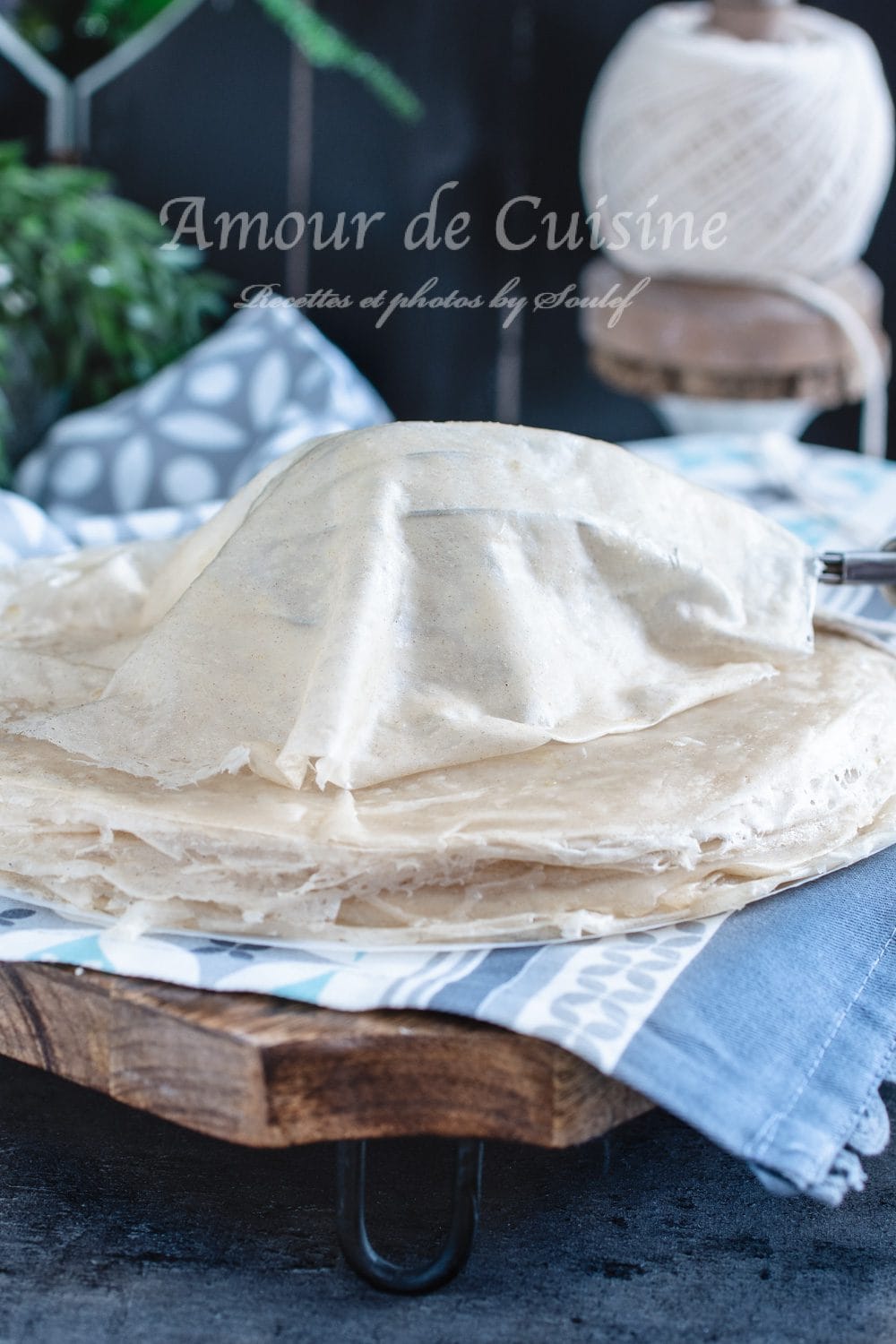
Homemade Brick Pastry Sheets : Spring Rolls Wrapper

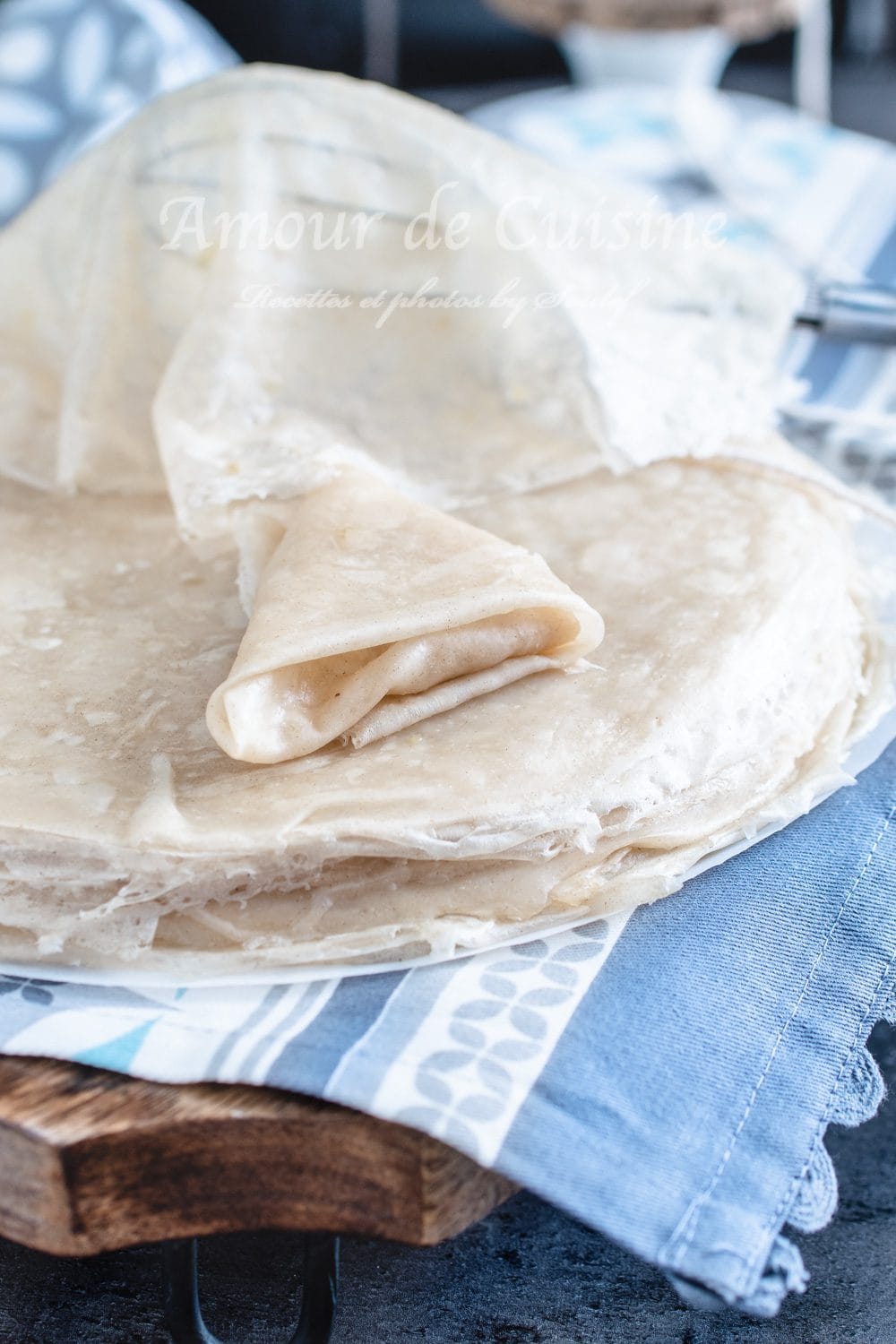
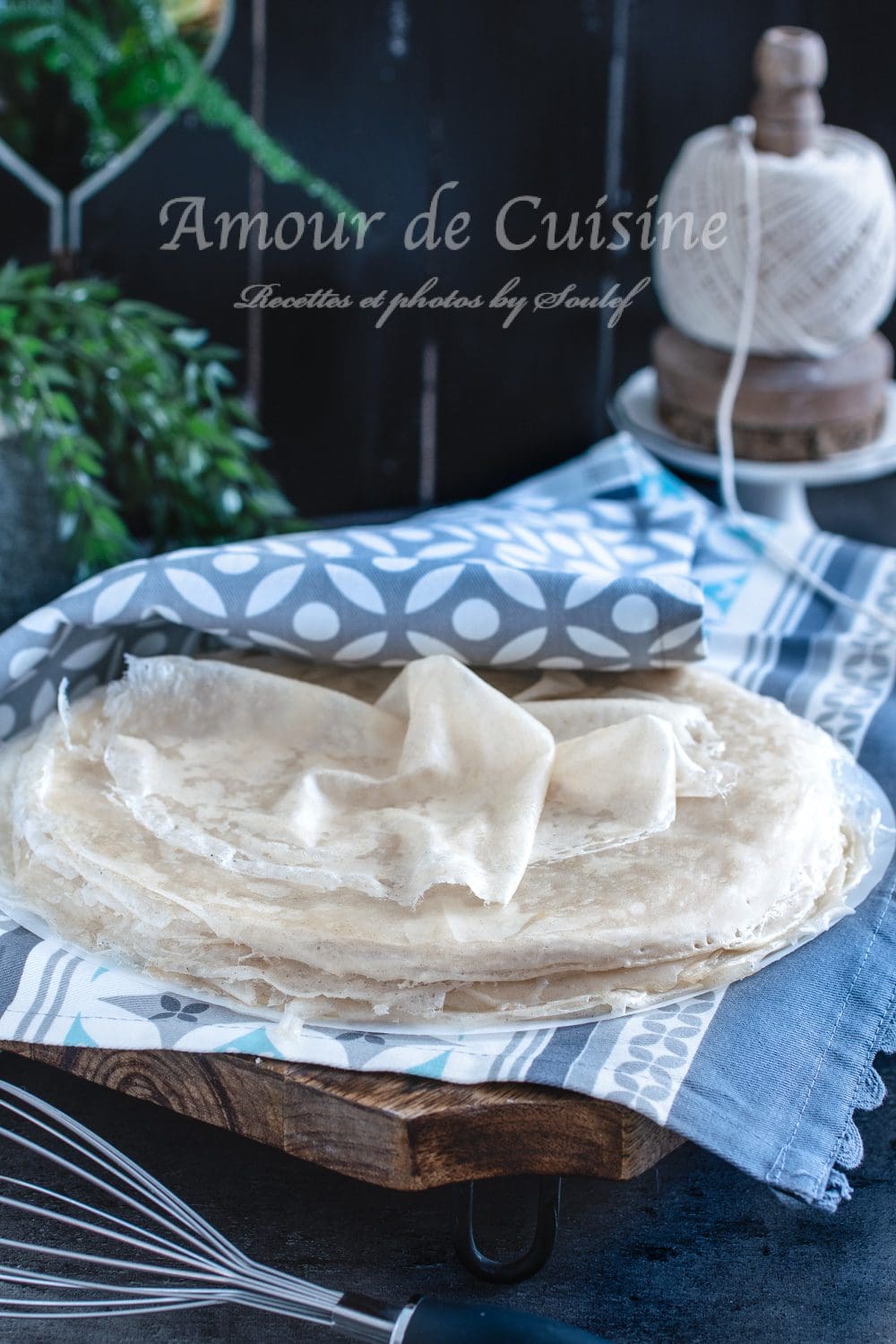
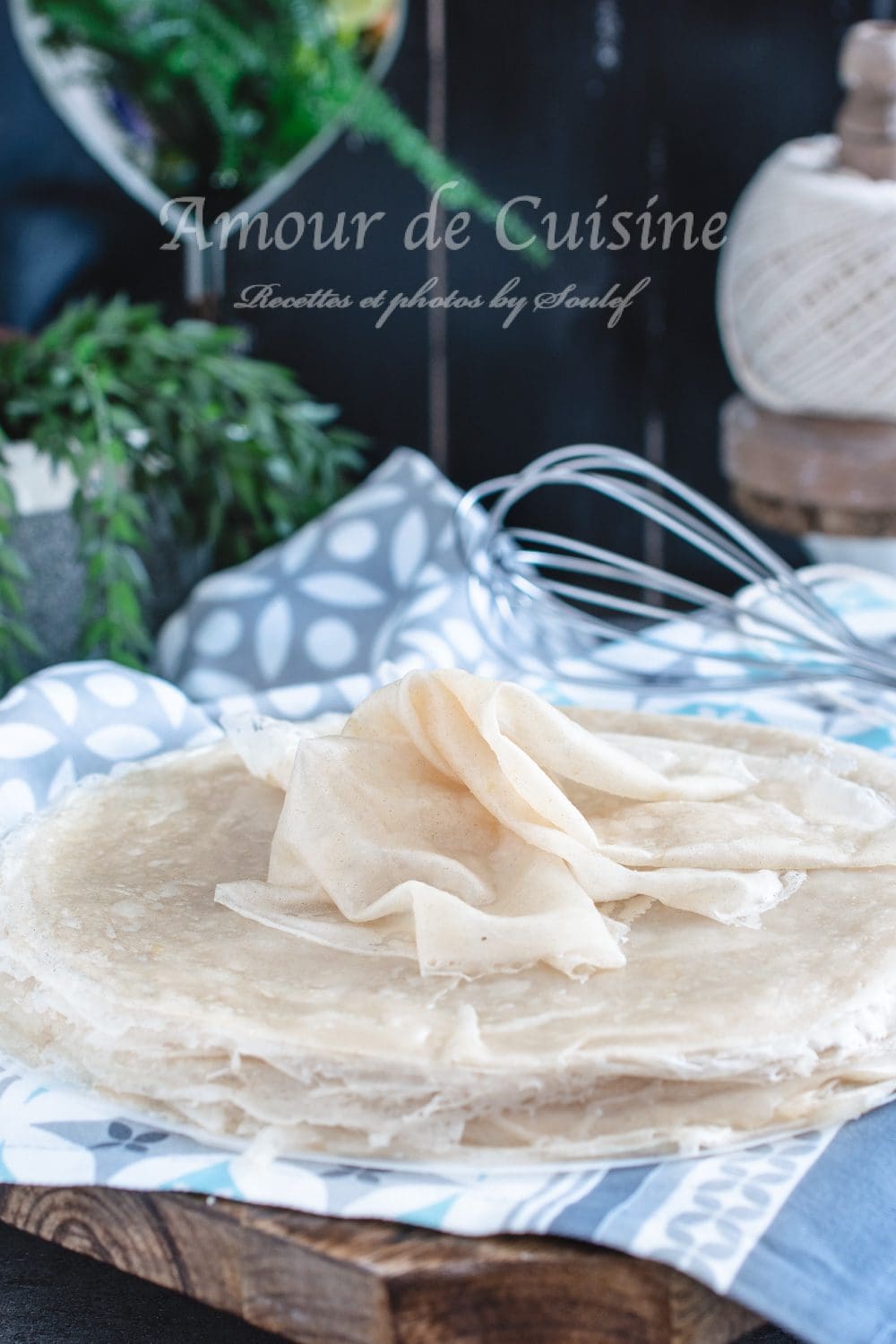
For nearly 20 years, this has been my go-to way to make homemade brick pastry sheets, also called dyouls or malsouka.
A thin batter, brushed onto a steam-heated pan, turns into soft, flexible spring roll wrappers for savory or sweet fillings.
Homemade Brick Pastry Sheets (Dyouls/Malsouka) – Easy Brush Method Spring Rolls Wrapper
For years, I watched my mother make brick pastry sheets the traditional way: a well-worked, gluten-rich dough, gently “painted” across a scorching pan to form paper-thin sheets.
It looked effortless in her hands. When I tried it as a teenager, I quickly learned that the heat shows no mercy, my confidence didn’t last long!
That’s why the brush method became my forever favorite.
The batter is light, the steam heat is gentler, and you get reliable, flexible wrappers without rushing or risking burns.
In Ramadan, I often make a small batch every few days because they’re a real time-saver: fill, fold, and you’re minutes away from crisp savory parcels, sweet rolls, or an easy spring rolls wrapper for last-minute guests.
Ingredients for homemade brick pastry sheets
- 400 ml warm water: Warm (not hot) helps the batter turn smooth and lump-free.
- 250 g all-purpose flour: Regular white flour works best for soft, flexible sheets.
- Salt (a pinch): Just enough to balance the flavor.
- 2 tbsp fine semolina: Adds a subtle bite and improves structure without making the sheets rough.
Step-by-step instructions (easy to follow)
- Mix the dry ingredients (flour, fine semolina, salt) in a bowl.
- Whisk in the warm water gradually until you get a very thin batter (thinner than crêpe batter). If needed, strain for a silky texture.
- Rest the batter for 10-15 minutes so it hydrates evenly.
- Set up a gentle steam bath: bring a little water to a simmer in a wide pot, then place your crêpe pan on top so it heats from the steam.
- Brush a thin, even layer of batter over the hot pan. Work quickly and lightly.
- Cook until the edges lift and the sheet looks matte. Keep it pale, no browning.
- Lay each sheet on a clean cloth as you remove it.
- Lightly oil between sheets, then cover to keep them supple.
Pan size matters (and why your edges may stay raw)
- 22–25 cm pan: Great for tuna bricks, almond cigars, and Tunisian-style bricks, easy to fold and shape.
- 28 cm pan: Best for Bourek Annabi Squares so you get wide sheets; otherwise you’ll end up joining smaller sheets to make a proper square.
- Important: Your pan should sit fully over the pot. If the pan overhangs by a couple of centimeters, the edges won’t receive enough steam and can stay undercooked.
Pro tips for thin, flexible wrappers (no tearing)
- Use a wide flat brush (~5 cm). A clean paintbrush works too; if it feels bulky, trim one side so it stays wide but becomes easier to handle.
- Skip silicone brushes: the batter won’t cling well and spreads unevenly.
- Patch thin spots immediately: any “hole” or extra-thin area will tear later when folding.
- Don’t overcook: remove as soon as it releases at the edges, browning dries the sheet.
- Oil lightly between sheets so they don’t stick and they stay soft while you keep cooking.
How to store brick pastry sheets longer
- They dry fast, so store them in a well-sealed bag slightly larger than the sheets to avoid creasing.
- Fridge: 3-4 days, stored in the lower part where temperature is steadier.
- Before using: place them on a slightly damp clean towel to restore softness.
- Batch smart: divide into several bags (one bag per use) so you don’t repeatedly open the whole stack.
- Freezer: freeze in airtight bags, portioned.
- To use frozen sheets: thaw at room temperature until pliable.
FAQ (common questions)
- Why do my sheets turn stiff instead of flexible? Usually the batter went on too thick, heat was too high, or the sheet stayed on too long and dried out.
- Why is my batter lumpy even after whisking? Water added too fast or batter not rested. Blend briefly, then strain for a perfectly smooth batter.
- Why do my sheets stick to the pan? The pan may be unevenly heated or slightly wet. Make sure it’s hot and dry before brushing.
- Why do I tear the sheet when lifting it? It may be undercooked in spots or unevenly brushed. Wait for edge release, then lift gently from one side.
- Can I make these without semolina? Yes, but the sheets can be a little more delicate. Keep the layer extra even and thin.
- How do I get extra-thin, shop-style wrappers? Brush two very light passes (rather than one heavy layer), crossing directions for even coverage.
Recipes to make with brick pastry sheets (spring roll wrappers)
- Tuna and Potato Bricks
- Tunisian malsouka
- Crispy Minced Lamb Samosas (bricks)
Brick Pastry Sheets : Easy homemade recipe
- Total Time: 55 minutes
- Yield: 20 sheets 1x
Description
this is my go-to way to make homemade brick pastry sheets, also called dyouls or malsouka sheets. A thin batter, brushed onto a steam-heated pan, turns into soft, flexible wrappers for savory or sweet fillings.
Ingredients
- 400 ml warm water
- 250 g all-purpose flour
- A little salt
- 2 tbsp fine semolina
Instructions
- Mix all the dry ingredients.
- Add the water gradually while whisking to get a very thin batter.
- Let it rest for a little while.
- Place a pan over a bain-marie.
- Use a brush to spread the batter evenly over the pan.
- Cook until the batter gently releases from the edges of the pan.
- Place the brick pastry sheets on a clean cloth.
- Lightly oil the surface and cover the dyouls so they don’t dry out.
- Prep Time: 15 min
- Cook Time: 40 min
Nutrition
- Serving Size: 1 sheet
- Calories: 75 kcal