
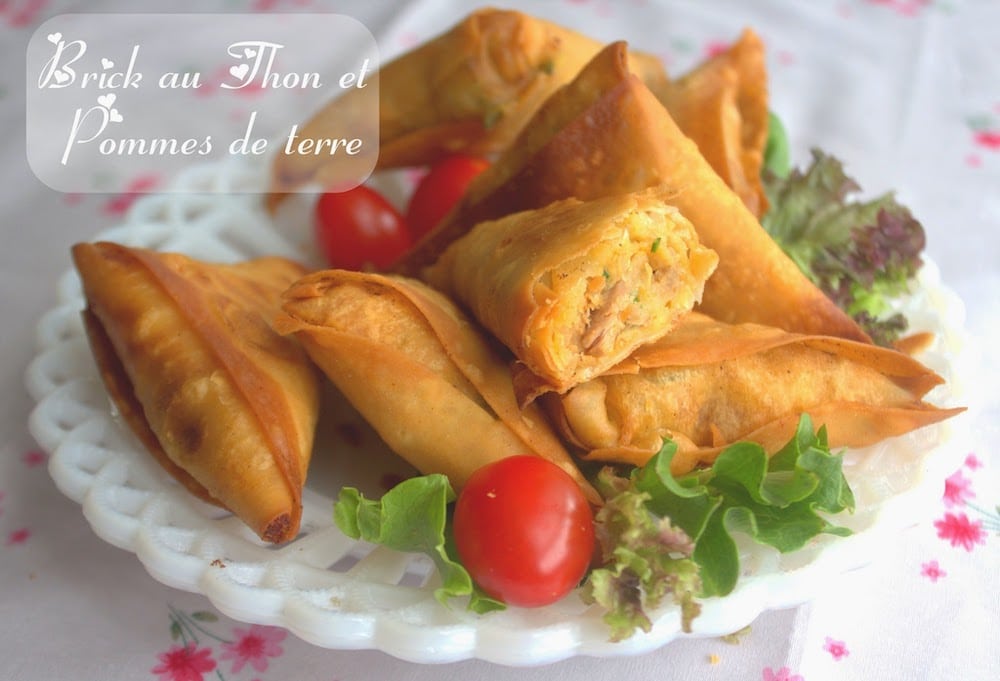
Tuna and Potato Bricks (algerian Boureks): Crispy Ramadan Starter

These tuna and potato bricks are a quick, fuss-free starter with a golden, crackly shell and a warm, savoury filling.
An algerian boureks recipe perfect alongside a comforting chorba, or with a crisp salad for a light summer dinner.
Use homemade or store-bought brick sheets “dyouls” to wrap them into irresistible, samosa-style triangles.

Why We Love These Tuna and Potato Bricks
Potato bricks are a real favourite in our home, mainly because the filling is so easy to adapt.
You can keep it simple with pantry staples, or add whatever you have on hand, extra herbs, a handful of olives, a pinch of spice, or a little grated cheese for a richer bite.
Tuna and potato bricks are especially great for Ramadan, served hot alongside chorba or harira.
They’re also perfect when you need something quick: pair them with a fresh salad for a light meal, or serve them as finger food on a party table, Christmas buffets included.
Today, we’re making the classic tuna and potato version. If you don’t have cooked potatoes ready, you can absolutely make a tuna-only filling for an even faster option.
That said, adding potato gives you a bigger batch and helps the bricks absorb less frying oil, so they stay lighter and crispier.
For the best texture and flavour, homemade brick sheets (dyouls) are ideal, but good store-bought sheets work well too.
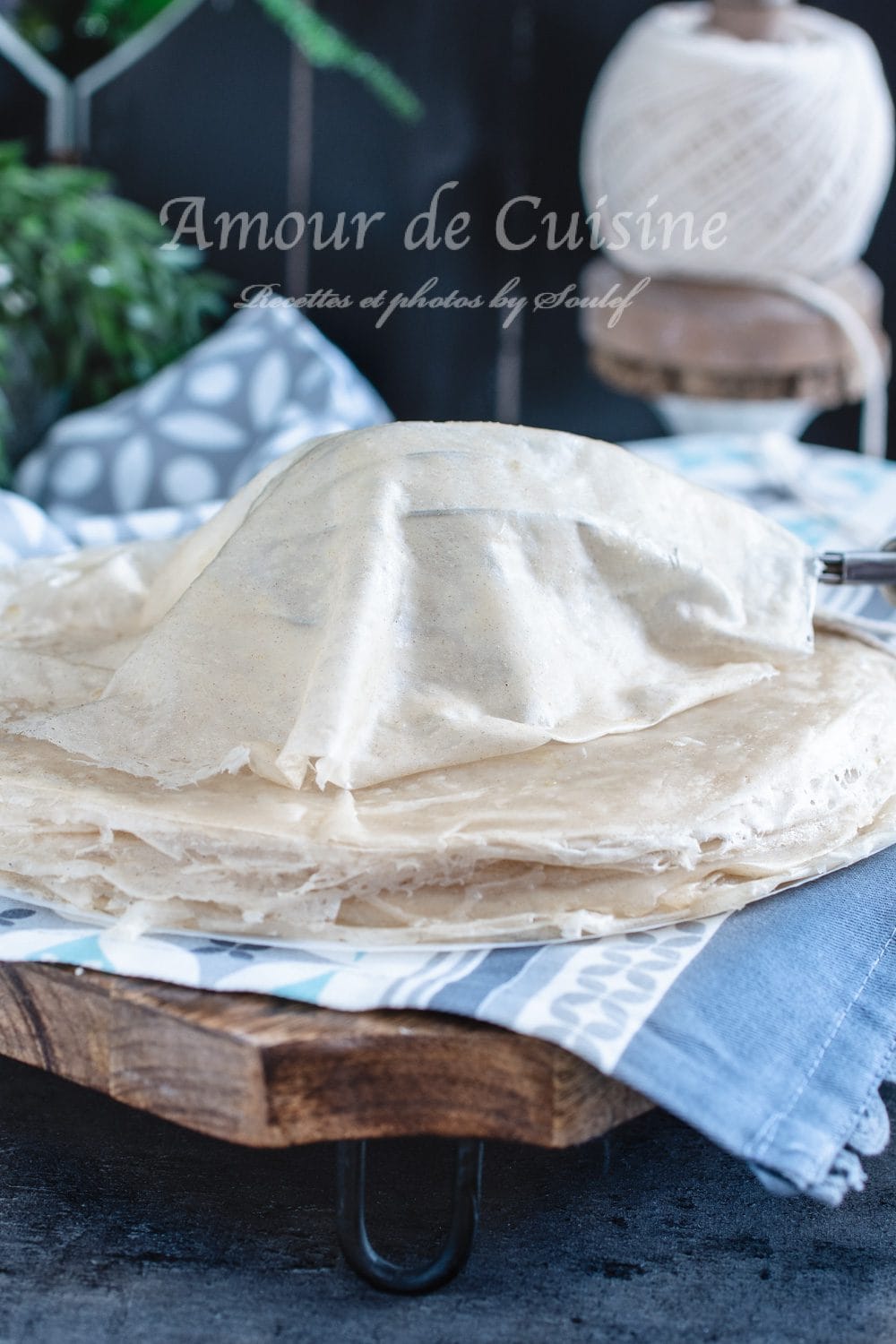
Brick Sheets “dyoul” or Samosa pastry sheets: Which Gives the Best Result?
I tested this recipe with store-bought samosa pastry sheets, they are the long, ready-cut strips that make folding neat triangles really easy.
They are similar to filo pastry, just a little thicker, and their shape is convenient when you want fast prep and evenly sized bricks every time.
That said, there’s a downside. These wrappers often have a noticeable cornstarch taste, and because they’re slightly denser, the finished samosas can feel a bit dry once you bite in, especially if the filling is not very creamy.
They also tend to lose their crispness more quickly after cooking.
Brick sheets, spring roll or as we called them in Algeria “dyoul”, on the other hand, give the best texture: lighter, thinner, and beautifully crackly, with a delicate crunch that stays satisfying.
They also cook very quickly, so you get a golden finish without over-drying the pastry.
If you want the most classic result : crisp, light, and not heavy, brick sheets are the best choice.

Ingredients for Tuna potato bricks
- Brick sheets (thin and crispy, ideal for wrapping the filling)
- 3 to 4 medium potatoes (cooked and mashed for a soft, comforting texture)
- 1 onion (finely chopped to boost flavour)
- 1 can of tuna in oil (drained and flaked, for a savoury, protein-rich filling)
- 1/2 bunch of chopped parsley (or to taste, for freshness)
- A handful of pitted green olives (sliced, for a salty tang)
- 1 tsp harissa (or to taste, to add heat)
- 200 g grated cheese (Gruyère, Emmental, or mozzarella, for a melty centre)
- Salt, black pepper, ground coriander (season to taste)
- Egg white (to seal the pastry so it stays closed while frying)
- Oil for frying (vegetable oil such as sunflower or peanut oil for a crisp finish)
How to Make Tuna and Potato Bricks
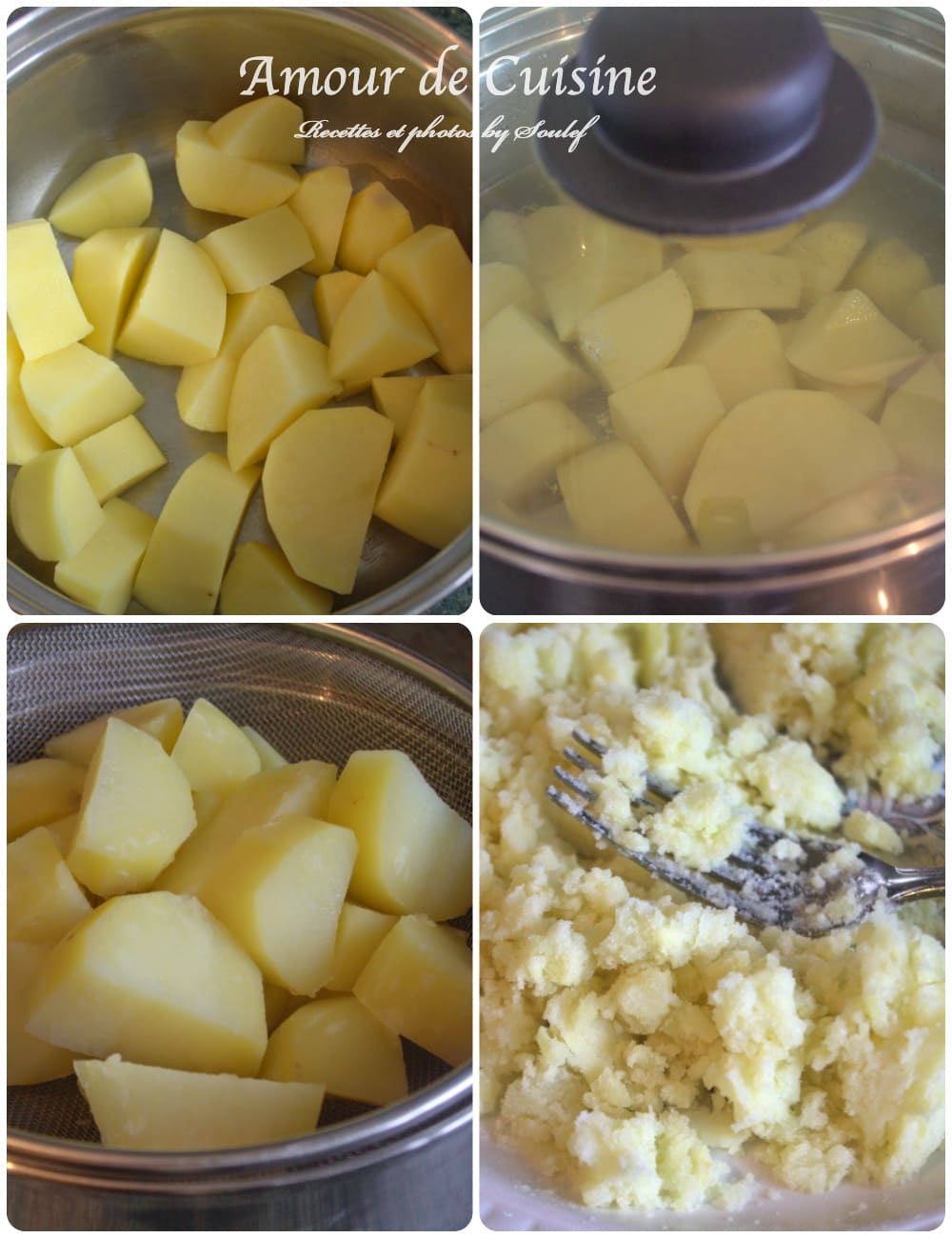
- Cook the potatoes: Wash, peel, and cut the potatoes into large chunks. Boil in lightly salted water until tender, then drain very well.
- Make the mash: Mash the potatoes while warm, then transfer to a large bowl. Let the mash cool slightly so it stays firm (this helps prevent greasy bricks).
- Sauté the onion: Finely dice the onion and sauté in a little oil over medium heat until soft and translucent.
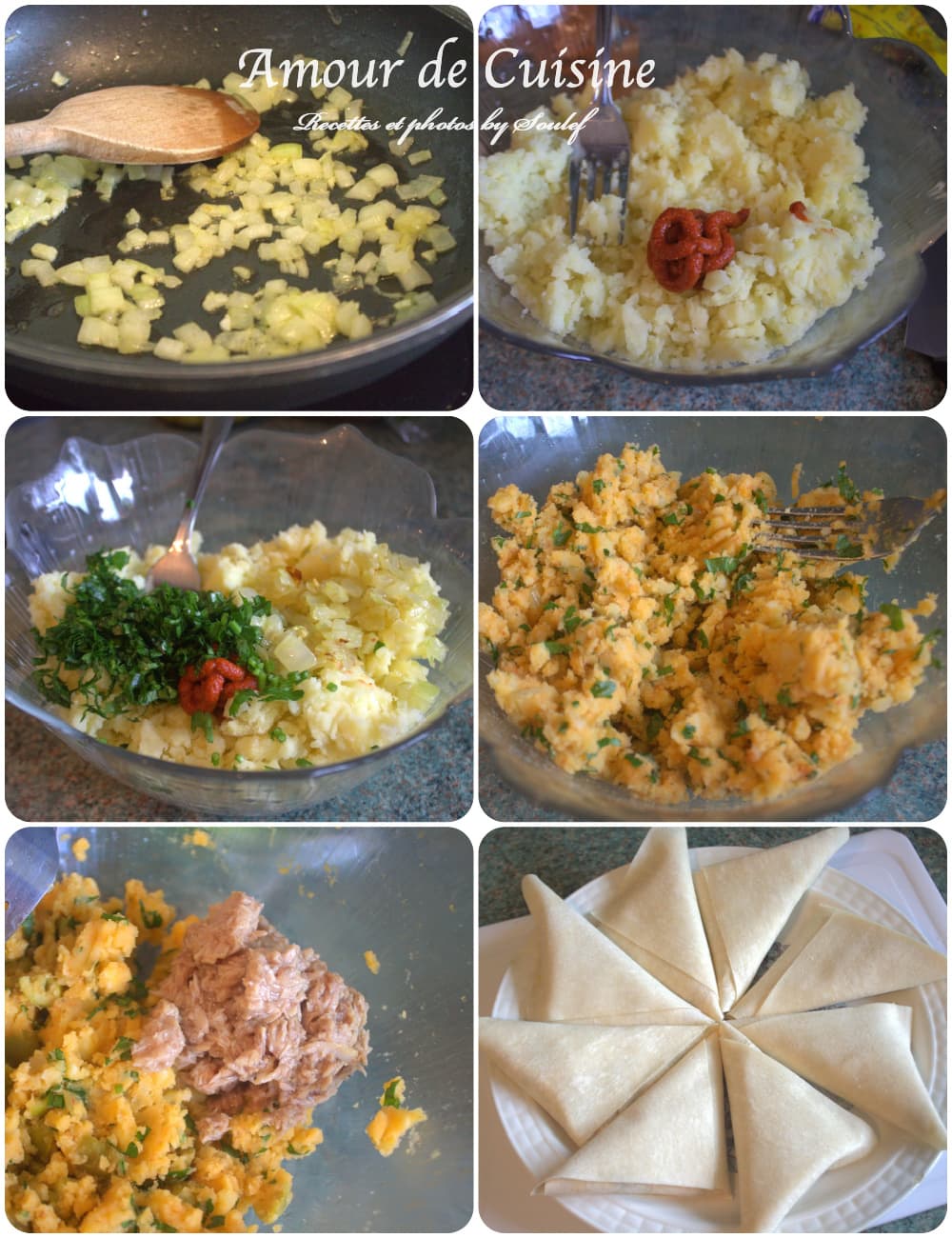
- Season the filling: Add the cooked onion, chopped parsley, harissa, salt, black pepper, and ground coriander to the mashed potatoes. Mix until evenly combined.
- Finish the filling: Stir in the grated cheese and sliced olives, then gently fold in the tuna (drained and flaked) so it keeps a nice texture.
- Fill and fold: Place a spoonful of filling on a strip of brick sheet. Fold into a tight triangle and seal the final flap with a little egg white to stop it opening in the oil.
- Fry until golden: Heat oil in a deep pan and fry the bricks in hot oil until crisp and golden on all sides. Work in small batches.
- Drain and serve: Drain on kitchen paper and serve warm, ideally straight away for the best crunch.
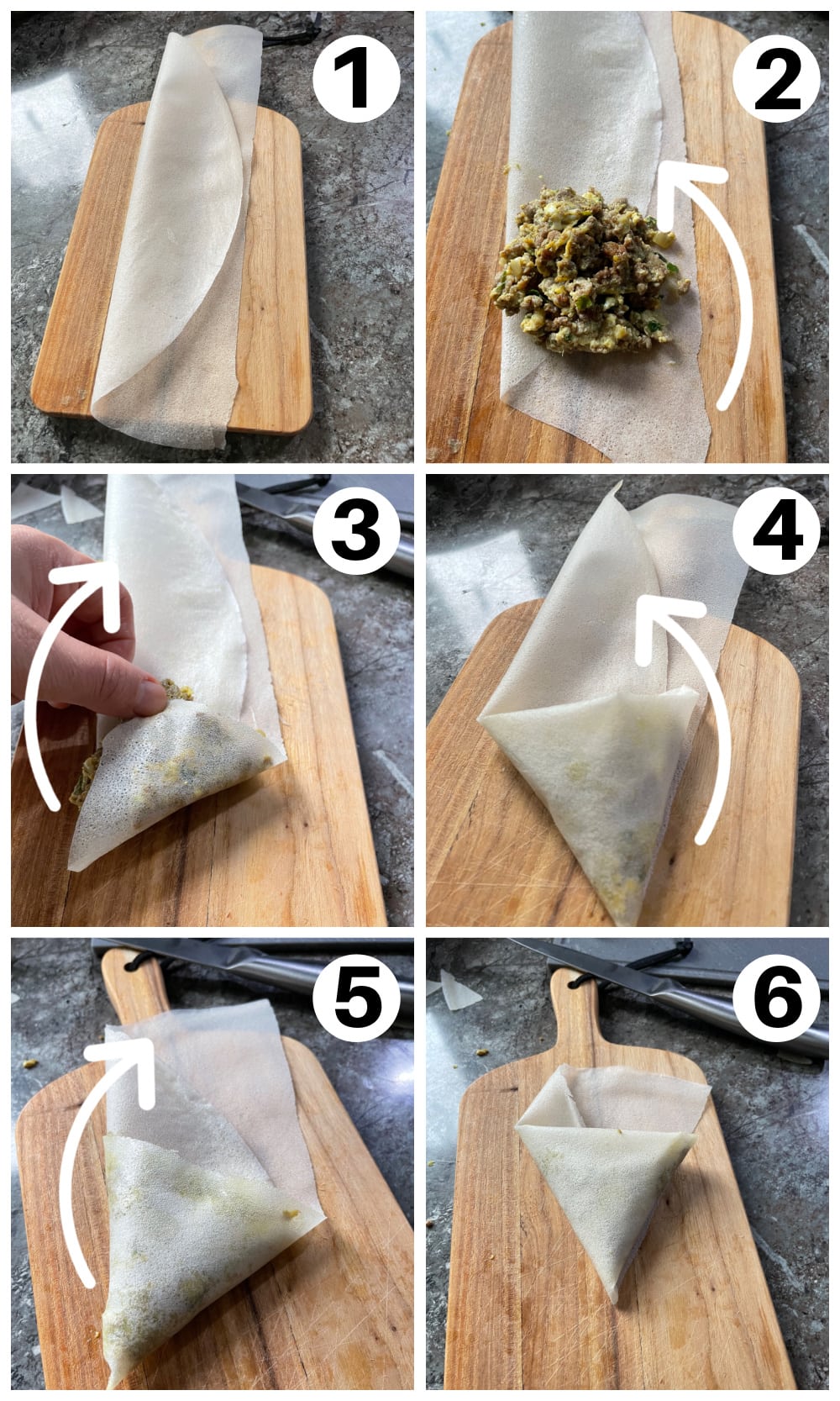
How to Fold Triangle Bricks (Step-by-Step)
- Prep the strip: Lay one long strip of brick pastry on your board (use a double layer if it’s very thin).
- Add the filling: Place a small mound of filling near the bottom of the strip, leaving a little space at the edges.
- First fold (make a triangle): Fold the bottom corner up and over the filling to form a neat triangle.
- Keep folding up: Flip the triangle upward along the strip, alternating sides each time (like folding a flag) to keep a tight triangle shape.
- Continue to the end: Repeat the same triangular flips until you reach the top of the strip.
- Finish and seal: Tuck the remaining flap into the last fold (or wrap it neatly around), then seal with a dab of egg white (or flour-water paste).
Can You Make Bricks Ahead and Freeze Them?
Here’s my honest opinion: I don’t like it, and I don’t recommend freezing fully assembled tuna and potato bricks, and the reason is simple.
Once potatoes are boiled and mashed, they may look dry, but they still trap a lot of water inside.
When you freeze the filling, that hidden moisture turns into ice crystals. As the bricks thaw at room temperature, the crystals melt into tiny droplets throughout the mixture.
When those droplets hit hot frying oil, they can cause the bricks to burst or split open.
My time-saving solution
Freeze the mashed potatoes on their own, not the folded bricks.
When you make mashed potatoes (even a large batch), portion it into freezer bags based on how many bricks you plan to make in one go.
This way, you always have a base ready without the risks of watery filling.
Personally, I portion 350 g of mashed potato, which makes almost 12 bricks.
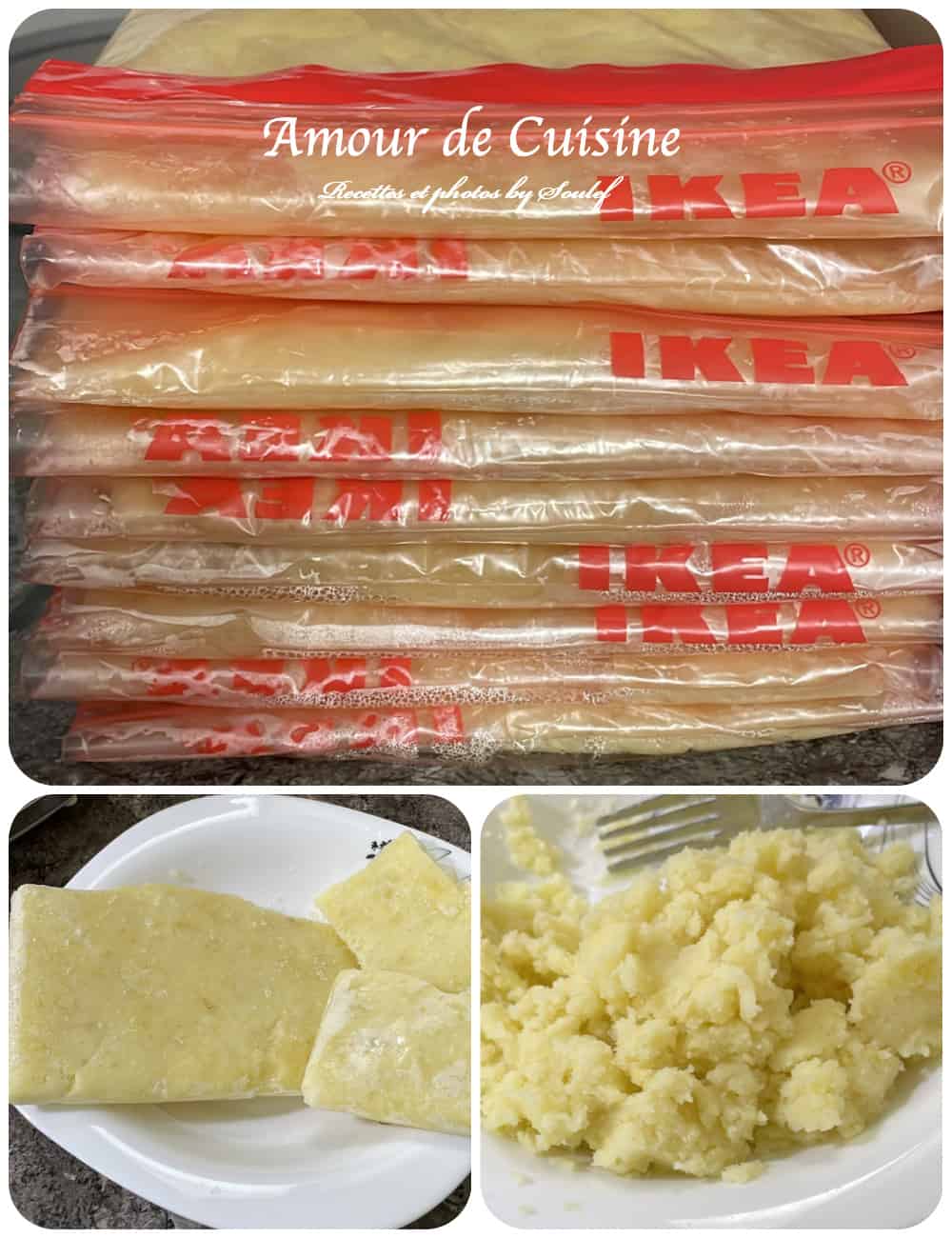
How to Use Frozen Mashed Potatoes for Bricks
- Take out one portion: Remove a bag of frozen mashed potatoes from the freezer.
- Spread it out: Tip the mash onto a wide plate and spread it slightly so it defrosts evenly.
- Defrost in the microwave: Microwave straight from frozen until fully thawed and hot throughout.
- Finish the filling: Once the mash is completely defrosted, add the remaining ingredients (onion, herbs, seasoning, tuna, olives, cheese) and mix well.
Important: Do not leave the mash to thaw at room temperature. You’ll end up with a puddle of water, and that extra moisture is exactly why potato bricks can split or burst during frying after defrosting.
Microwaving makes a big difference because the trapped water in the mash evaporates without ruining the texture.
It saves time (no boiling potatoes every time), and the same mash is also perfect for making maakouda, and even a creamy mashed potatoes.
Watch the video for a clearer visual guide, on how to defrost the mash :
FAQ: Tuna and Potato Bricks
- Can I prepare them in the morning for the evening? Yes. Fold them, wrap well, keep chilled, then cook at the last minute.
- Which oil should I use? A neutral oil with a high smoke point (sunflower, grapeseed).
- Can I replace harissa? Yes. Use sweet paprika, mild chilli, or leave it out.
- How do I stop them absorbing oil? Use a well-drained, cold filling, fry in properly hot oil, cook quickly, and drain on paper.
- Can I bake them instead of frying? Yes. Lightly brush with oil and bake in a hot oven until golden.
- How long do they keep? 24-48 hours in the fridge, then reheat in the oven/air fryer to bring back crispness.
Common Problems: Quick Troubleshooting
- Bricks bursting: filling is too wet or too warm → drain well, let it cool, seal with egg white.
- Soft bricks: oil not hot enough / cooking too long → raise the heat, cook quickly, drain immediately.
- Too greasy: oil is lukewarm or pan is overcrowded → fry in small batches and let the oil come back up to temperature.
- Filling leaking: too much filling or loose folding → use less filling, fold tightly, and use an intact sheet.
Other appetisers for Ramadan
- Indian potato beef and green pea samosa
- Tunisian Brik with Egg and Tuna: Easy, Crispy Recipe
- Crispy Minced Lamb Samosas with Spring Roll sheets
- Cheese Turnovers : Empanadas
Crispy Algerian Tuna and Potato Briks
- Total Time: 45 minutes
- Yield: 12 bricks 1x
Description
These tuna and potato bricks are a quick, fuss-free starter with a golden, crackly shell and a warm, savoury filling. An algerian boureks recipe perfect alongside a comforting chorba, or with a crisp salad for a light summer dinner.
Ingredients
- Brick pastry sheets
- 3 to 4 medium potatoes
- 1 onion
- 1 can of tuna
- 1/2 bunch of chopped parsley (or to taste)
- 1 handful of green olives (pitted)
- 1 tsp harissa (or to taste)
- 200 g grated cheese
- Salt (black pepper, ground coriander)
- Egg white (to seal)
- Oil (for frying)
Instructions
- Wash, peel, and cut the potatoes into large cubes, then cook them in a little salted water.
- Dice the onion and sauté in a little oil until translucent.
- Mash the potatoes after draining them from the cooking water, then place in a large bowl.
- Add the cooked onion, chopped parsley, harissa, salt, black pepper, and ground coriander. Mix well.
- Add the grated cheese and sliced olives, then gently fold in the tuna pieces.
- Fill the brick sheets with the mixture, fold them, and seal the final flap with a little egg white.
- Cook in a bath of very hot oil.
- Drain the cooked boureks on paper towels and serve warm.
- Prep Time: 30 min
- Cook Time: 15 min
- Category: appetiser
- Cuisine: algerian cuisine
Nutrition
- Serving Size: 1 brick
- Calories: 120 kcal