
Gugelhupf (Kouglof) : Classic German Bundt Cake

Traditional Alsatian kouglof, also known as gugelhupf, is an iconic yeast cake from Alsace. Baked in its fluted ring mold, it rises tall and tender.
Studded with raisins and topped with almonds, it’s perfect for breakfast, brunch, or a cozy afternoon treat.
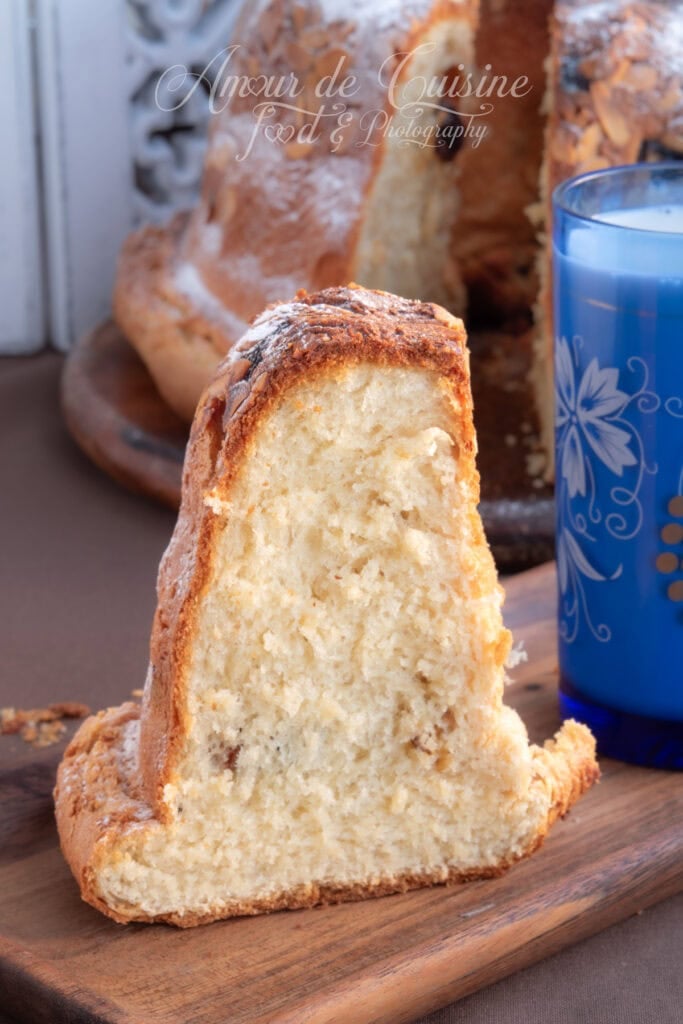
Easy Recipe for Soft Alsatian Kouglof
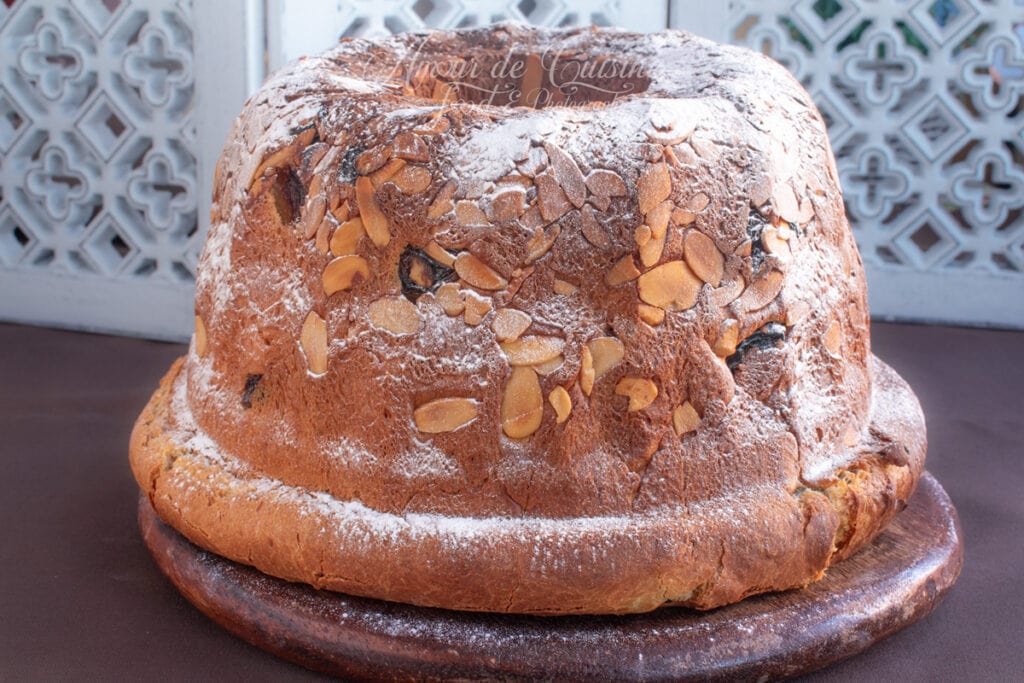
Gugelhupf, also known as kouglof or kougelhopf, is an Alsatian enriched yeast bundt cake baked in a fluted ring mold with a central tube, which helps it cook evenly and creates that iconic “turban” shape.
One popular tale says the name comes from a royal turban decorated with almond-like jewels, later used by a Strasbourg baker as a mold, hence “Kugelhof”, meaning “turban”.
Want an easy, reliable homemade version? The real secret is patience.
Let the dough truly double in a warm spot (24–26°C / 75–79°F), then give it a second rise in the mold for a tall, airy crumb.
Soak the raisins for 10 minutes in hot tea, drain and dry them well, and butter the mold generously for a clean release.
A simple check: press a finger into the dough, if the dent returns slowly, it’s ready to bake.
Dust with icing sugar, and save that golden almond on top for the last bite, absolutely perfect with coffee, too.
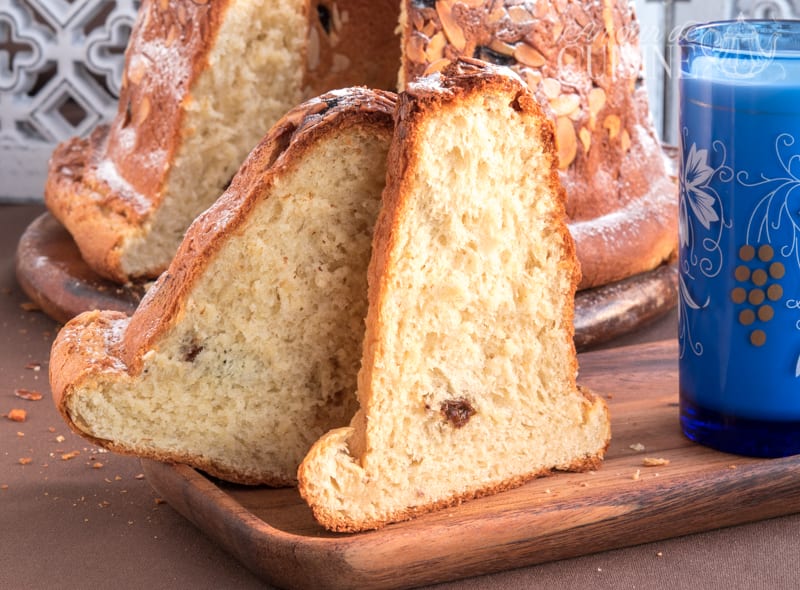
Kouglof: origin and the story behind the name
Kouglof is an Alsatian-style enriched yeast brioche, generously filled with raisins and sometimes almonds, hazelnuts, or other dried fruits.
Its instantly recognisable shape comes from a traditional mold (often ceramic or enamelled metal) with a central tube.
This helps heat reach the middle so the cake bakes evenly, creating that ring shape, almost like a turban.
As for the name, there are several stories. My favourite says that a king from Bethlehem once forgot his turban, decorated with almond-shaped ornaments.
A Strasbourg pastry chef supposedly used it as a cake mold, and the brioche took the Alsatian name Kugelhof, meaning “turban”.
Over time, the spelling evolved in many ways : Kugelhopf, Gugelhopf, Guglhupf, Kouglof, Kougelhopf, Gugelhof, Kugelhof.
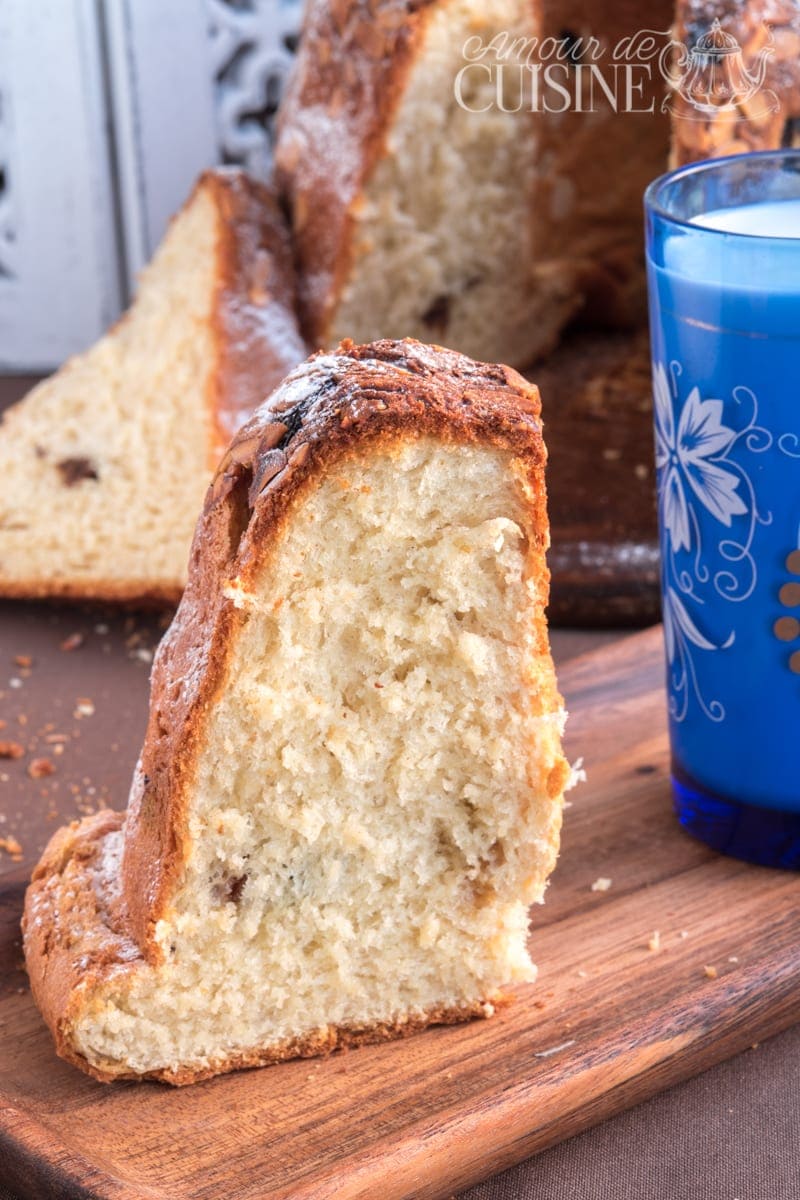
Quick Snapshot: real time, skill level, and equipment
– Real total time (including proofing): 4 to 6 hours (with lots of hands-off time)
– Difficulty: Intermediate, but very achievable if you respect the rising times.
– Serves: About 10 to 12 slices (depending on your mold size and how thick you cut the slices).
– Essential equipment
- Kouglof/Gugelhupf mold (ceramic, metal, or silicone)
- Stand mixer recommended, or hand-kneading (allow a bit more time and effort)
- Mixing bowl + towel/plastic wrap, spatula, kitchen scale, cooling rack
Ingredients for a soft, tall Gugelhupf
- 500 g all-purpose flour (T45/T55 style) : Builds a light, stringy crumb. Keep a little extra only for the counter, avoid adding lots into the dough.
- 250 ml milk, lukewarm : Warm enough to wake the yeast, not hot (too hot can weaken it).
- 100 g sugar : Sweet, but not overly so.
- 1 packet instant baker’s yeast (about 1 Tbsp) : Make sure it’s yeast, not baking powder.
- 1/4 tsp salt : Essential for flavour, keep it away from direct contact with yeast at the start.
- 2 whole eggs, room temperature : Helps the dough come together smoothly.
- 2 egg yolks, room temperature : Extra richness and tenderness.
- 150 g butter, very soft (room temperature) : Adds that plush, brioche-like texture, soft butter blends in without tearing the dough.
- 150 g raisins : Best plumped then well-dried so they don’t water down the dough.
- Butter, for greasing the mold : Be generous, especially in the grooves.
- 24 toasted almonds (or flaked almonds) : Placed in the bottom of the mold (they’ll appear on top after unmolding).
- Icing sugar, for dusting : Only once the cake is fully cool.
Step-by-step: easy kugelhopf recipe instructions
- Plump the raisins : Cover raisins with boiling water and let stand 10 minutes. Drain thoroughly and pat dry.
- Mix the dry ingredients : In a mixer bowl: flour + sugar + salt + yeast. Mix briefly. (Keep salt and yeast on opposite sides at first.)
- Add eggs : Add 2 eggs + 2 yolks. Start mixing on low until combined.
- Pour in lukewarm milk : Add the milk gradually while mixing. The dough will look soft and sticky, that’s normal.
- Knead to develop elasticity (Knead #1) : Knead 10 minutes on medium speed. The dough should become more elastic and start pulling from the bowl a little.
- Add butter slowly : Add very soft butter in small pieces, waiting for each addition to absorb before adding more.
(At first the dough can look like it’s “breaking”, keep going.) - Knead again (Knead #2) : Knead another 10 minutes until the dough is smooth, glossy, and stretchy.
- First rise : Cover and let rise 45-60 minutes (depending on room temperature) until doubled.
- Deflate gently + add raisins : On a lightly floured surface, gently deflate the dough and fold in the raisins just until evenly distributed.
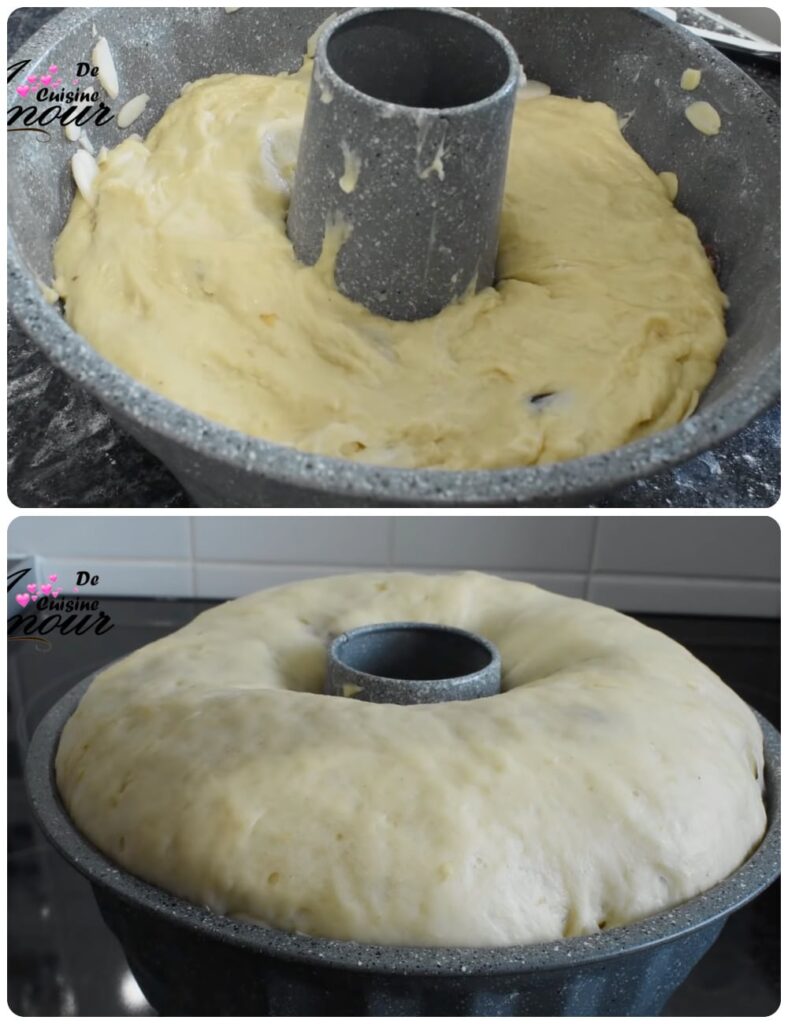
- Prepare the mold : Butter the mold very generously (especially the ridges). Place the almonds in the bottom.
- Shape a ring : Roll dough into a thick rope and form a large donut/ring. Place into the mold seam-side down.
- Second rise (the key to a fluffy crumb) : Let rise until doubled or even tripled and visibly airy. Do not rush this step.
- Finger test: press gently, if the dent springs back slowly, it’s ready.
- Bake : Bake at 180°C / 350°F for 30–35 minutes.
If using a thick ceramic mold, you may need a little longer. - Cool + finish : Rest 10 minutes, unmold onto a rack, cool completely, then dust with icing sugar.
Express troubleshooting (quick fixes)
- Dough doesn’t rise : Check yeast freshness, keep dough warm, and make sure milk wasn’t too hot.
- Rise is very slow : Normal in a cool kitchen; move to a gently warm spot and wait longer.
- Dough feels extremely sticky : Keep kneading; avoid adding lots of flour (use only a light dusting).
- Dough is dry/stiff : Flour may be absorbent; add 1-2 Tbsp milk gradually until supple.
- Butter leaks or dough tears : Butter was too cold; use very soft butter and add slowly.
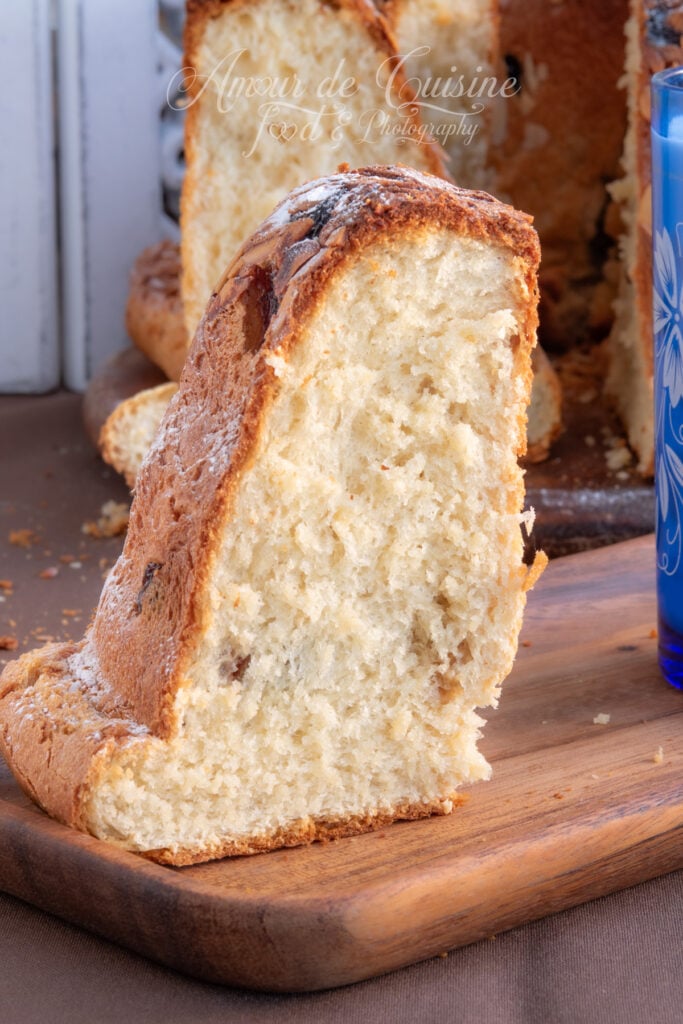
- Cake is dense : Under-kneaded or under-proofed; make sure dough is elastic and second rise is full.
- Cake collapses after baking : Over-proofed or under-baked; bake until fully set and adjust rise timing.
- Top browns too fast : Oven runs hot; tent with foil and/or reduce to 170–175°C.
- Center not baked : Bake a little longer (common with ceramic molds) and cool on a rack.
- Hard to unmold : Grease deeply and let rest 10 minutes before turning out.
- Raisins sink : Not dried enough or added too early; drain/pat dry and fold in near the end (lightly flouring raisins also helps).
- Raisins burn on the surface : Make sure they’re tucked inside during shaping.
- Almonds fall off : Press them gently into the buttered mold so they “anchor.”
- Flavour feels mild : Add vanilla, orange zest, or soak raisins in tea (or a splash of rum for a festive note).
Storage, freezing, reheating (keep it soft)
– Cool completely before storing : This prevents condensation, which can soften the crust and make it feel damp.
– Keep it soft for 2-3 days : Store at room temperature in a sealed bag or airtight container.
– Skip the fridge : Refrigeration dries out enriched yeast cakes surprisingly fast.
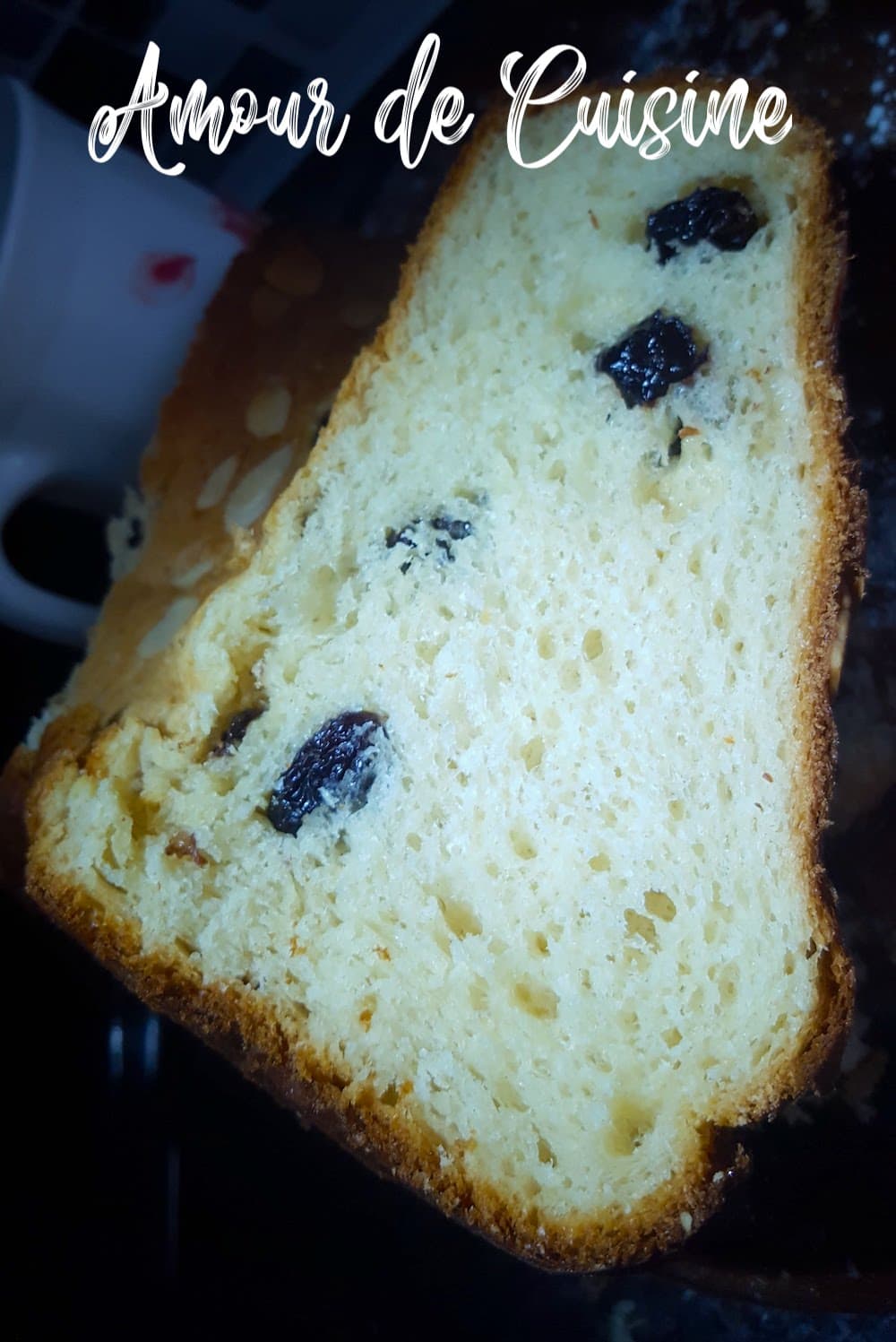
– Once sliced : Protect the cut side tightly (wrap it well or press it against a board) to limit drying.
– Freeze in slices : Wrap each slice individually (plastic wrap + freezer bag) so you can take out only what you need.
– Defrost gently : Leave at room temperature for 30-60 minutes, keeping it wrapped at first.
– Reheat quickly : Warm a slice 10-15 seconds in the microwave, or a few minutes in a low oven for a just-baked feel.
Other Brioches and Breads to try
- Panettone: Soft Italian Holiday Brioche
- Homemade sandwich bread
- Stollen with Marzipan : Traditional German Christmas Bread
- King’s Cake brioche from Provence-brioche des rois recipe
- Hokkaido Japanese Milk Bread
Gugelhupf (Kouglof) : Classic German Bundt Cake
- Total Time: 5 hours
- Yield: 12 servings 1x
Description
Traditional Alsatian kouglof, also known as gugelhupf, is an iconic yeast cake from Alsace. Baked in its fluted ring mold, it rises tall and tender. Studded with raisins and topped with almonds, it’s perfect for breakfast, brunch, or a cozy afternoon treat.
Ingredients
- 500 g all-purpose flour (T45/T55 style)
- 250 ml milk, lukewarm
- 100 g sugar
- 1 packet instant baker’s yeast (about 1 Tbsp)
- 1/4 tsp salt
- 2 whole eggs, room temperature
- 2 egg yolks, room temperature
- 150 g butter, very soft (room temperature)
- 150 g raisins
- Butter, for greasing the mold :
- 24 toasted almonds (or flaked almonds)
- Icing sugar, for dusting
Instructions
- Cover raisins with boiling water, or tea and let stand 10 minutes. Drain thoroughly and pat dry.
- In a mixer bowl: flour + sugar + salt + yeast. Mix briefly. (Keep salt and yeast on opposite sides at first.)
- Add 2 eggs + 2 yolks. Start mixing on low until combined.
- Add the milk gradually while mixing. The dough will look soft and sticky, that’s normal.
- Knead 10 minutes on medium speed. The dough should become more elastic and start pulling from the bowl a little.
- Add very soft butter in small pieces, waiting for each addition to absorb before adding more.
(At first the dough can look like it’s “breaking”, keep going.) - Knead another 10 minutes until the dough is smooth, glossy, and stretchy.
- Cover and let rise 45-60 minutes (depending on room temperature) until doubled.
- On a lightly floured surface, gently deflate the dough and fold in the raisins just until evenly distributed.
- Butter the mold very generously (especially the ridges). Place the almonds in the bottom.
- Roll dough into a thick rope and form a large donut/ring. Place into the mold seam-side down.
- Let rise until doubled or even tripled and visibly airy. Do not rush this step.
- press gently, if the dent springs back slowly, it’s ready.
- Bake at 180°C / 350°F for 30–35 minutes.
If using a thick ceramic mold, you may need a little longer. - Rest 10 minutes, unmold onto a rack, cool completely, then dust with icing sugar.
- Prep Time: 30 min
- Rest/Rise time: 4 hours
- Cook Time: 30 min
- Category: brioche
- Cuisine: Alsatian cuisine
Nutrition
- Serving Size: 1 serving
- Calories: 360 kcal