
Homemade Butter Puff Pastry

Homemade butter puff pastry turns out crisp, golden, and beautifully layered with a straightforward 6-turn method and chilled rests.
This guide walks you through each step, with temperature cues, freezing tips, and easy ways to use it in sweet or savoury bakes.
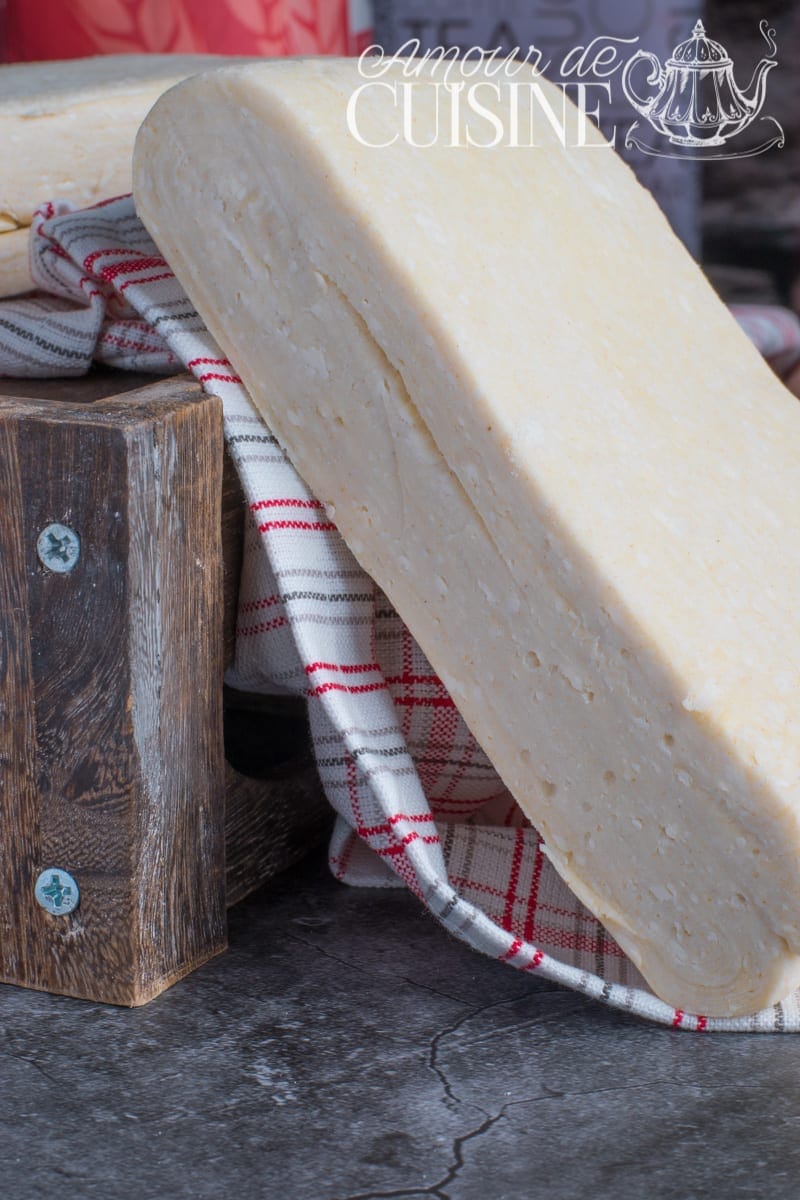
Homemade Butter Puff Pastry Recipe (Traditional 6-Turn Method
Homemade puff pastry has that unbeatable something extra, and this butter version is the best proof.
It’s not difficult at all, just a little slow, because the dough needs time to chill between turns.
You’ll spend about 30 minutes hands-on, then let the fridge do the heavy lifting for a total of roughly 3 hours 30 minutes (30 min + 1 h + 1 h + 30 min).
The method is beginner-friendly, as long as you follow the temperature cues: keep the dough cold but flexible, and the butter firm so it laminates into neat layers instead of cracking or leaking.
Once baked, the pastry puffs up into light, golden sheets that shatter delicately with every bite, exactly the kind of crisp you can’t fake.
This batch gives you enough for several uses: two rounds for a generous Galette des Rois, or multiple bases for thin tarts, appetizers, and savory bakes.
Freeze it up to two months, tightly wrapped, for later. Add homemade frangipane, and it’s pure magic.
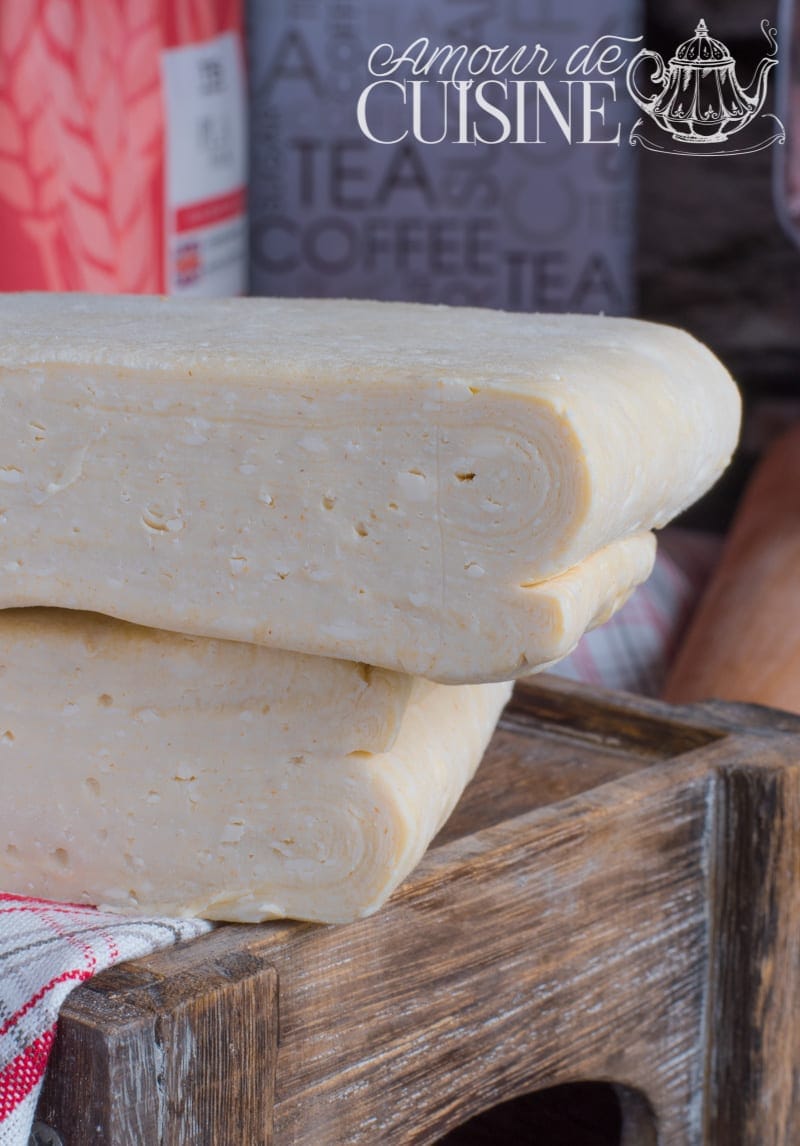
Ingredients for puff pastry dough (détrempe + butter block)
– For the dough (détrempe)
- 400 g all-purpose flour (or French T45/T55): sift if you can for smoother rolling.
- 200 ml cold water: helps keep the dough firm and the butter stable during laminating.
- 50 g softened butter (room temperature, not melted): makes the dough supple and easier to roll.
- 7 g salt (about 1 slightly heaped tsp): improves flavor and balances the richness.
– For laminating
300 g good-quality butter: firm, cold, and not spreadable butter (avoid margarine and “butter for toast”).
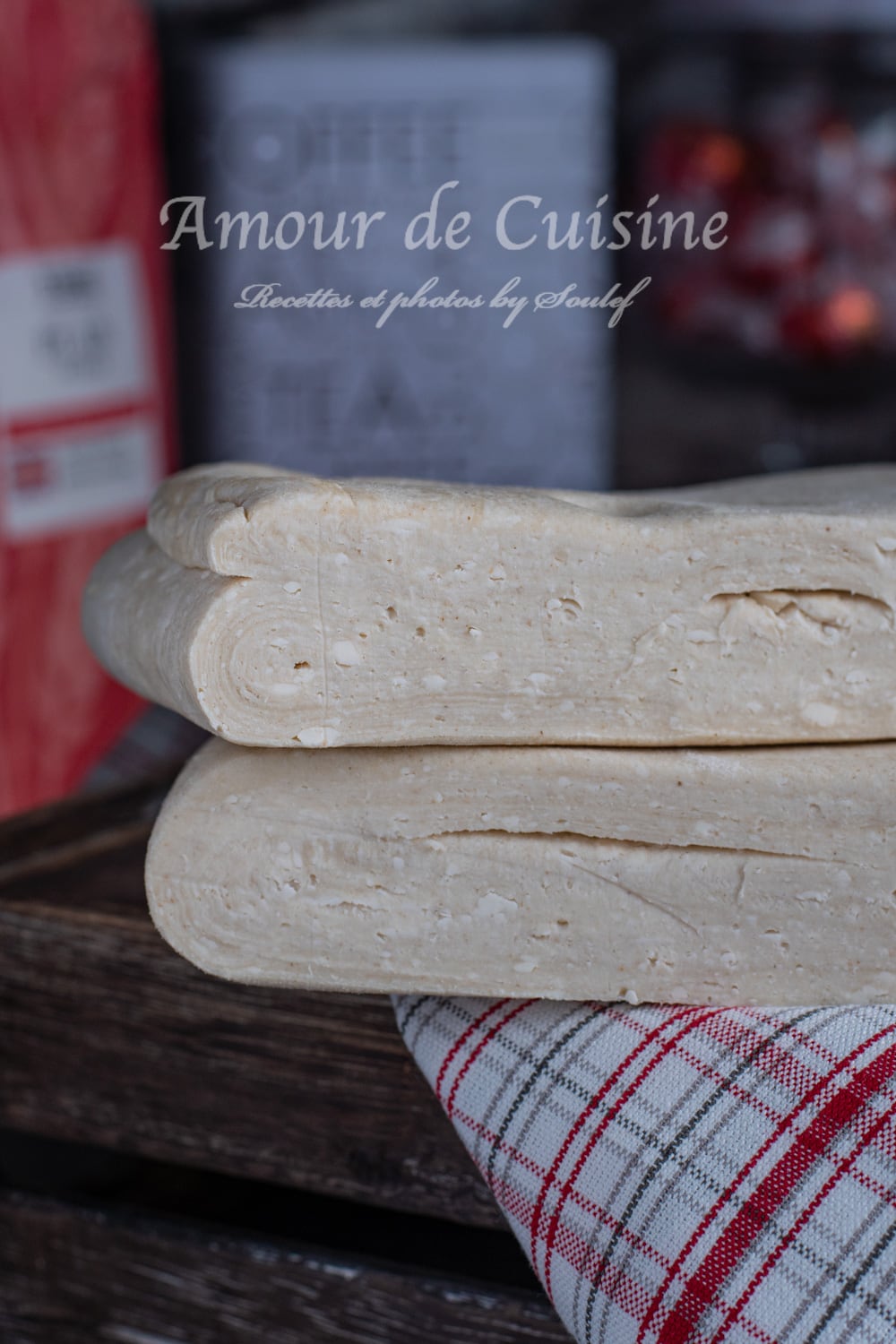
Temperature guide: the secret to predictable results
This is the real pain point in puff pastry: butter that cracks (too cold) or leaks (too warm).
– Your goal: dough that’s cold but flexible, and butter that’s firm but pliable (similar texture).
– Simple checks:
- Butter cracks or breaks under the rolling pin, too cold (rest 5-10 minutes at room temp).
- Butter softens and squeezes out, too warm (stop and chill 10-15 minutes).
– Helpful range (indicative): some methods aim for dough around 2–7°C / 35–45°F while laminating.
– If the dough warms up:
- Chill 10-15 minutes
- Use minimal flour (too much dries the dough)
- Work quickly and gently, without pressing aggressively
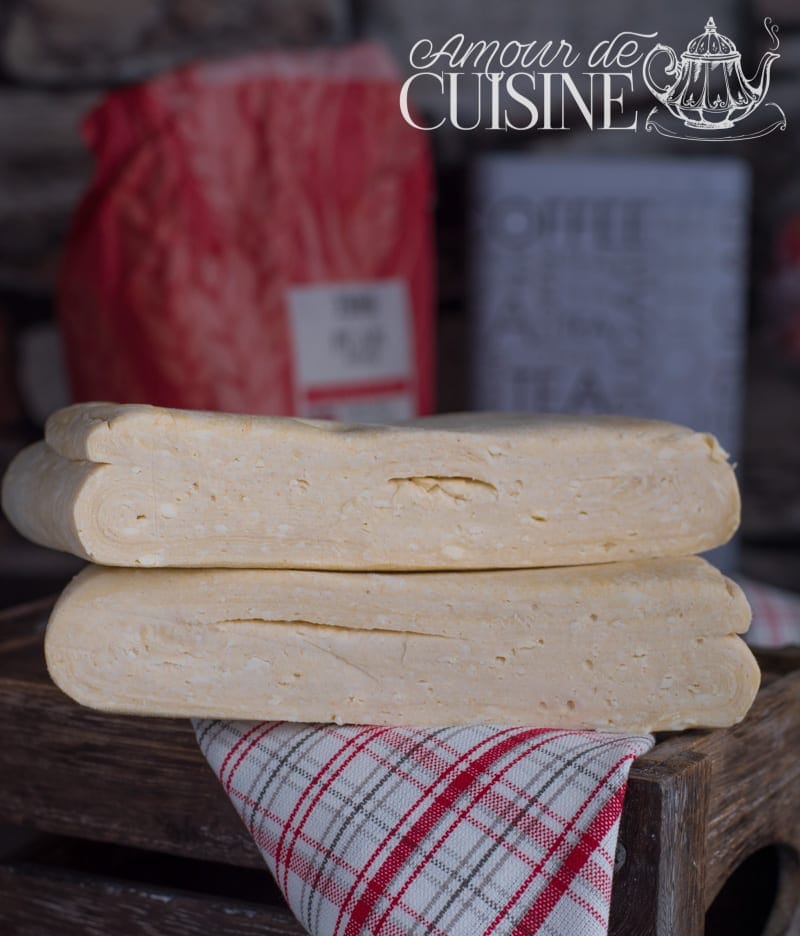
Step-by-step: traditional butter puff pastry (6 turns)
1) Make the détrempe (base dough)
- Mix flour and salt.
- Add the cold water, then the softened butter.
- Knead just until smooth and combined (don’t overwork).
- Shape into a rectangle, wrap tightly, and chill 30 minutes.
2) Prepare the butter block
- Place the cold butter in a zip-top bag (or between two sheets of baking paper).
- Roll/flatten into a neat square.
- Chill until firm but workable.
3) Bring dough and butter to a similar texture
- Take both out for a few minutes.
- You want butter that bends slightly—not rock hard, not soft.
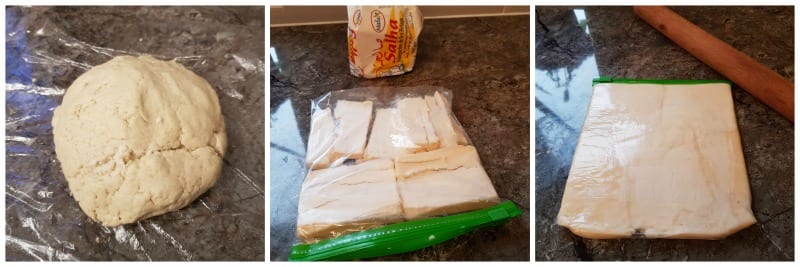
4) Enclose the butter
- Lightly flour the work surface.
- Roll the dough into a cross shape: keep the center slightly thicker and roll out four “arms”.
- Place the butter square in the center.
- Fold the four sides over to fully seal the butter inside.
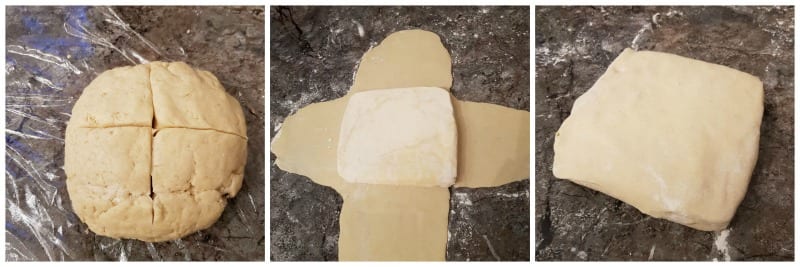
5) Turns 1 and 2 (letter folds)
- Tap the dough gently with the rolling pin to spread butter evenly (don’t push it out).
- Roll into a long rectangle.
- Fold like a letter: bottom third up, top third down.
- Turn the dough 90° so the fold is on the right.
- Roll again into a long rectangle and repeat the fold. You’ve done 2 turns.
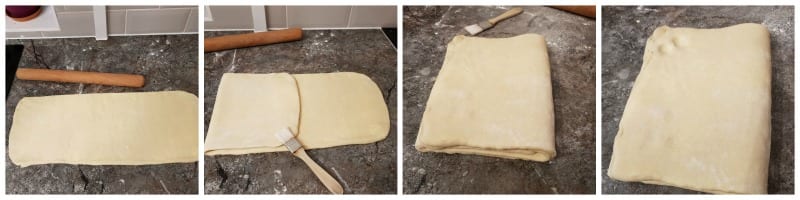
6) Chill
- Wrap and chill 1 hour.
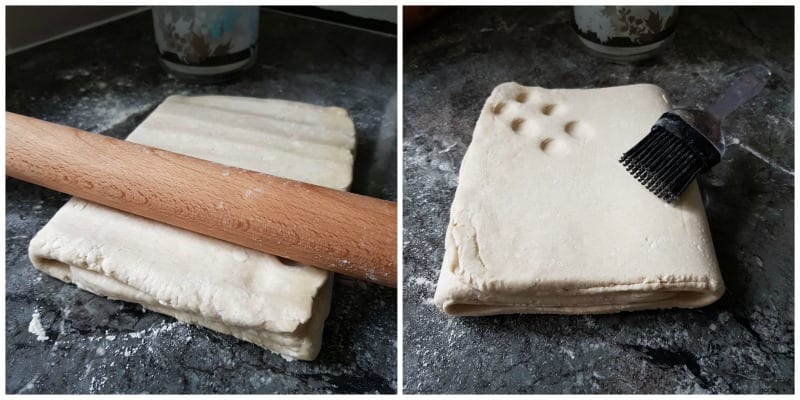
7) Turns 3 and 4
- Place the dough with the fold on the right.
- Roll into a rectangle, fold in thirds.
- Repeat once more. You’ve done 4 turns.
8) Chill again
- Wrap and chill 1 hour.
9) Turns 5 and 6
- Same method: fold on the right, roll, fold.
- Repeat once more. You’ve completed 6 turns.
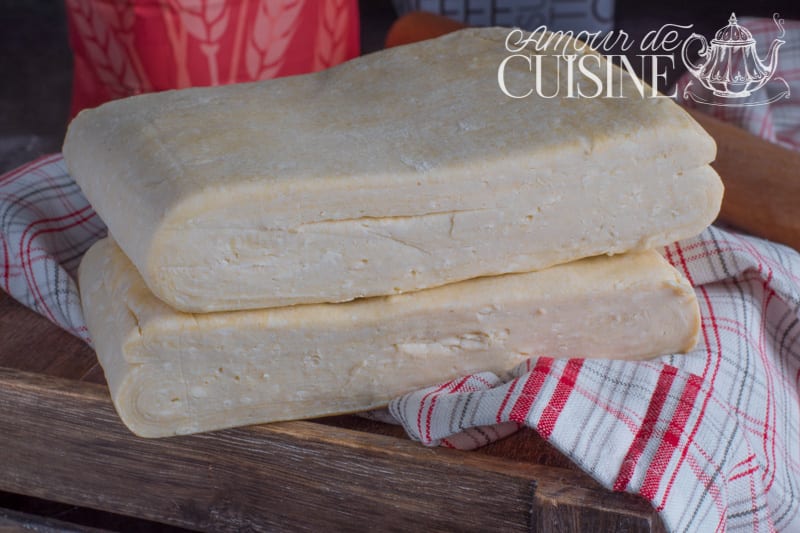
Your puff pastry is ready. Keep it chilled until you need it.
Storage and freezing
– Fridge (short term)
- Wrap tightly (plastic wrap against the dough) or use an airtight container.
- Keeps 3-4 days (up to 5 if very well protected).
– Freezer (long term)
- Double-wrap: plastic wrap + freezer bag (protect from air and moisture).
- Freeze up to 2 months.
– Best thawing method
- Thaw overnight in the fridge.
- If it softens while you work: chill 10-15 minutes before rolling.
In short: fridge for a few days, freezer for 2 months, and always thaw slowly in the fridge.
Baking tips: should puff pastry be baked cold?
Yes, always bake it cold.
- At room temperature, the dough softens, spreads, and the layers stick together.
- Cold dough gives butter time to melt slowly in the oven, helping the pastry rise beautifully and form light, crisp layers.
Prevent soggy puff pastry
Puff pastry can turn soft in the middle for several reasons, one common issue is thawing frozen pastry too long on the counter.
- Best method: thaw overnight in the fridge.
- It takes longer, but the pastry stays firm and bakes up much more reliably.
Frequently Asked Questions for Homemade Puff Pastry
– Should puff pastry be baked cold? Yes, this is essential. If the dough is too warm, it turns soft and spreads: the layers stick together, it puffs less, and it’s harder to handle. When it’s well chilled, the butter melts more slowly in the oven, helping the pastry rise and form light, distinct layers.
– Can I make puff pastry the day before? Absolutely. You can make it ahead and keep it well wrapped in the fridge for 3-4 days (up to 5). For longer storage, freeze it for up to 2 months, tightly wrapped to protect it from air and moisture.
– How do I prevent soggy or overly soft pastry? This often happens when frozen pastry is left to thaw too long at room temperature. For best results, thaw it in the fridge (ideally overnight). It takes longer, but the texture is much more reliable.
– Why didn’t my pastry rise / why are the layers weak? Common causes: butter too warm, uneven turns, resting times too short, or an oven that wasn’t fully preheated.
– What if the butter cracks while rolling? The butter is too cold. Let it sit 5-10 minutes, gently tap with the rolling pin, then continue slowly.
– What if butter leaks out during laminating? The dough is too warm. Chill it again, use a light dusting of flour, and roll more gently.
– Why does my pastry shrink in the oven? It usually needs more resting time, or the dough was overworked.
– Should I dock (prick) puff pastry? Yes for thin tarts/quiches (to limit puffing). Not always for pastries where you want maximum lift.
– How do I get well-risen edges? Cut cleanly with a sharp knife, avoid pressing the edges with the rolling pin, and bake the pastry very cold.
– Can I refreeze thawed puff pastry?It’s best to avoid, especially if it has started to soften.
Recipes to try with puff pastry
- Pesto Tarte soleil recipe : homemade sun tart
- Classic French Apple Tarte Tatin
- quiche lorraine recipe

foolproof Homemade Butter Puff Pastry
- Total Time: 3 hours 30 minutes
- Yield: 960 g 1x
Description
Homemade butter puff pastry turns out crisp, golden, and beautifully layered with a straightforward 6-turn method and chilled rests. This guide walks you through each step, with temperature cues, freezing tips, and easy ways to use it in sweet or savoury bakes.
Ingredients
For the dough (détrempe)
- 400 g all-purpose flour
- 200 ml cold water
- 50 g softened butter (room temperature, not melted)
- 7 g salt
For laminating
- 300 g good-quality butter
Instructions
1) Make the détrempe (base dough)
- Mix flour and salt.
- Add the cold water, then the softened butter.
- Knead just until smooth and combined (don’t overwork).
- Shape into a rectangle, wrap tightly, and chill 30 minutes.
2) Prepare the butter block
- Place the cold butter in a zip-top bag (or between two sheets of baking paper).
- Roll/flatten into a neat square.
- Chill until firm but workable.
3) Bring dough and butter to a similar texture
- Take both out for a few minutes.
- You want butter that bends slightly, not rock hard, not soft.
4) Enclose the butter
- Lightly flour the work surface.
- Roll the dough into a cross shape: keep the center slightly thicker and roll out four “arms”.
- Place the butter square in the center.
- Fold the four sides over to fully seal the butter inside.
5) Turns 1 and 2 (letter folds)
- Tap the dough gently with the rolling pin to spread butter evenly (don’t push it out).
- Roll into a long rectangle.
- Fold like a letter: bottom third up, top third down.
- Turn the dough 90° so the fold is on the right.
- Roll again into a long rectangle and repeat the fold. You’ve done 2 turns.
6) Chill
- Wrap and chill 1 hour.
7) Turns 3 and 4
- Place the dough with the fold on the right.
- Roll into a rectangle, fold in thirds.
- Repeat once more. You’ve done 4 turns.
8) Chill again
- Wrap and chill 1 hour.
9) Turns 5 and 6
- Same method: fold on the right, roll, fold.
- Repeat once more. You’ve completed 6 turns.
- Prep Time: 30 min
- resting time: 3 hours
- Category: basic pastry
Nutrition
- Serving Size: 100 g
- Calories: 414 kcal