French Flan Pâtissier Recipe (French Custard Tart)

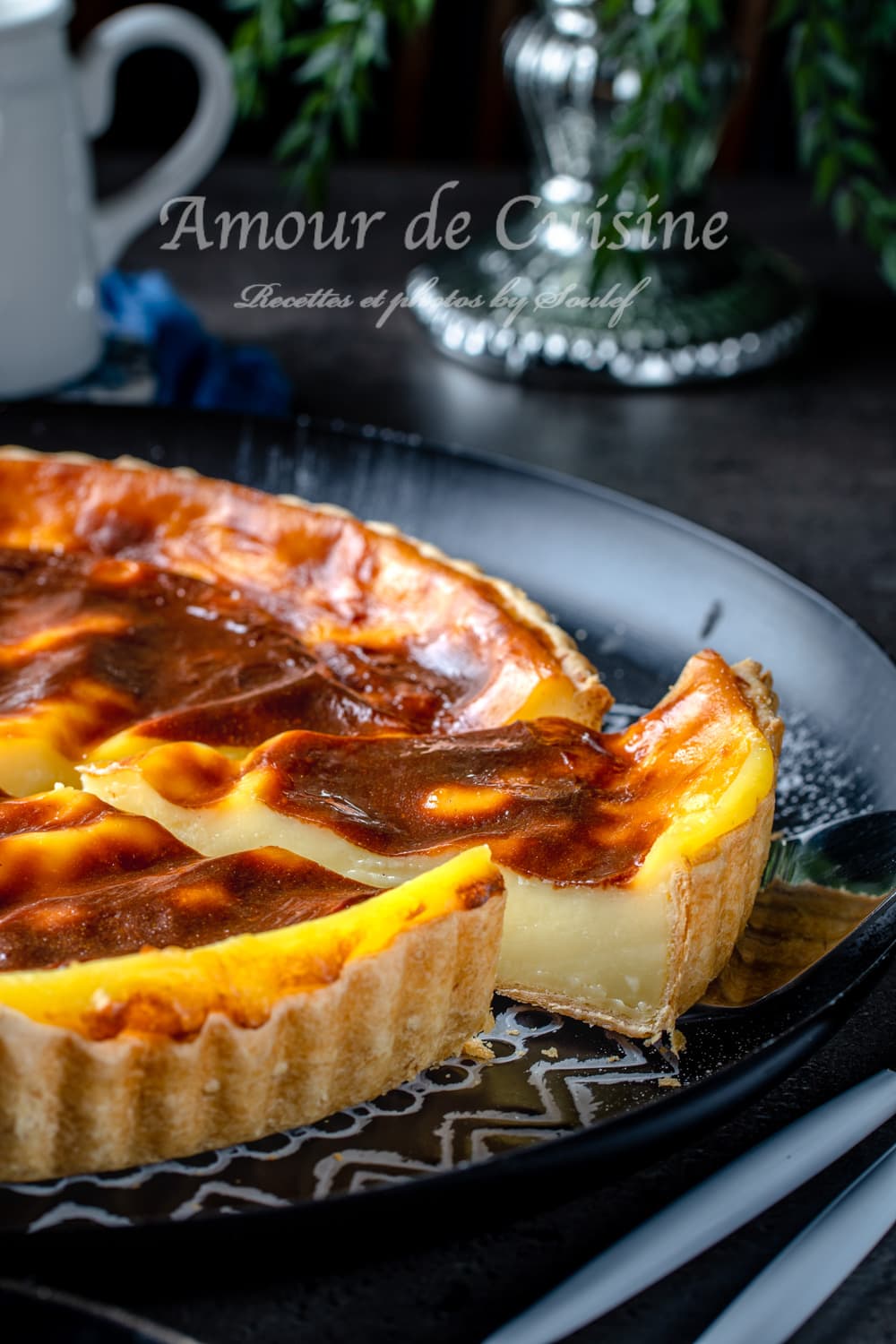
French Flan Pâtissier is a classic vanilla custard tart with a creamy, set centre and a crisp pastry base.
This easy, reliable method includes clear visual cues, pan-size guidance, and practical tips for clean slices every time.
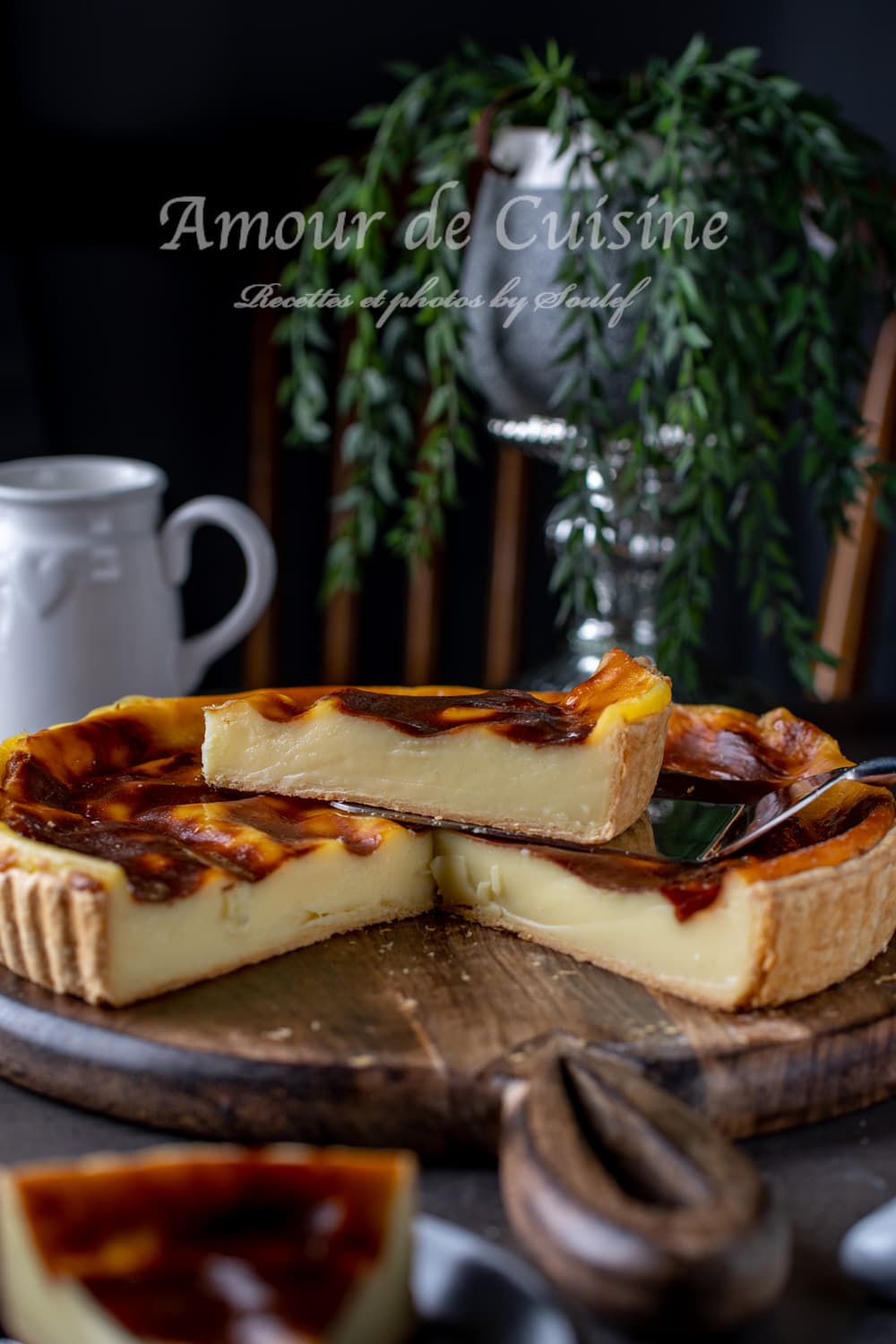
Foolproof Parisian Flan : Custard tart
If there’s one dessert that always appeared on weekend afternoons, it’s this French Parisian flan.
That warm vanilla aroma still takes me straight back to childhood, when the kitchen felt cosy and the first slice was always the prize.
What I love most is how simple it is: a smooth, pastry-cream-style custard, baked until set but still softly creamy.
You can keep it classic on puff pastry for a light, crisp base, choose shortcrust for extra crunch, or skip the crust entirely when you’re short on time.
This puff pastry version is a true French favourite, and it’s easier than it looks.
With a few clear visual cues, no whisking at the wrong moment, no overbaking, you’ll avoid lumps, a runny centre, or a soggy bottom.
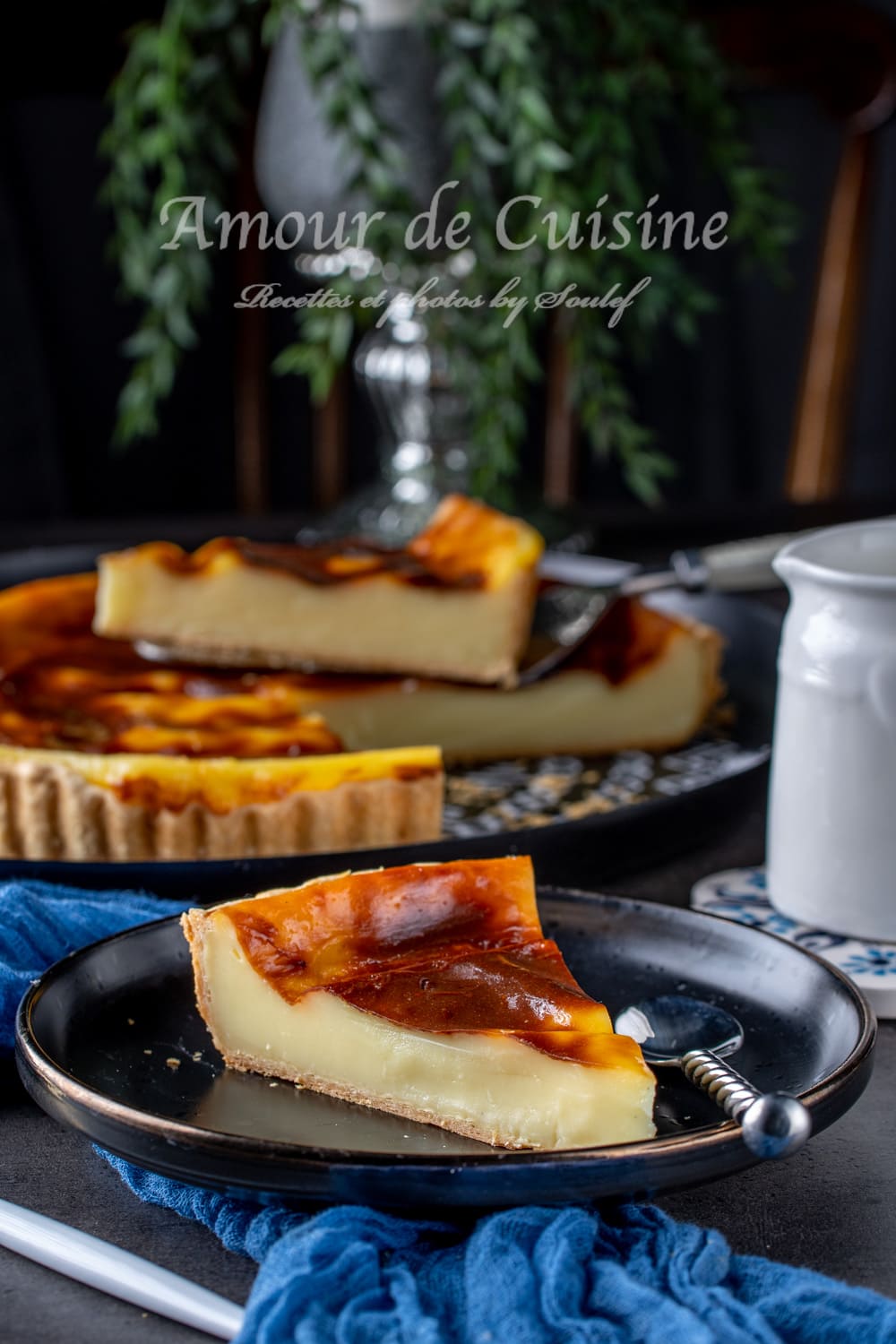
Chill it well before slicing for neat, bakery-style cuts.
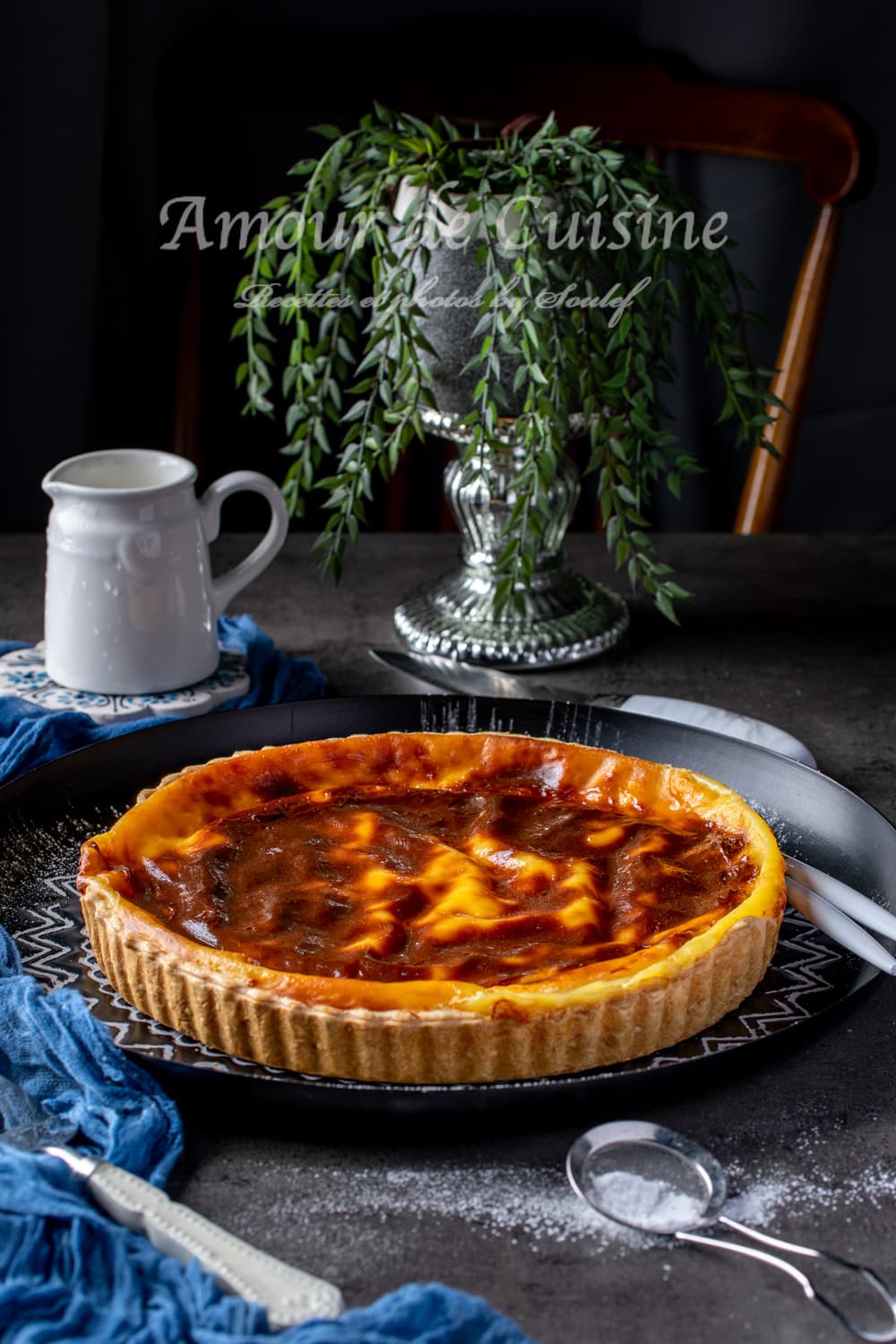
Flan Pâtissier vs Flan Parisien: what’s the difference?
This question comes up all the time, and honestly, the names are often used interchangeably. In many cases, they refer to the same vanilla baked custard. The main difference is whether there’s pastry.
- Flan pâtissier is often the simplest version, made without a crust.
- When the custard sits on a pastry base, like puff pastry in this recipe, it’s commonly called flan parisien.
Whatever you call it, it’s the same comforting dessert. Today’s recipe is the puff pastry version, which readers often request because it’s quick, especially with store-bought pastry.
If you prefer homemade, a quick “rough puff” works too. And if you ask me, I have a soft spot for shortcrust under flan.
Ingredients for French Flan Pâtissier (Vanilla Custard Tart)
- 1 sheet puff pastry: Ideally all-butter for the best flavour and a crispier base. Use store-bought to save time, or make your own for a more traditional result.
- 1 litre semi-skimmed milk: A good balance of creaminess and lightness. Swap for whole milk if you want an even richer texture.
- 3 whole eggs (medium/size M): They set and bind the custard without making it heavy.
- 160 g caster sugar (or granulated sugar): Adjust slightly to taste; this amount stays sweet but not cloying.
- 100 g cornflour (cornstarch): The key to a smooth, firm custard. Avoid substituting with flour, which makes the texture heavier.
To flavour the flan (choose one option):
- 2 sachets vanilla sugar (usually about 7.5 g each)
- 3 tsp liquid vanilla extract
- 1/2 tsp vanilla powder (very intense)
- 1 vanilla pod, split and seeds scraped (most natural and fragrant)
Puff pastry or shortcrust: which is best for flan?
It really comes down to texture preference.
- Shortcrust pastry gives a crisper bite and a strong contrast with the custard.
- Puff pastry is lighter and softer, but it needs the right bake so it doesn’t stay pale or soggy.
Time-wise, there’s not a big difference, the custard (and especially the cooling time) is what takes patience.
Key rule: never pour hot custard onto the pastry, or the base can turn wet.
For shortcrust, blind-baking is a great option; for puff pastry, fill only once the custard has cooled down.
How to Make French Flan Pâtissier on Puff Pastry (Step-by-Step)
- If you’re making homemade puff pastry, start with the dough and cook the custard early. By the time you’ve finished the folds, the custard will be at the right temperature to fill the tart.
Pastry cream for flan (with whole eggs)
- For flan, I prefer using whole eggs (instead of yolks only): it avoids leftover whites and gives a better set.
- In a mixing bowl, whisk (or use an electric mixer) together:
- 3 eggs, cornflour (cornstarch), vanilla extract, and 125 ml milk (taken from the 1 litre).
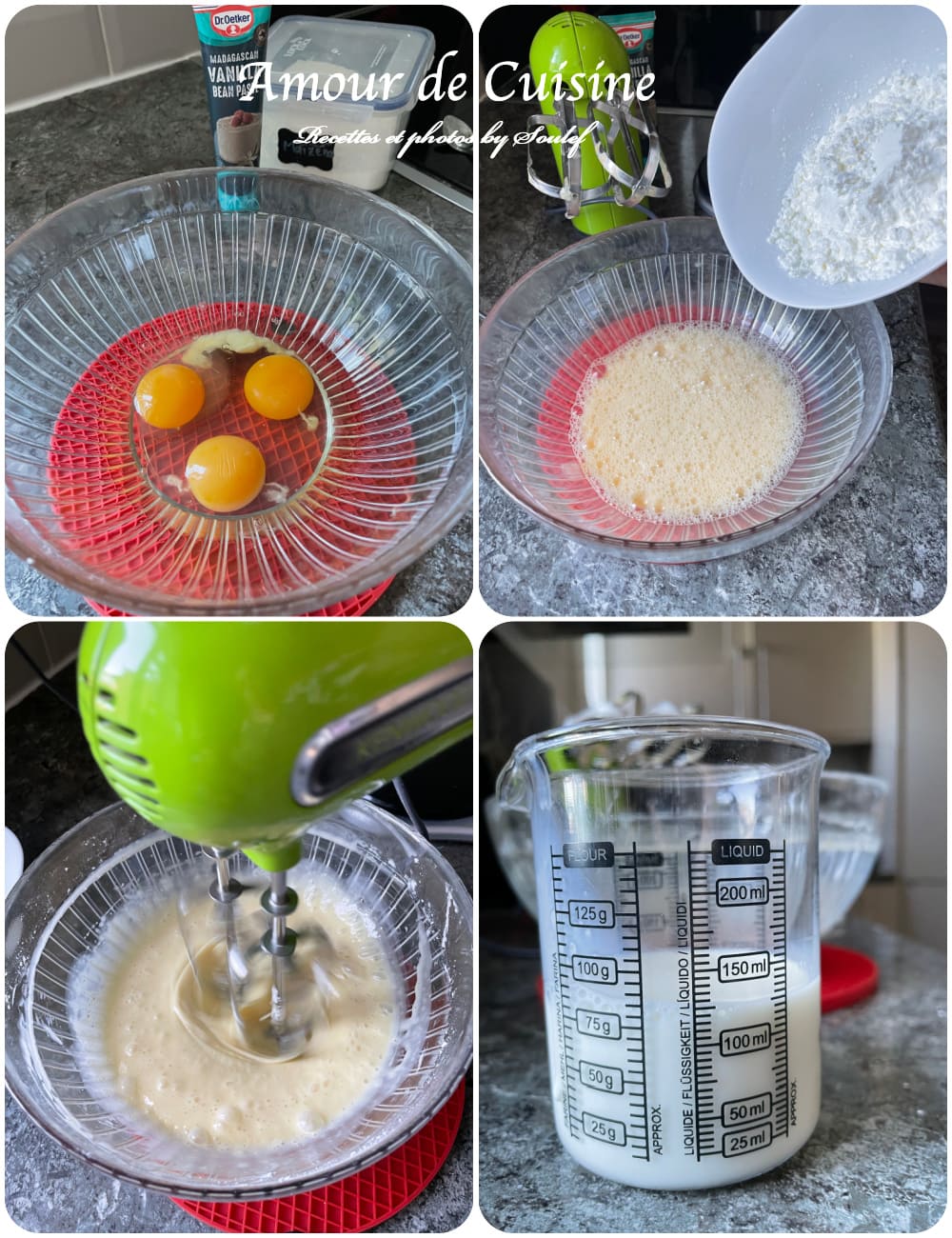
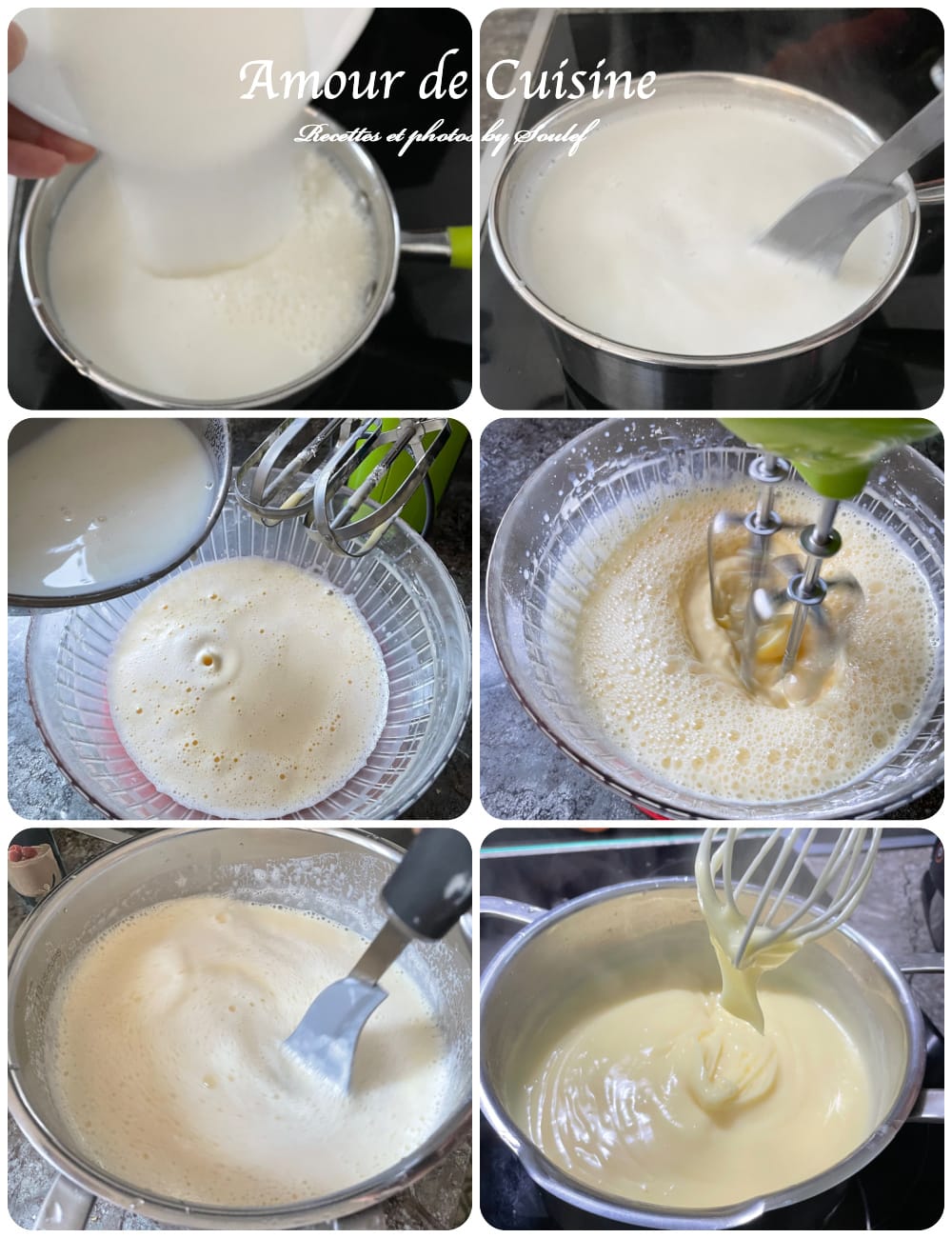
- In a saucepan, heat the remaining milk with the sugar, vanilla sugar, and vanilla powder (if using).
- Bring to a boil.
- Pour the hot vanilla milk onto the egg mixture while whisking continuously.
- Return everything to the saucepan and cook on very low heat, stirring constantly with a wooden spoon/spatula.
- Let it gently bubble for a few seconds only, until slightly thickened.
- Transfer to a clean bowl and cover directly on the surface with cling film to prevent a skin.
- Leave to cool completely before using.
Assemble and bake the flan
- While the custard cools, roll out the puff pastry to about 5 mm thick.
- Line a tart tin 22–24 cm wide and about 3.5 cm deep.
Pan size reminder
- 22–24 cm gives a flan around 3 cm tall, creamy and well set.
- Larger tin: thinner flan → bake a little less.
- Smaller tin: thicker flan → bake a little longer, watch the centre.
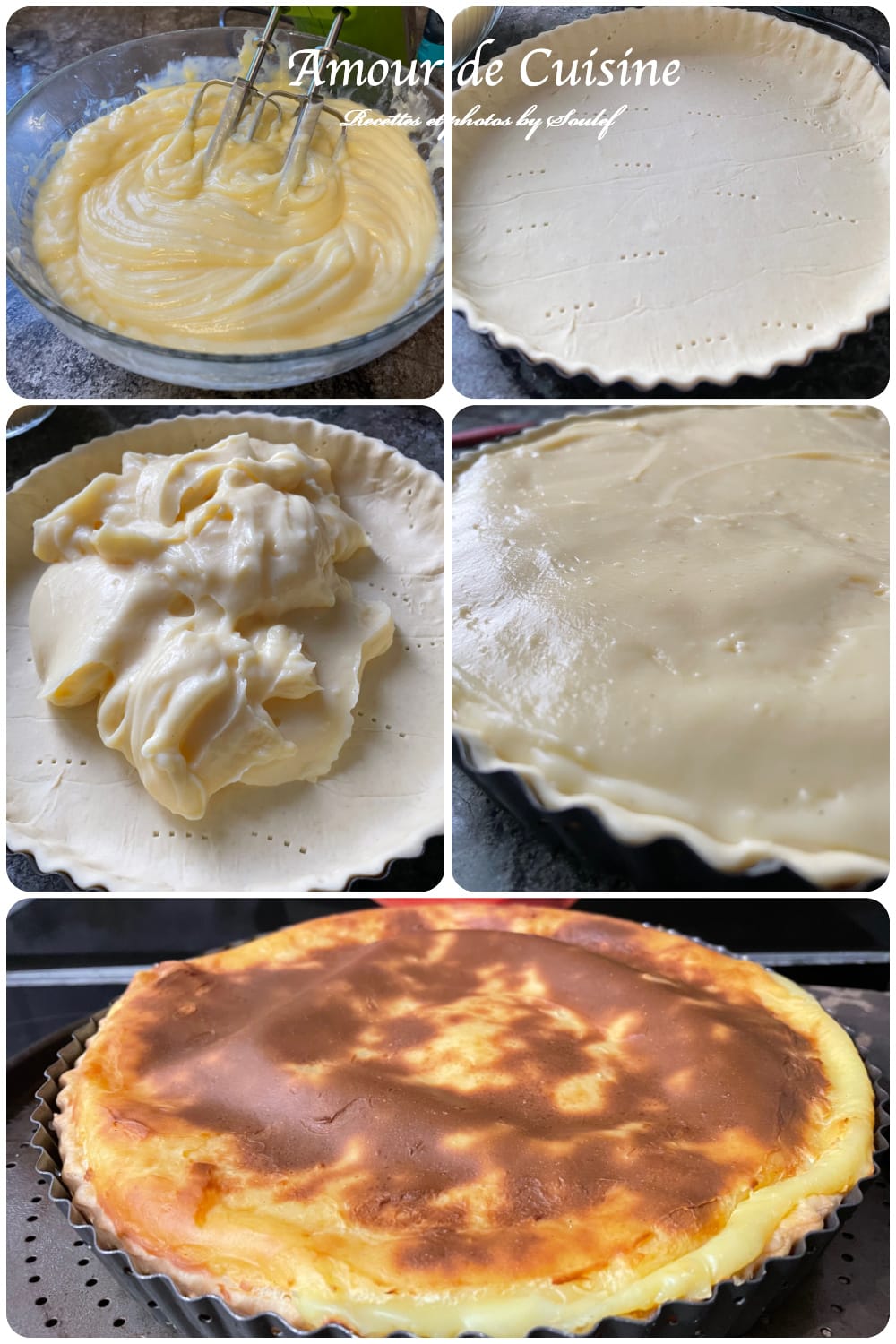
- Bake on the second shelf from the bottom in a preheated oven for 30–40 minutes.
- Make sure the pastry base is fully baked; then you can switch to fan/convection briefly to deepen the colour on top.
- When golden and set, remove from the oven and cool on a rack before unmoulding.
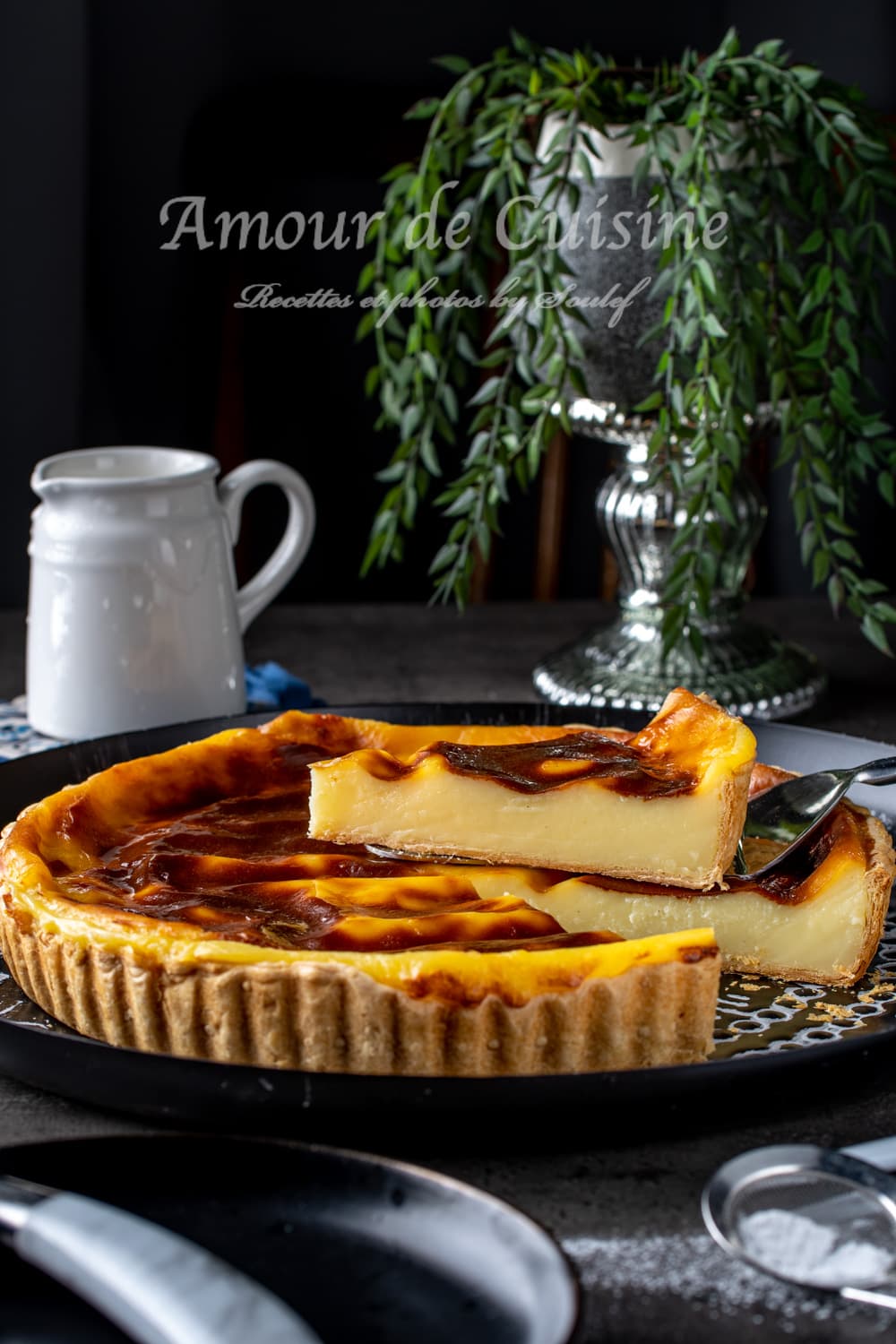
- Chill well before serving for the cleanest slices.
Tips for a Perfect French Flan Pâtissier
- Use room-temperature ingredients: This helps the custard blend smoothly and reduces the risk of lumps.
- Sift the cornstarch (cornflour): Well-sifted cornstarch mixes more evenly and prevents clumps in the pastry cream.
- Thicken the custard properly: It should look like a thick béchamel before you pour it into the tin; otherwise, the flan may not set well in the oven.
- Let the custard cool slightly before filling: Pouring it in while it’s too hot can soften the pastry, especially if the base isn’t pre-baked.
- Pre-bake the pastry if needed: This is especially helpful with shortcrust, a quick blind bake keeps the base crisp.
- Choose a deep tin: A taller mould gives you that thick, even bakery-style flan.
- Chill before slicing: The flan needs several hours in the fridge to fully set and cut neatly.
Storage, freezing, and reheating
- Fridge: keep 3-4 days in an airtight container (or tightly wrapped) to prevent fridge smells.
- Expected texture: it firms up in the cold and usually slices best the next day.
- Freezing: up to 1 month, ideally in individual slices, well wrapped. The pastry may lose some crispness.
- Defrost: overnight in the fridge.
- Reheat: a few minutes in a low oven to warm gently (microwave tends to soften the pastry).
FAQ: your flan pâtissier questions
- Can I make flan the day before? Yes, resting time helps the custard settle and the flavour develop.
- Why does flan sometimes crack on top? Usually from heat that’s too high or baking a bit too long, which dries the surface.
- How do I get a smooth, even top? Pour the custard in one go and level it gently before baking.
- Can I flavour it beyond vanilla? Yes: orange zest, tonka bean, or orange blossom water work beautifully.
- Do I need to grease the pan if I’m using pastry? A light greasing helps unmoulding, especially with a ring mould.
Other desserts to try
Foolproof French Flan Pâtissier Easy Recipe
- Total Time: 0 hours
- Yield: 8 servings 1x
Description
French Flan Pâtissier is a classic vanilla custard tart with a creamy, set centre and a crisp pastry base. This easy, reliable method includes clear visual cues, pan-size guidance, and practical tips for clean slices every time.
Ingredients
- Puff pastry
- 1 L semi-skimmed milk
- 3 eggs
- 160 g sugar
- 100 g cornstarch (cornflour)
- 2 sachets vanilla sugar, or 3 tsp vanilla extract, or 1/2 tsp vanilla powder, or 1 vanilla pod
Instructions
Pastry cream
- In a bowl, using an electric whisk, beat the eggs with the cornstarch, vanilla extract, and 125 ml milk (taken from the 1 litre).
- Pour the remaining milk into a saucepan with the vanilla sugar, sugar, and vanilla powder.
- Bring to a boil.
- Pour the boiling vanilla milk over the egg mixture while whisking (electric whisk).
- Pour everything back into the saucepan and cook over very low heat, stirring constantly with a wooden spatula.
- Let it gently bubble for a few seconds only; the mixture should thicken slightly.
- Transfer the pastry cream to a clean bowl and cover directly on the surface with cling film to prevent a skin.
- Let it cool completely before using.
Assemble the flan
- While the pastry cream cools, roll out the puff pastry to about 5 mm thick.
- Line a tart tin about 22–24 cm wide and about 4 cm deep.
- Refrigerate.
- Once the pastry cream is fully cooled, preheat the oven.
- Heat the oven to 180°C, bottom heat. If your oven runs hot, reduce to 170°C before baking for more even cooking of the puff pastry.
- Whisk the pastry cream to loosen it.
- Remove the chilled pastry case and prick the base with a fork.
- Pour in the pastry cream and smooth the surface.
- Bake on the second shelf from the bottom for 30–40 minutes.
- Make sure the puff pastry base is fully baked; then you can switch to fan/convection to colour the top nicely.
- When the flan is fully baked and nicely coloured, remove from the oven and cool on a wire rack before unmoulding.
- Let it cool completely before serving.
- Prep Time: 20 min
- temps de refroidisssement/repos: 1 heure
- Cook Time: 40 min
Nutrition
- Serving Size: 1 serving
- Calories: 380 kcal