Foolproof Kalb el Louz (Qalb Ellouz)

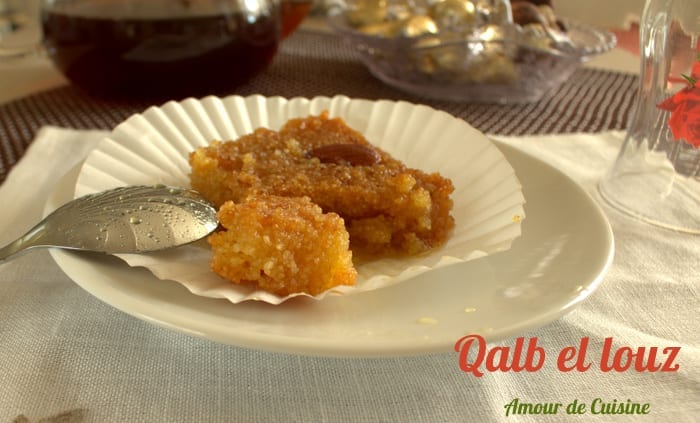
Kalb el Louz (Qalb Ellouz) is a beloved Algerian Ramadan semolina cake soaked in orange blossom syrup. With the right coarse semolina and a 24-hour rest, you get tender, glossy pieces perfect with mint tea.
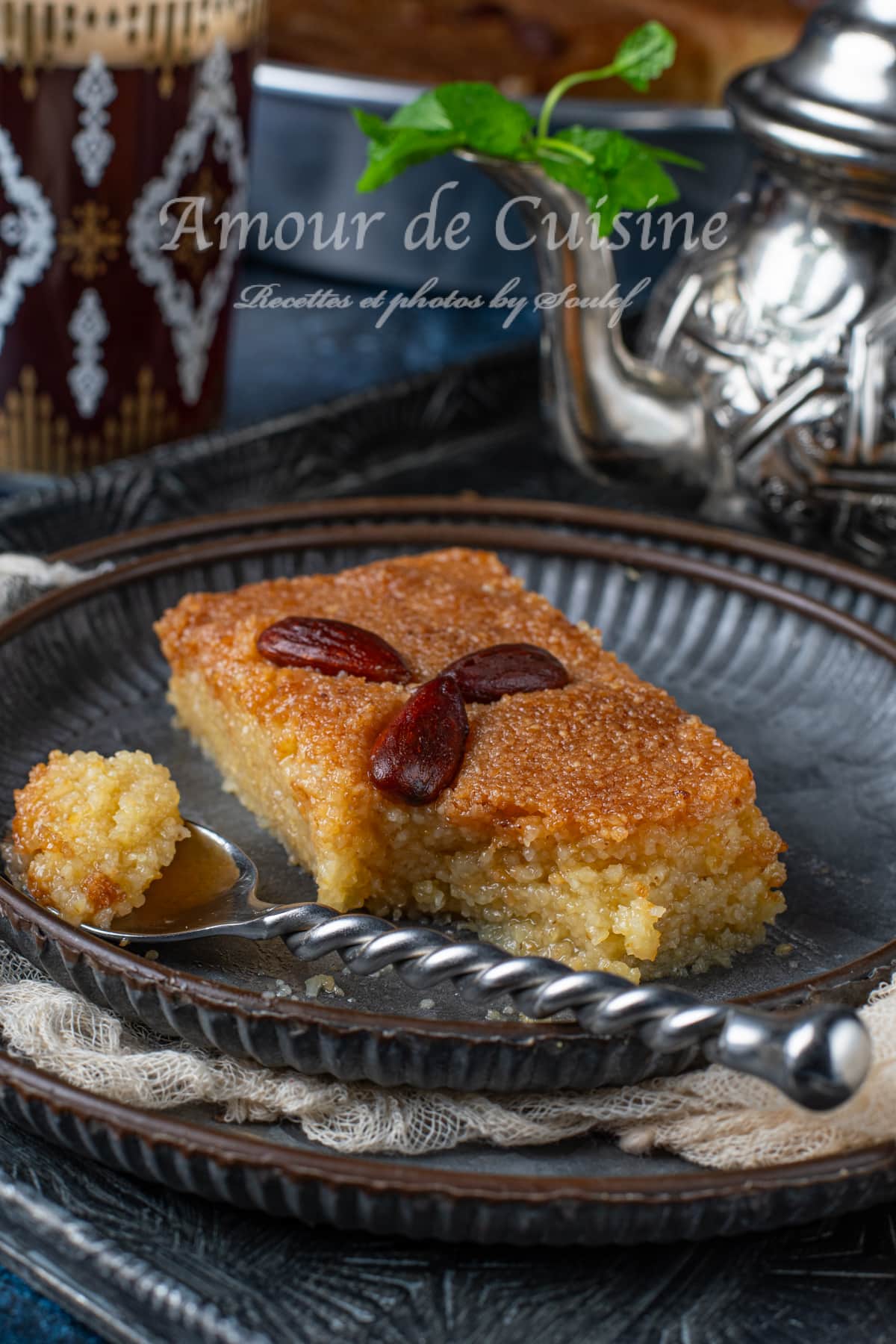
Foolproof Kalb el Louz (Qalb Ellouz) : Algerian Semolina Syrup Cake for Ramadan
Kalb el Louz, also known as Qalb Ellouz (قلب اللوز) or Chamia, is one of the most anticipated sweets of Ramadan.
Even when the table is filled with zlabia, lokum (turkish delight), or halva, this semolina syrup cake is often the one everyone reaches for first.
If it’s missing, people notice, because its warm, comforting sweetness is perfect after iftar.
Most families have a “go-to” version they trust and remake every year.
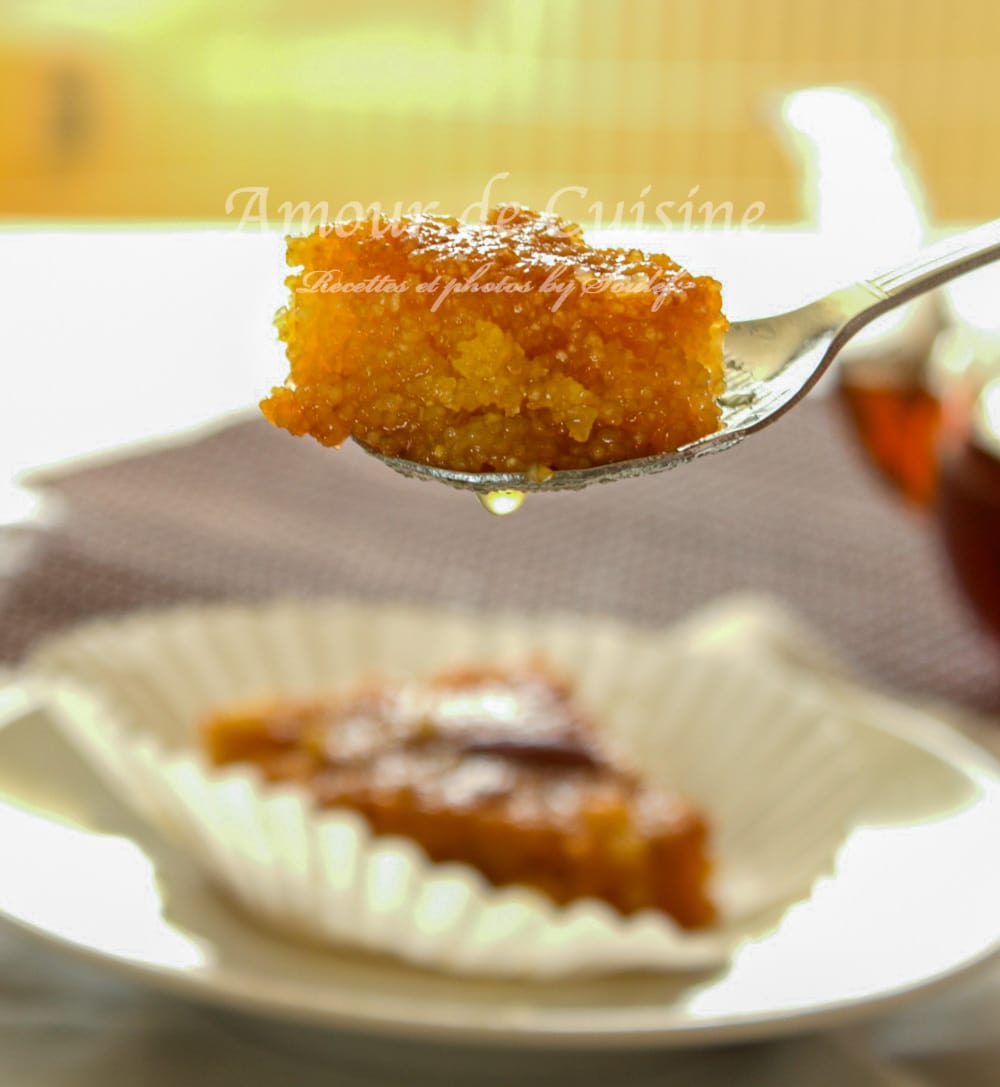
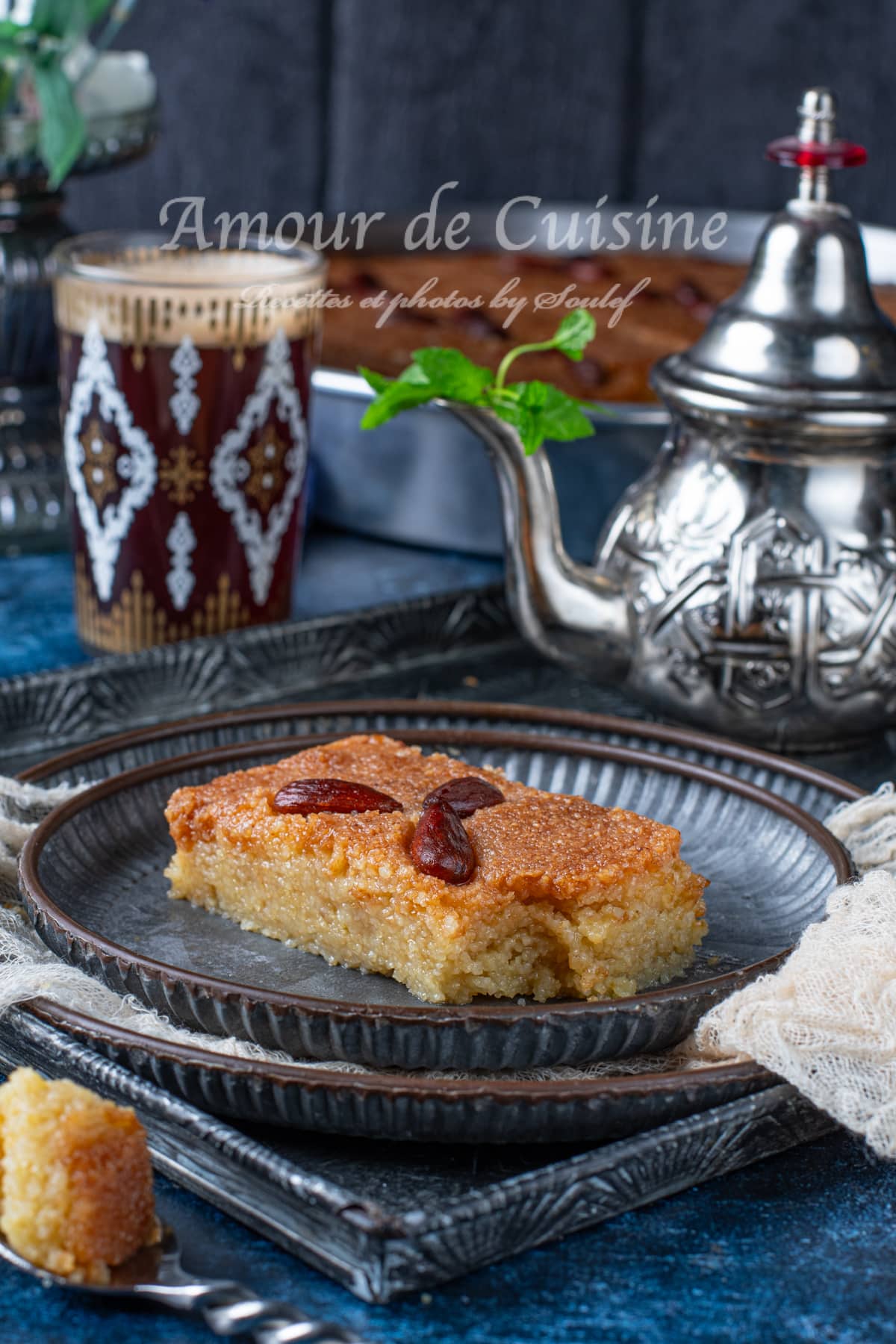
A truly good Kalb el Louz is easy to recognise: soft and tender without feeling heavy, evenly sweet, and gently scented, usually with orange blossom water.
Served with a glass of fresh mint tea, it turns into a quiet, cosy moment at the end of the meal.
On paper, the method looks simple, but success comes from the small details. The resting time, the right level of moisture, and pouring syrup at the right moment make all the difference.
Homemade also brings something special: that sweet aroma from the oven and the smiles with every bite.
Ingredients for Foolproof Kalb el Louz (Algerian Semolina Syrup Cake)
For the semolina cake
- 500 g coarse semolina : This is the key ingredient for texture. Coarse semolina helps the cake stay tender and moist instead of compact or hard.
- 250 g granulated sugar (the original version uses 375 g) : 250 g gives a more balanced sweetness, especially since the cake will be soaked in syrup.
- 125 g melted butter (or smen) : Butter adds richness and helps the semolina turn soft after soaking. Smen (clarified fermented butter) gives a deeper, traditional flavour.
- 125 ml liquid (65 ml orange blossom water + 60 ml water) : This moistens the semolina and starts the hydration process. Mixing orange blossom water with plain water keeps the flavour fragrant but not overpowering.
For the syrup
- 1 litre water : The base of the soaking syrup; it needs to be ready and fully cooled before you pour it on the hot cake.
- 500 g granulated sugar : Creates a clear syrup that gives the cake its glossy finish and signature moist bite.
- Juice of 1/4 lemon : Helps prevent the syrup from crystallising and adds a light, clean edge to the sweetness.
- 70 ml orange blossom water (about a small tea glass) : Adds the classic floral aroma. Stir it in only after the syrup has cooled so the fragrance doesn’t evaporate.
Optional almond filling (for a stuffed version)
- 1 measure ground almonds : Forms the “heart” of a stuffed Kalb el Louz, adding richness and a nutty bite.
- 1/4 measure sugar : Sweetens the filling gently without making it cloying.
- 2 tbsp melted butter : Binds the almonds so the filling stays moist and slices neatly.
- 2 tsp ground cinnamon : Brings warmth and a familiar spiced note that pairs beautifully with the syrup.
How to Successfully Make Kalb el Louz
A good Kalb el Louz always starts with one essential thing: the semolina. It’s what controls the texture, how well the cake absorbs the syrup, and how soft and moist it feels in the end. In other words, the final result depends heavily on the quality of your semolina.
You can follow the exact same recipe today and make it again tomorrow, but if you change the semolina, you’re taking a real risk. Some semolina absorbs liquid and syrup beautifully, while others don’t, so the outcome can be completely different.
That’s why it’s best to choose a coarser semolina, and, once you find a brand that works well for you, stick with it for consistent results.
Even a small change in semolina can cause common problems, such as:
- a Kalb el Louz that turns hard, especially on the top,
- a cake that tastes too sweet, because the semolina doesn’t absorb the syrup properly,
- or uneven baking, with a centre that stays too dense or slightly undercooked.
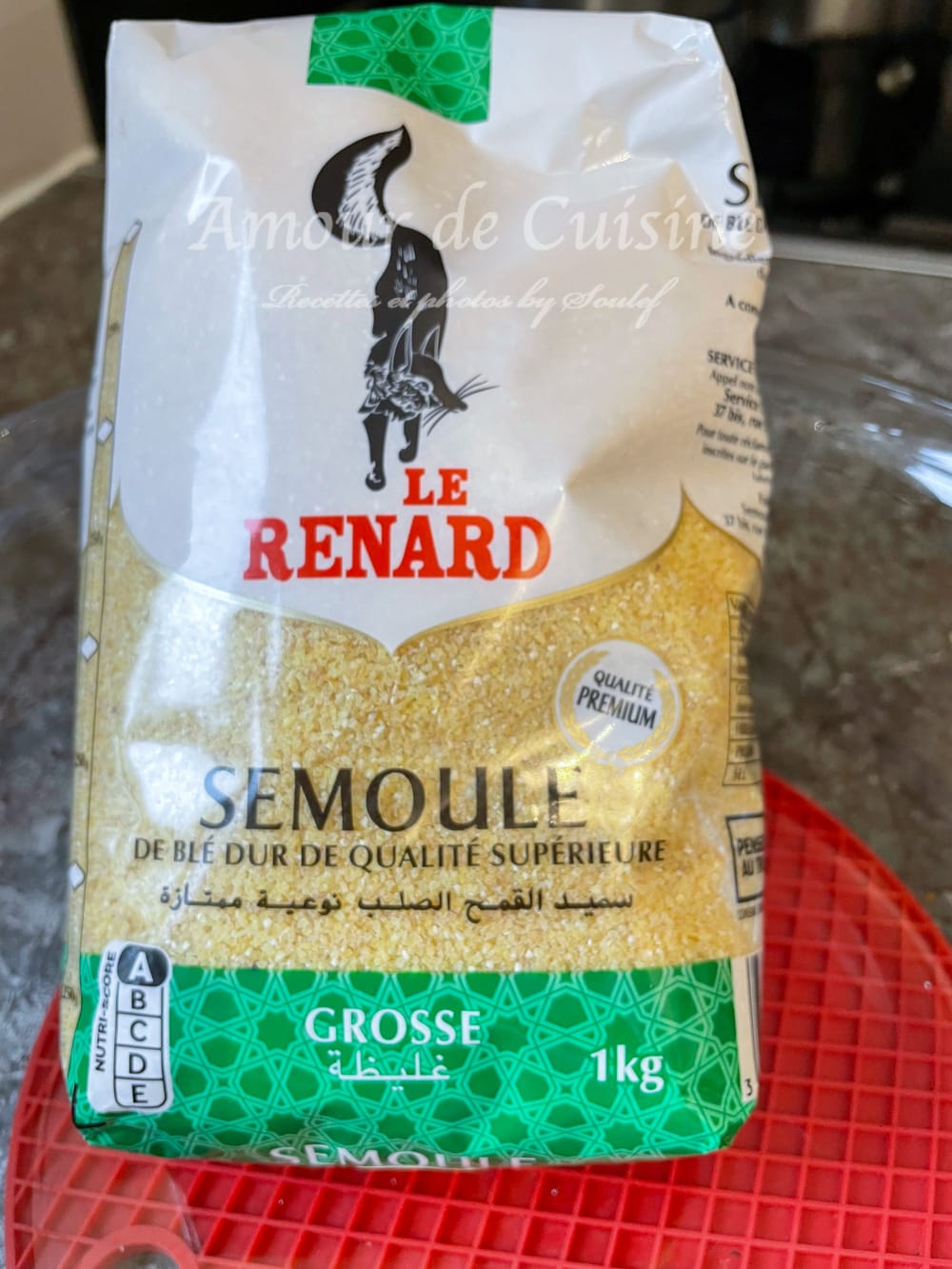
Note
A quick note about my semolina choice
This is not a sponsored post. It’s simply the semolina I personally buy for consistent results.
So before you conclude that:
- the recipe didn’t work,
- the measurements are off,
- it’s too sweet,
- or the baking time is too short,
first look at the most decisive factor: the semolina. If it doesn’t absorb properly, the cake can turn hard, taste overly sweet, or bake unevenly.
Make sure your semolina is the right one, then stick with it once you’ve found it.
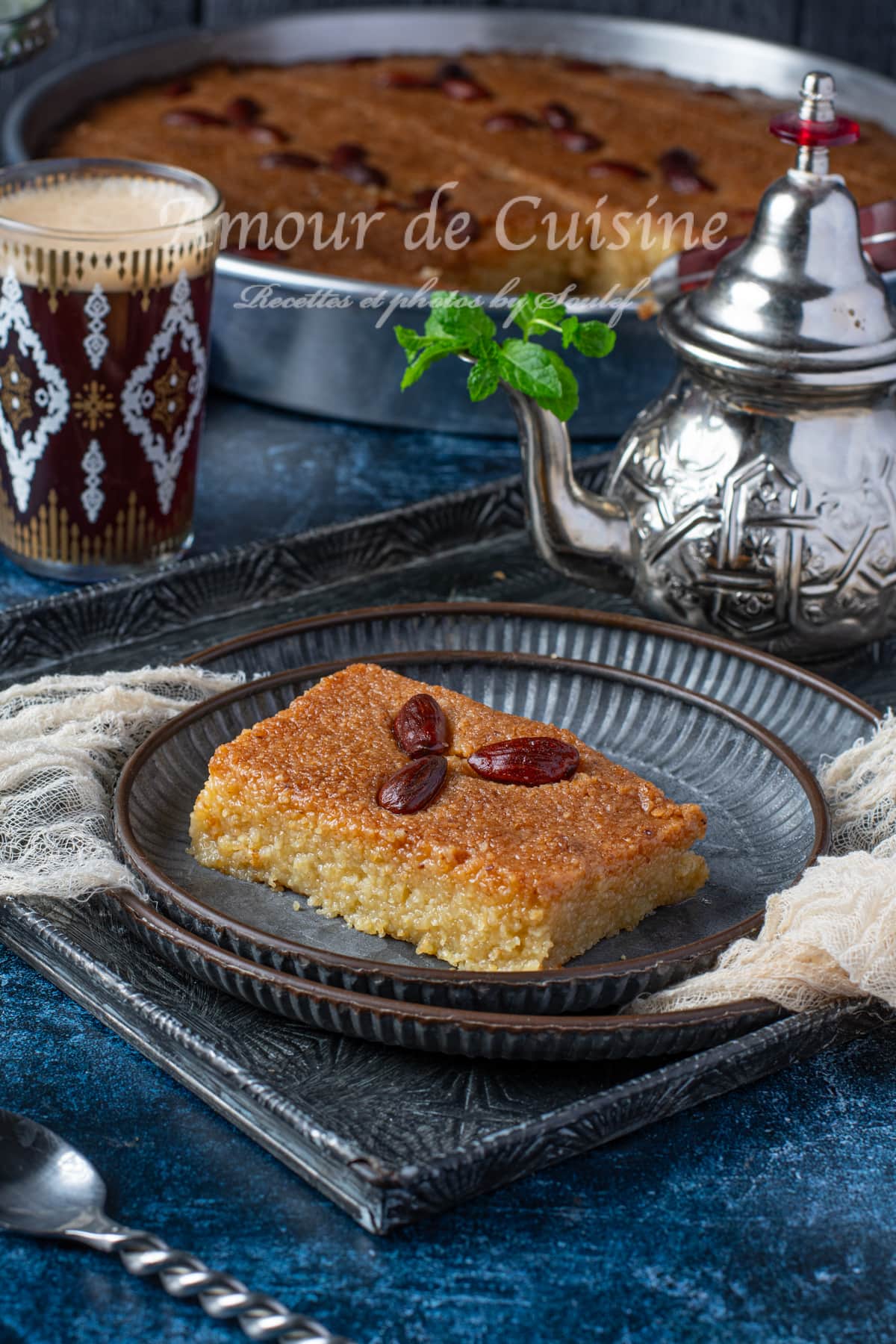
“Heart of almonds”… where is the filling?
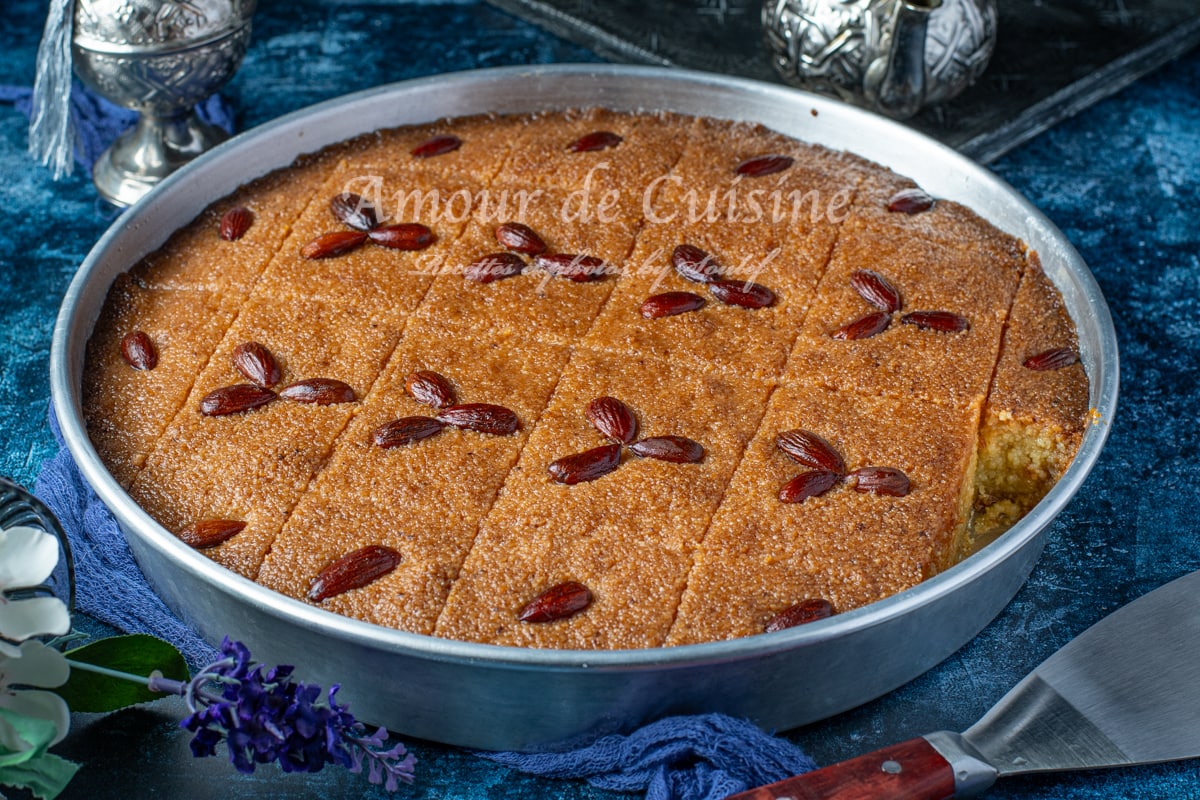
Kalb el Louz (قلب اللوز) literally means “heart of almonds.”
In the classic version, the “heart” is the almond on top: it roasts during baking and gets coated in syrup when you soak the cake.
If you want a true filling layer, you need the mahchi / stuffed version (coming soon).
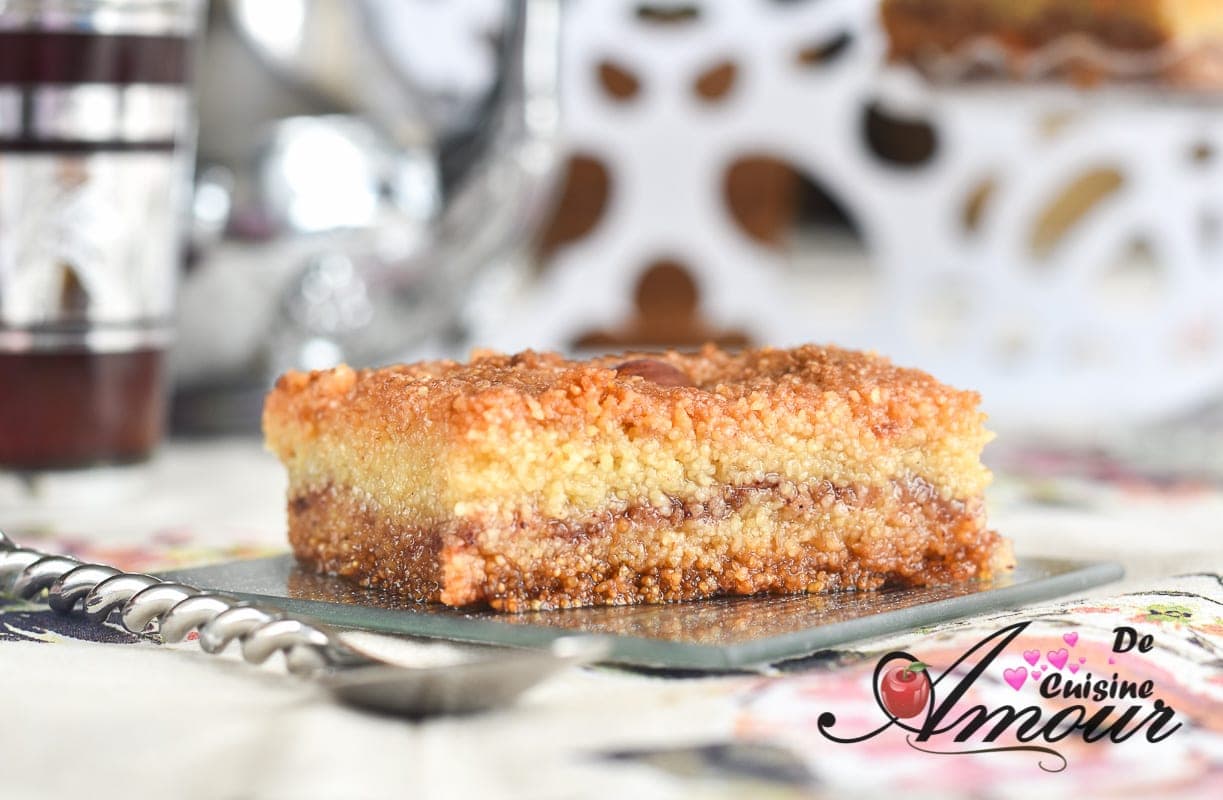
Step-by-Step Instructions for Kalb el Louz (Qalb Ellouz)
Day 1: Start the semolina mixture
- In a large bowl, mix semolina + sugar.
- Add melted butter and rub in with fingertips until sandy.
- Add half the liquid (reserve the other half for tomorrow).
- Work it like couscous: lift, rub, aerate for 10 minutes until the sugar feels dissolved.
Do not knead. - Cover and leave overnight, away from drafts. 24 hours is ideal.ond correctement, et moins la sensation de “trop sucré” ressort à la dégustation.

Day 2: Make the syrup first (it must be cool)
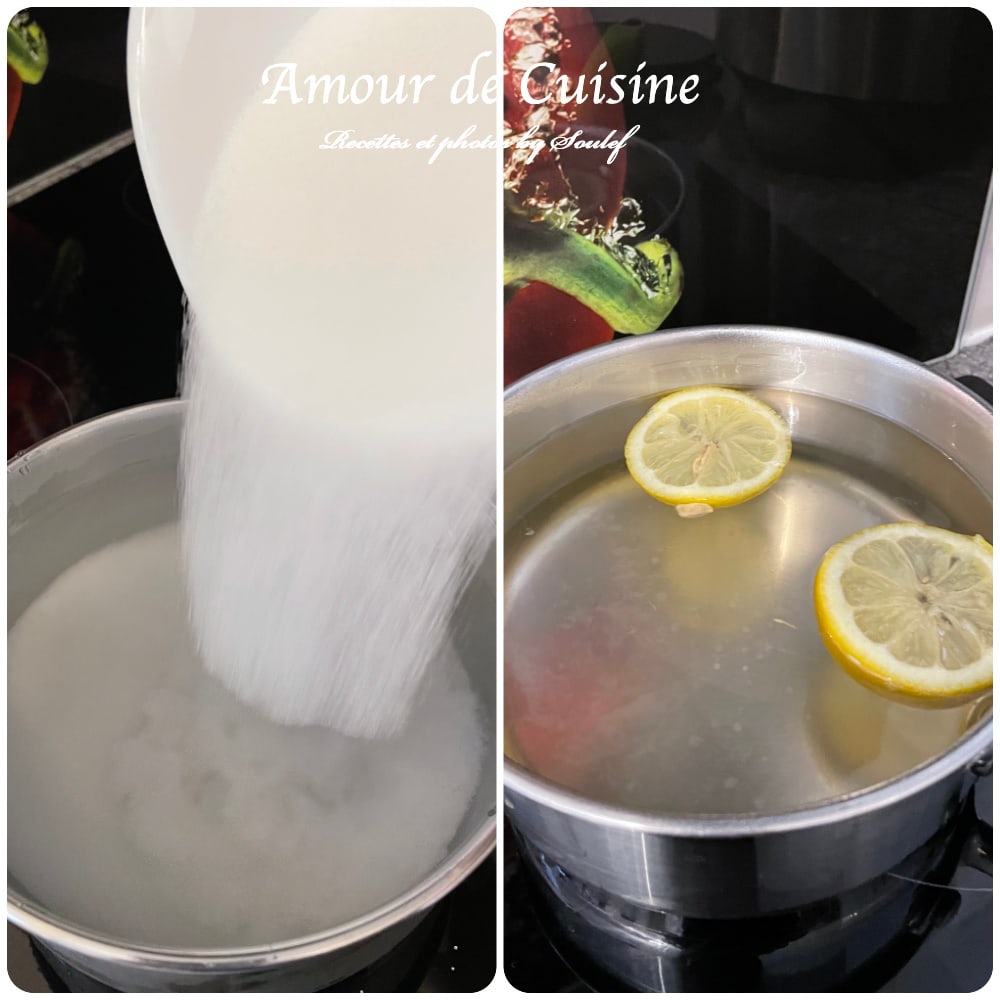
- In a pot, combine water + sugar + lemon slices (if using).
- Bring to a boil, then remove from heat as soon as it starts boiling.
- Let it cool completely, then stir in orange blossom water.
(If you boil it, the aroma fades.)
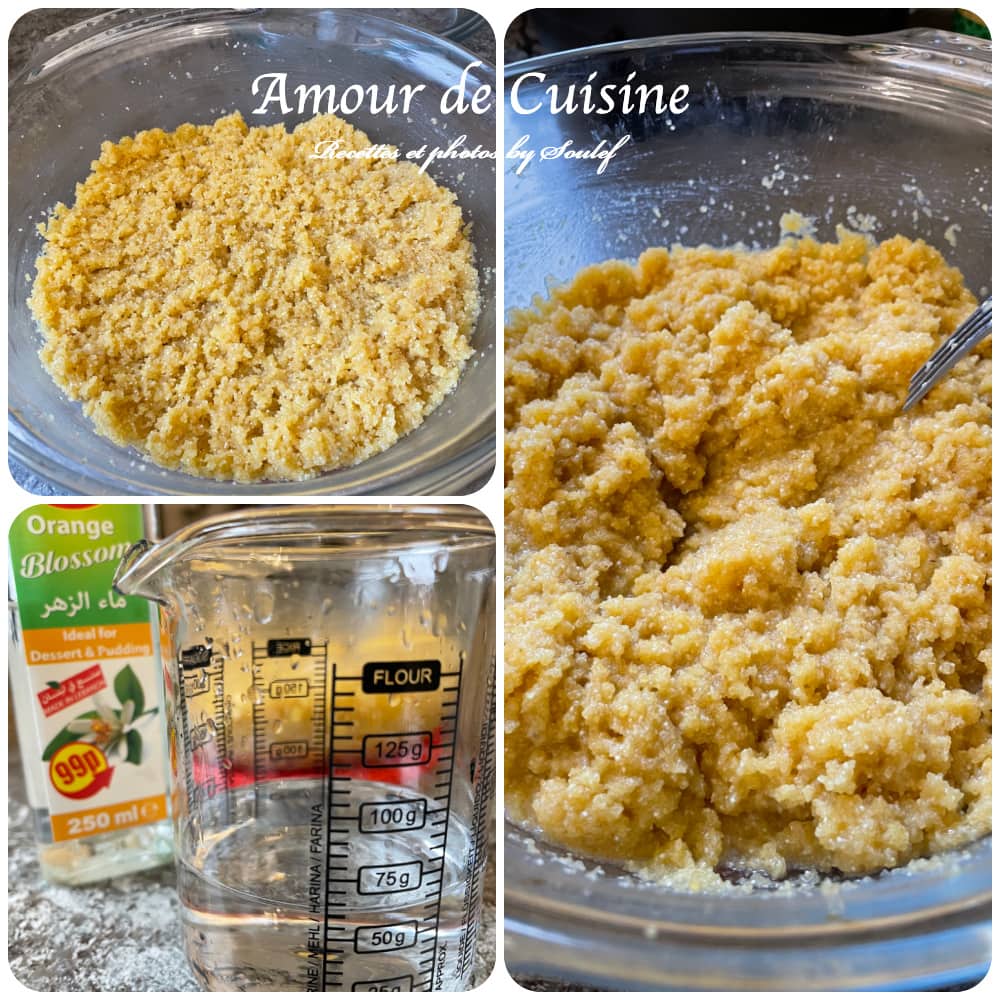
Prepare the semolina mixture
- Take the bowl from the day before and let it sit at room temperature for about 30 minutes.
- Using your fingertips, gently loosen and rub the semolina grains to separate them, like you would for couscous.
- Add the remaining reserved liquid little by little, mixing until the semolina is evenly moistened, light, and fluffy.
- Do not knead, you want an airy texture, not a compact dough.
- Generously oil your baking dish: 32 cm round pan or 33 × 23 cm rectangular pan.
Assemble, score, and bake (with or without filling)
- Optional filling: prepare it separately (see the stuffed “Kalb el Louz Mahchi” version, link at the top). In this recipe, I’m making the classic version without filling.
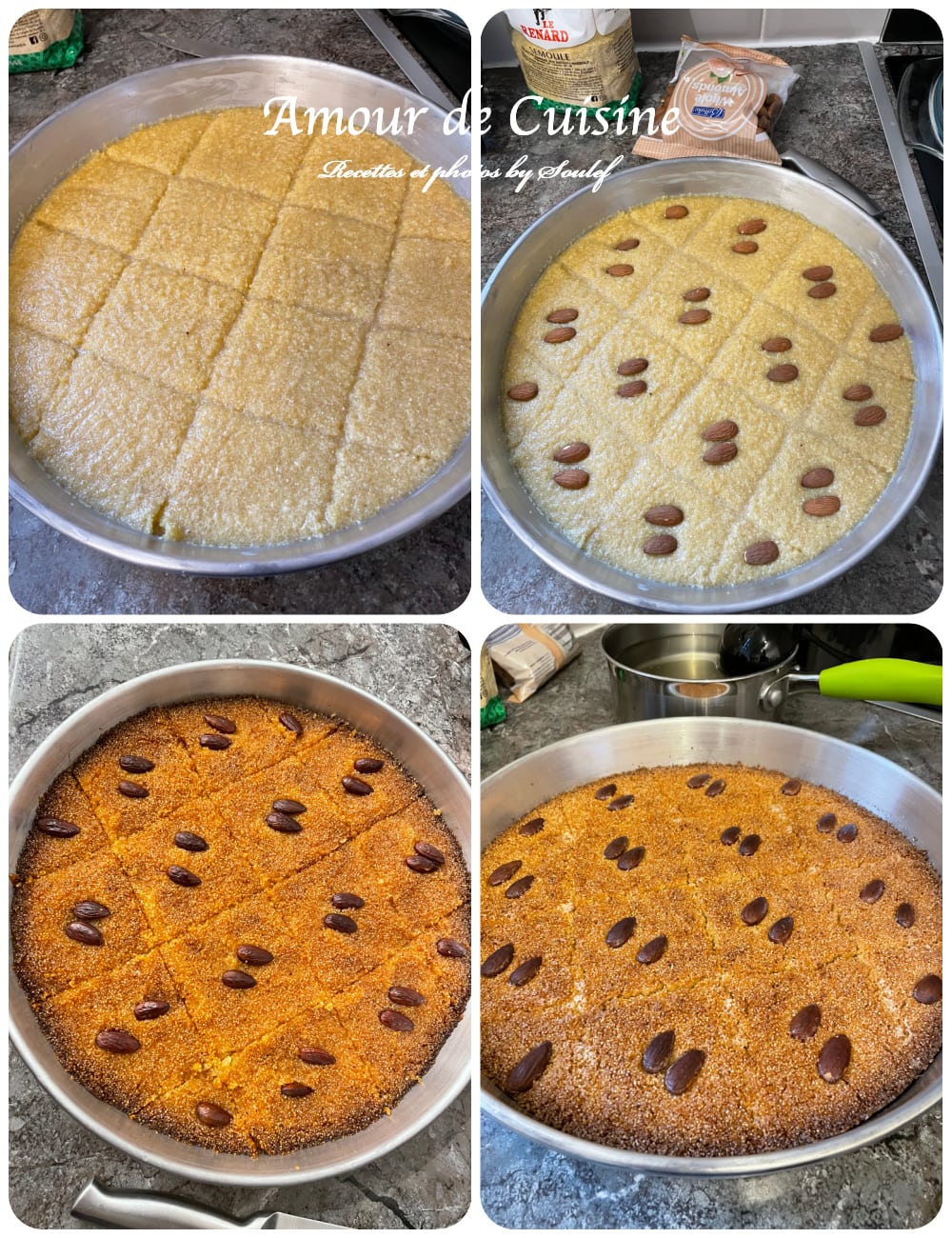
- In the oiled pan, drop the mixture in small handfuls using your fingers.
- Stuffed version: spread half the mixture, add the filling, then cover with the remaining half.
- Flatten gently with your fingertips to create an even surface without packing it down (a fork can help).
- Score into diamonds/portions with a large knife: press down and lift up each time, don’t drag the blade.
- Brush the top with melted butter (about 100 g).
- Decorate each piece with 1 almond (or 2 if you like).
- Bake at 200°C for about 1 hour, until deeply golden.
- My oven method: 185°C static, bottom heat for 45 minutes (second rack from the bottom), then 190°C fan for 15-20 minutes (middle rack), until you get the colour you want.
Soak the cake in stages (cold syrup)
- As soon as it’s baked, remove the Kalb el Louz from the oven.
- Immediately ladle cool/cold syrup gently over the entire surface.
- Stop the first pour as soon as the syrup starts to lightly pool on top.
- Put the pan back into the hot but switched-off oven.
- Once absorbed, take it out and pour again.
- Repeat (pour → oven off → absorb) until the cake feels soft and fully soaked when pressed gently.
- You may not use all the syrup, absorption depends on your semolina.
- Check with the tip of a knife: the inside should feel moist and tender.
- Let it cool completely.
Note: Keep the Kalb el Louz in its baking pan and leave it there until serving.
Storage, Freezing, and Make-Ahead Tips (Kalb el Louz)
- Room temperature: Keep Kalb el Louz in its baking pan, well covered, for 2-3 days.
- Refrigerator: It will keep for 4-5 days, but the texture may firm up. Cover tightly so it doesn’t dry out.
- Freezer: Yes, freeze in individual pieces, wrapped or stored in an airtight container. If you plan to freeze it, avoid over-soaking with syrup.
- Defrosting: Let it thaw at room temperature, still covered.
- How to make it soft again: Warm gently in a low oven (140-150°C for a few minutes), or let it sit 30 minutes at room temperature before serving.
Kalb el Louz FAQ (Troubleshooting and Common Questions)
- Can I skip the resting time? Not recommended. Resting helps the semolina hydrate; skipping often leads to a harder cake.
- Can I use smen instead of butter? Yes, swap 1:1 for a richer, traditional flavour.
- Does the syrup have to be cold? Yes: cool syrup + hot cake helps absorption and keeps the orange blossom aroma.
- What pan size if I halve the recipe? Choose a pan with about half the surface area (roughly round 22–24 cm or similar).
- Why is my cake grainy? Usually from not working the semolina enough, or from kneading. Rub and aerate like couscous.
- No orange blossom water, what can I use? It’s the soul of this cake, but in a pinch use vanilla, lemon zest, a little rose water, or a hint of cardamom in the syrup.
Desserts for Ramadan
- Semolina cake, the best basbousa recipe
- Algerian Makrout oven-baked : Makroud el Koucha
- Delicious Baklava Rolls
- Maamoul Lebanese Date filled Cookies
How to Make Kalb el Louz (Qalb Ellouz): Authentic Algerian Semolina Cake Soaked in Orange Blossom Syrup
- Total Time: 13 hours 45 minutes
- Yield: 16 servings 1x
Description
Kalb el Louz (Qalb Ellouz) is a beloved Algerian Ramadan semolina cake soaked in orange blossom syrup. With the right coarse semolina and a 24-hour rest, you get tender, glossy pieces perfect with mint tea.
Ingredients
- 500 g semolina
- 250 g sugar (in the original recipe, I use 375 g)
- 125 g melted butter (if you have smen, it’s even better)
- 125 ml liquid (65 ml orange blossom water + 60 ml water)
For the syrup:
- 1 L water
- 500 g sugar
- Juice of 1/4 lemon
- 1 tea glass orange blossom water (70 ml)
Filling (I didn’t use it in this recipe):
- 1 measure ground almonds
- 1/4 measure sugar
- 2 tbsp melted butter
- 2 tsp cinnamon
Instructions
The day before:
- Mix the semolina and sugar.
- Add the melted butter and mix with your fingertips—do not knead.
- Moisten with half of the liquid (reserve the rest for the next day) and work it like couscous.
- Work for at least 10 minutes, without kneading. The more you work it, the more the sugar melts and the less sweet your Kalb el Louz will taste.
- Cover and rest for 24 hours (important).
Make the syrup:
- The syrup should be room temperature or cold to pour over the hot cake. Ideally, make it first.
- In a saucepan, add water, sugar, and lemon slices.
- Bring to a boil.
- Remove from the heat at the first boil.
- Let it cool well, then add the orange blossom water.
- If you add orange blossom water while cooking, the aroma will evaporate.
Prepare the Kalb el Louz mixture:
- Take the bowl with the mixture.
- Gently loosen the semolina with your fingertips and work it for at least 10 minutes.
- Moisten little by little with the remaining liquid, working as you go. You should get a ball that holds together without breaking, but crumbles when touched.
- Oil a baking dish: 32 cm round pan, or 33 × 23 cm rectangular pan.
- Prepare the filling (optional). I didn’t stuff my Qalb el Louz.
- Place small handfuls of mixture in the pan with your fingertips.
- When it’s even, spread the filling on top, then cover the same way with the remaining mixture.
- For the non-stuffed version: start with larger handfuls and make one layer only.
- Flatten with fingertips so it’s even.
- Cut portions with a large knife, lifting it out each time, do not slide it.
- Brush with melted butter (100 g) (or good-quality smen).
- Decorate each portion with an almond.
- Bake at 200°C for 1 hour (baking time depends on your oven), until well golden.
- At the end, pour syrup over the cake as soon as it comes out of the oven, using a ladle.
- Pour in three stages, starting from the edges toward the centre. Let it rest and absorb between each pour.
- You may not use all the syrup, depending on the semolina, but it’s better to have extra than not enough. Usually, for this amount of semolina, you’ll need almost 800 ml of syrup for a well-soaked Kalb el Louz.
- Check by pressing with your finger: it should be very soft and well soaked. Let cool, then cut.
- Prep Time: 45 min
- rest time: 12 hours
- Cook Time: 1 hour
- Category: desserts
- Cuisine: algerian cuisine
Nutrition
- Serving Size: 1 serving
- Calories: 450 kcal