
Homemade Yakitori Sauce : No alcohol

A quick, glossy yakitori sauce made without mirin or sake, ready in just 13 minutes.
Balanced with soy sauce, grape juice, lemon, garlic, and ginger, it coats chicken skewers, tofu, or grilled veggies beautifully.
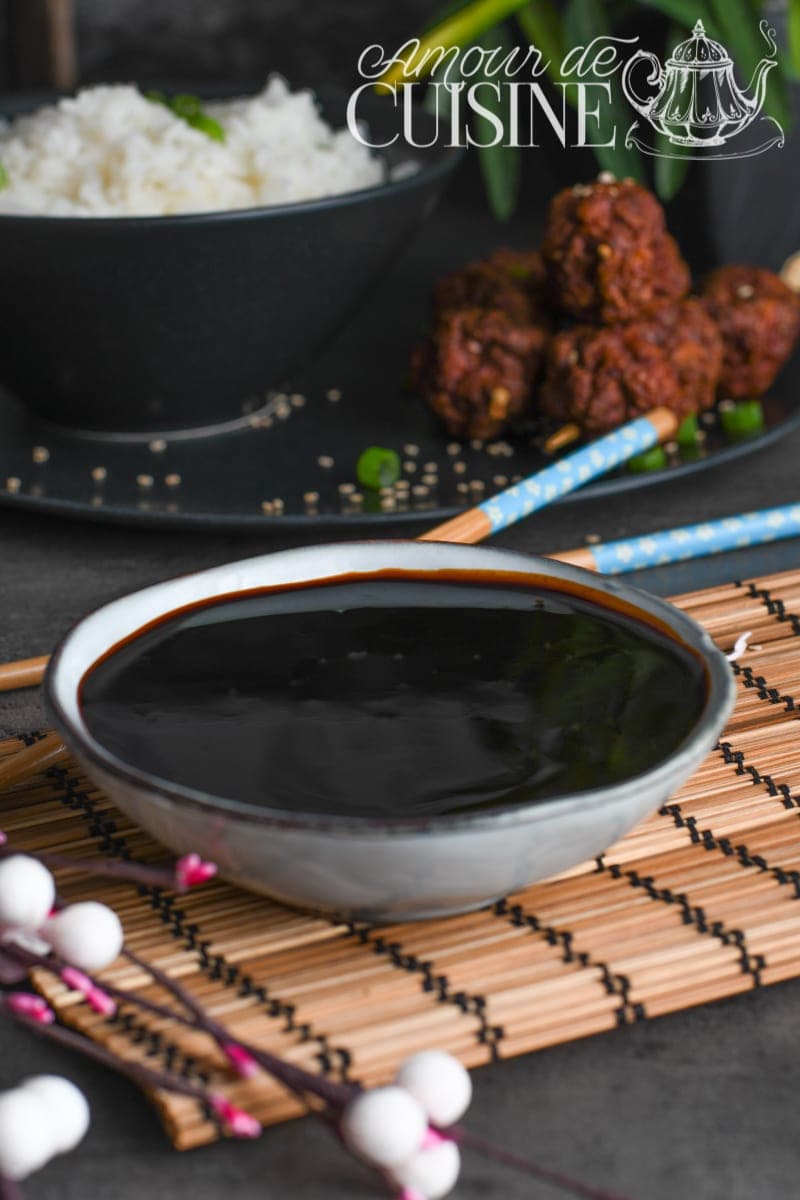
What Is Yakitori Sauce in Japanese Cooking?
Bonjour tout le monde,
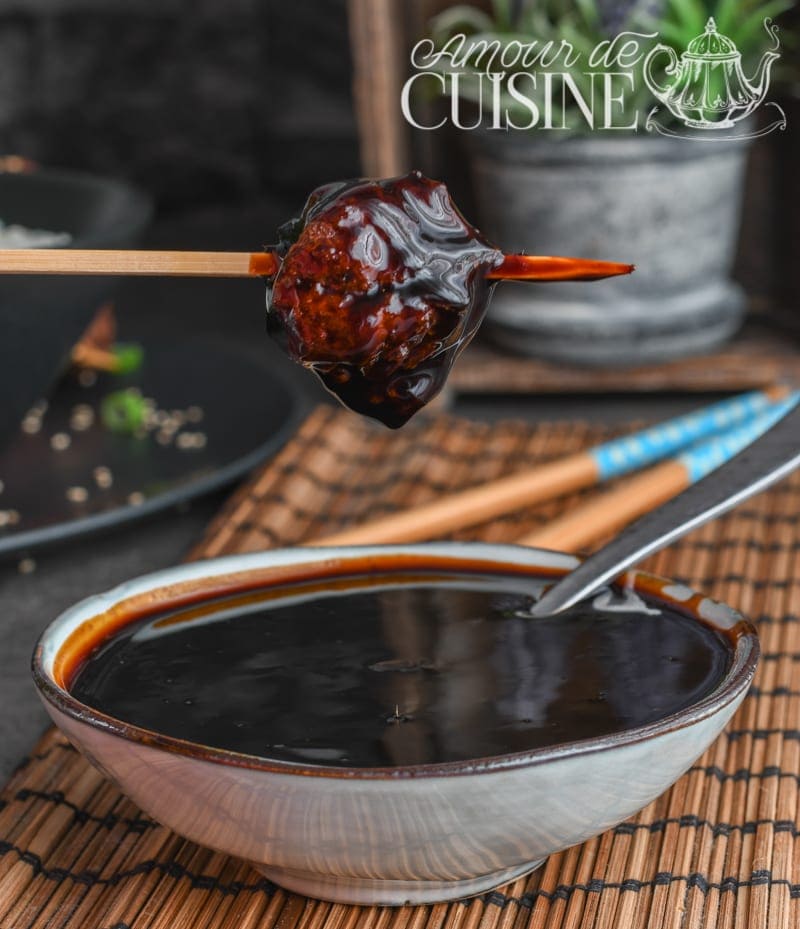
Yakitori sauce, also known as tare, is a classic Japanese glaze that gives skewers their deep colour and glossy, caramelised finish.
The word yakitori means “grilled chicken”: traditionally, bite-size chicken pieces are cooked over charcoal and brushed with a sweet-salty sauce built on soy sauce, sugar, and rice wine.
This homemade version keeps the same rich umami taste but skips the alcohol, making it perfect for anyone who avoids mirin.
It’s slightly sticky, easy to simmer in minutes, and instantly upgrades weeknight meals.
Use it to glaze chicken skewers, coat grilled vegetables, or finish crispy tofu and rice bowls.
The best part? You control everything, salt level (depending on your soy sauce), sweetness, and thickness, so it tastes exactly the way your family likes it.
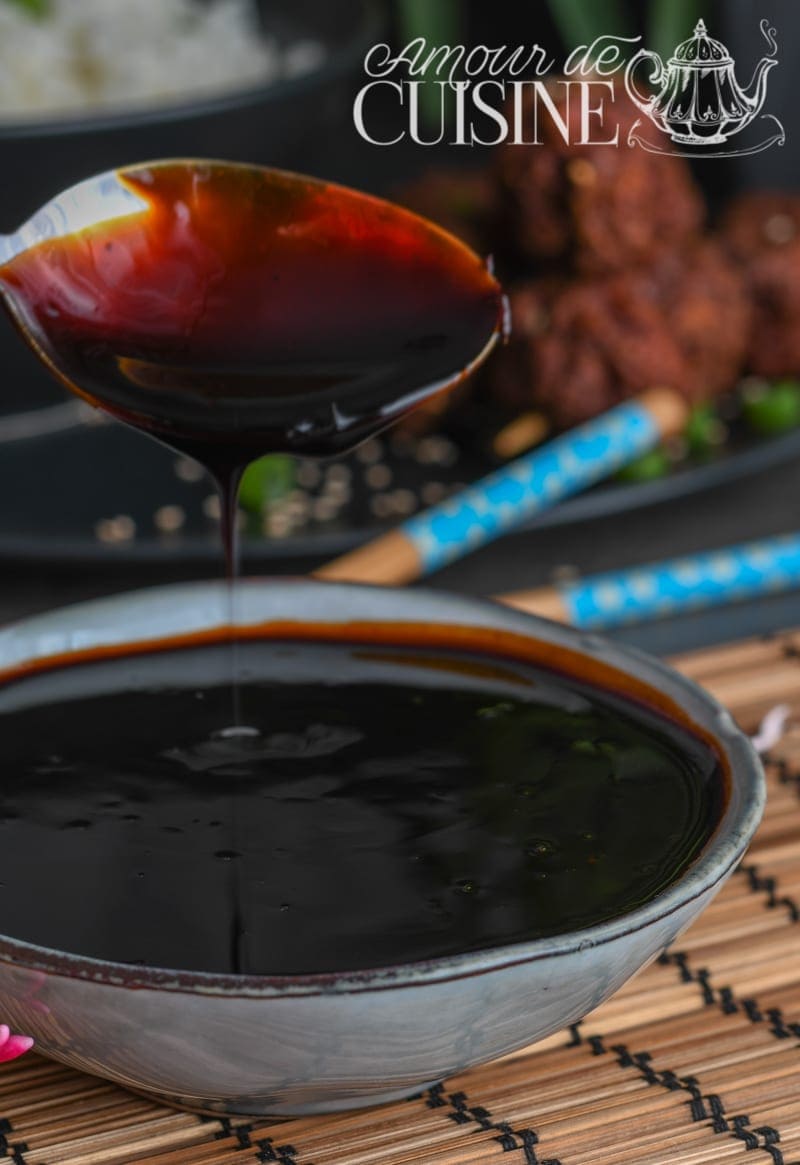
Ingredients for Homemade Yakitori Sauce (No Alcohol)
Traditionally, yakitori sauce combines soy sauce, mirin, sake, and sugar.
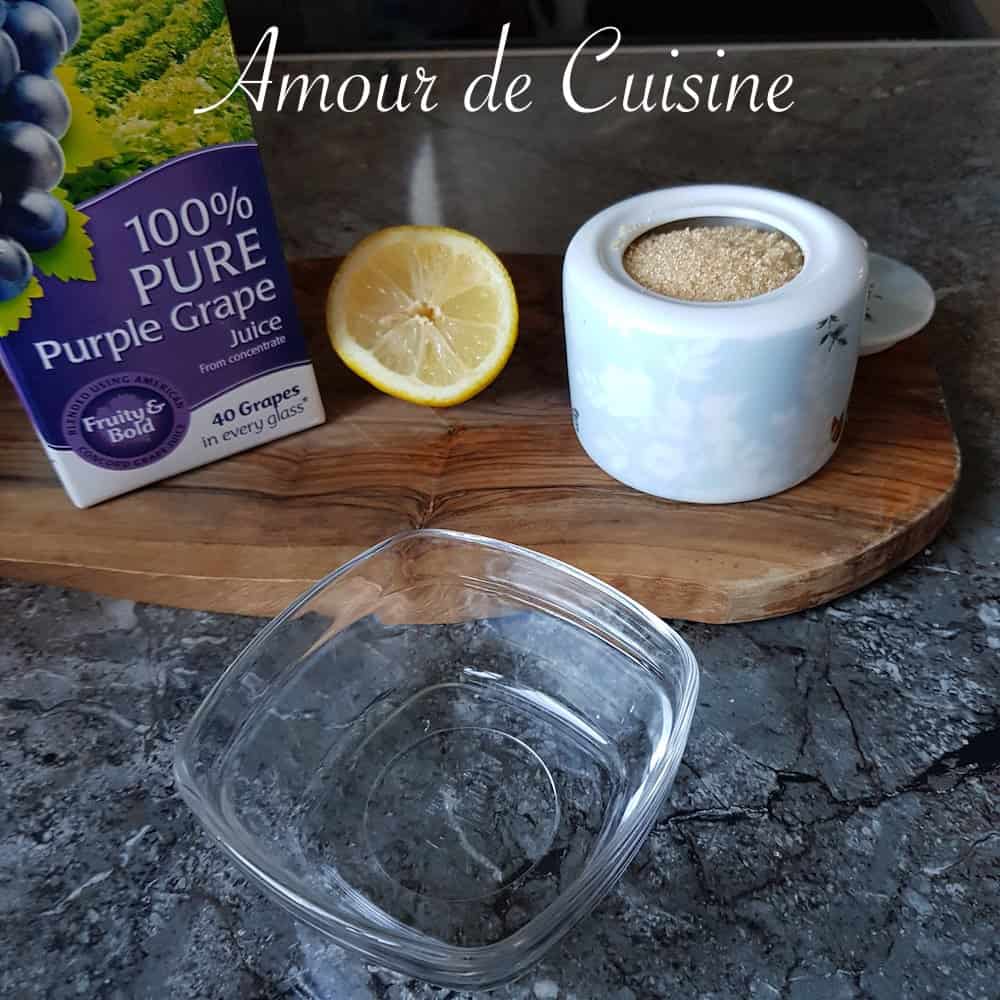
In this alcohol-free version, grape juice replaces mirin and sake, giving a naturally sweet depth and a slightly darker colour.
- Soy sauce, 120 ml (½ cup): the umami-rich base; choose light soy for a milder salt level.
- Sugar, 50 g (¼ cup): creates that glossy caramelised texture; honey works too.
- Grape juice, 120 ml (½ cup): a perfect mirin/sake substitute that adds sweetness and shine.
- Lemon juice, 120 ml (½ cup): balances the sweetness with gentle acidity.
- Garlic, 1 clove: crushed for subtle aroma.
- Fresh ginger, 1 slice (≈5 g): grated or finely chopped for warmth and freshness.
- Water, 1 tbsp (15 ml): used to mix the starch.
- Cornstarch, 1 tbsp (≈8-10 g): thickens the sauce into a smooth glaze.
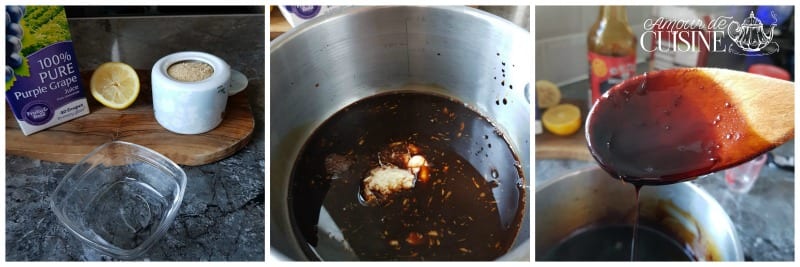
How to Make Yakitori Sauce Without Mirin (Step-by-Step)
Before cooking, prepare these simple substitutes for traditional Japanese recipes:
- Mirin substitute: 1 tbsp grape juice + 1 tbsp lemon juice + 1 tsp brown sugar.
- Sake substitute: 1 tbsp grape juice + 1 tbsp lemon juice.
Now let’s make the sauce:
- Combine the base, In a small saucepan, mix soy sauce, sugar (or honey), grape juice, lemon juice, garlic, and ginger.
- Simmer, Bring to a gentle boil over medium heat for 3–4 minutes until the flavours blend and the sauce begins to thicken.
- Thicken, In a separate bowl, mix water and cornstarch, then pour it into the pan while stirring constantly until smooth and glossy.
- Strain, For a silky texture, strain the sauce through a fine mesh sieve.
- Cool and store, Let it cool before sealing in a clean jar.
Pro tip: Use light soy sauce for a lighter colour or add a touch of honey for a richer, stickier finish.
Yakitori vs Teriyaki Sauce: What’s the Difference?
They look similar, but there’s a key distinction:
- Yakitori sauce is typically used only for grilled chicken skewers. It’s thicker, with a more caramelised glaze.
- Teriyaki sauce (from teri = shiny, yaki = grilled) is more versatile, used for chicken, beef, salmon, or tofu, often as a marinade before cooking.
Both share the same soy-based sweetness, but yakitori focuses on finishing and glazing, while teriyaki is both a marinade and cooking sauce.
Storage and Food Safety
– Refrigerator (best option): Store in a clean, airtight jar for 3-5 days. Always use a clean spoon to avoid contamination.
– Cooling before sealing: Let the sauce cool completely before closing the lid, this prevents condensation, which can shorten shelf life.
– Room temperature (up to 24 hours): Only keep it out if your kitchen is cool, the sauce is covered, and it’s kept away from sunlight/heat (avoid in summer or near the stove).
– Freezer (up to 2 months): Freeze in small portions (ice cube trays are perfect), then transfer cubes to a freezer bag for easy grab-and-use.
– Defrosting: Thaw in the fridge overnight or gently in a saucepan on low heat.
– Reheating: Warm slowly, stirring often. If it’s too thick, loosen with 1-2 tbsp water until glossy again.
– Fixing texture: If the sauce looks separated, whisk briefly over low heat, it usually turns smooth and shiny again.
Other Dips and Sauces to try
Homemade Yakitori Sauce : Asian cuisine
- Total Time: 13 minutes
- Yield: 280 ml 1x
Description
A quick, glossy yakitori sauce made without mirin or sake, ready in just 13 minutes. Balanced with soy sauce, grape juice, lemon, garlic, and ginger, it coats chicken skewers, tofu, or grilled veggies beautifully.
Ingredients
- 1/2 cup soy sauce
- 1/4 cup sugar
- 1/2 cup grape juice
- 1/2 cup lemon juice
- 1 garlic clove (crushed)
- 1 slice fresh ginger (peeled and chopped)
- 1 tbsp water
- 1 tbsp cornstarch
Instructions
- In a small saucepan, mix the soy sauce, sugar, grape juice, lemon juice, garlic, and grated ginger.
- Cook over medium-high heat for 3 to 4 minutes.
- In a small bowl, mix the water and cornstarch.
- Stir the cornstarch mixture into the soy sauce mixture.
- Cook until thickened, stirring constantly.
- Strain the sauce through a fine mesh sieve.
- Keep at room temperature for up to 24 hours.
- Refrigerate.
- Prep Time: 5 min
- Cook Time: 8 min
- Category: dip, sauce
- Cuisine: Asian cuisine, japanese cuisine
Nutrition
- Serving Size: 10 ml
- Calories: 14 kcal